

Need some advice regarding my 18 year old (sorry long)
23 years ago
Featured Answer
Sort by:Oldest
Comments (58)
 23 years agolast modified: 11 years ago
- 23 years agolast modified: 11 years ago
Related Discussions
18 year old jade plant need advice pleaseee
Comments (10)Tom Using large pot and soil that does not drain freely together would cause problem with any plant. What kind of soil is it planted in? Planting jade (or any plant) so deep also creates too much shade for the lower parts of trunks/stems. If it was my plant, I would plant it much higher (almost level with the top of container). If you like to keep that container, make sure the soil drains very well. Does it have drainage hole on the bottom? Are you planning to keep it outside during summer? It will like it - if you have any outdoor area available. Don't worry much about 'butchering' it right now, that can be corrected. Most important are the growing conditions, so your plant is healthy. Cuttings are looking good, looks like there is new growth already. How long ago did you chop them off? You did right thing to keep them out of soil to callus (harden). If you plant them in soil, don't water right away as the plant without roots can't absorb water. Rina This post was edited by rina_ on Mon, Jun 17, 13 at 17:34...See MoreNeed some help/advice on my old house
Comments (12)Removing Paint from Siding. There are two tools that, in our experience, are very good at taking paint off siding, and a lot better than the traditional heat and scrape, or scrape and sand methods.. 1. Silent Paint Remover is one. This tool is a GIANT STEP above heat guns and the dangers they cause. The other is 2. Paint Shaver. This is a mechanical, high speed stripper that uses replaceable carbide blades. Which one we use depends on the paint to be removed. Silent Paint Remover is slower, but does a very neat job requiring very little sanding. Paint Shaver is faster, but takes a bit of practice to remove the paint without putting a lot of crescent-shaped divots in your siding that require a lot of sanding out. One mistake to guard against using this tool is setting the depth adjustment for too-aggressive a cut. You don't need to remove all the paint, just the loose paint, so don't try to get down to bare wood in one pass. When you are removing paint, you hope the original painter did a lousy job so it will come off easily. If he was good at his job, it's going to come off hard no matter what tool you use. Keep in mind that the EPA lead abatement rules govern the safe removal of any exterior lead paint. As a homeowner, they may not apply to you, but follow them anyway for everyone's safety. Both of these tools are commonly available at a deep discount over retail from e-Bay and Graig's list. We have used and cannot recommend the Metabo or Wagner machines. They don't work nearly as well as the suggested machines. Repairing Plaster To repair cracked or falling-off true plaster you need to reattach it to the wood or metal lath underneath. The traditional way is with screws and plaster washers. These usually extend proud of the wall, making them difficult to conceal except with thick coats of patching plaster. The better way is to glue the plaster to the lath. There is a commercial kit to do this called Plaster Magic which we like, but which we also think is pretty expensive. We just use our own, locally available materials, that work just as well and are a lot less expensive. Here's what to do: 1. Using a concrete bit, drill about 3/8" holes in the plaster until you hit the lath -- do not drill through the lath. You will feel it when you reach the lath. You will want to drill about 1" on both sides of any crack, putting a hole about every 4-6" along the crack. Its a judgment call. Drill as many holes as you think you will need. If in doubt, more is usually better. For large loose areas, drill about every 4"-6" in the field and every 4" around the perimeter of the loose plaster area. Sometimes you will hit the gaps between lath strips. Don't worry about it. Just move about 1" away and drill again. 2. With your trusty shop vac, suck the plaster dust out of each hole. This is important, plaster dust interferes with the adhesive. 3. Using your caulk gun and a good construction adhesive (we like Power Grab, but any quality adhesive should work. In a pinch, we have used most of them at one time or another and none have failed.) squirt a good glob of adhesive into each hole. This will probably be messy, so have some mineral spirits and rags around to cleanup any drip-out. 4. Make a bunch of 4" square wood washers. You can make them out of job scrap. We use 1/2" or 3/4" OSB most of the time just because it happens to be around. Drill a hole in the center of each washer - 3/16" or 1/4" ought to do it. 5. Line the washers up with the holes you drilled earlier and, using a drywall screw, attach the washer to the wood lath beneath the plaster. You don't need to screw into every hole, about every 4-6 holes is a good rule of thumb. What you want to do is put even pressure over the loose plaster area and draw it back to the lath. This will allow the adhesive you just applied to bond the lath tightly to the plaster once again. As you tighten the screw, you will feel the plaster draw in. DO NOT try to sink the screws all the way in one go. Draw them in gradually moving from screw to screw. This lessens the risk of cracking the plaster further. When all the screws are sunk, you are done until tomorrow. Go have a beer. 6. After 24 hours, remove the screws, put them back in the box (they can be reused) and throw the washers away. The plaster is now stuck solidly to the lath once again. There are no screws or washers in the wall - so finishing the plaster is much simplified, and this fix is strong. The adhesive sticks like, well, like glue. 7. Using patching plaster, a setting joint compound, or even regular joint compound, patch the screw holes, cracks and fill in any missing plaster. The purists will tell you that joint compound has a different texture than real plaster and is softer, so you should not use it. It does have a different texture and is softer, but so what? The paint will hide any differences. 8. We recommend against paper tape on cracks. What we use is nylon screening -- the stuff in screen doors. buy a role from your hardware store and cut it into 6" strips while it is still rolled up -- its easy to cut with normal shop shears or even your utility knife. Use this in place of nylon mesh tape -- it works better. We embed it in a thin coat of joint compound, then, when the first coat of mud has set, mud over it. Its wider footprint is better at stabilizing cracks than narrow nylon mesh tape. In fact, we have never had a repair fail using this method. Removing Layers of Paint from Interior Trim Definitely use a commercial stripping service if you have one in your area. At $1.00 - $2.00 per linear foot, the price is well worth not having to deal with the mess of stripping in place or on saw horses in your garage. After stripping be sure to sand with a fine sandpaper to remove the fuzzing that stripping causes. Good luck....See MoreI need some major help making a kitty decision (sorry so long!)
Comments (14)Cat mom and all, no one's saying the cat WOULD become a biter but only there is a real RISK of aggression problems or other personality changes. Is it worth the risk when there may be options with a more certain or sure outcome? The point is you shouldnt think of it as a "last resort," because there is a real chance it would NOT solve the problem. How I manage a similar situation is to do sort of a time share - my old 20 yr old cat stays in the bedroom 8 am - 8 pm, then gets the run of the house 8 pm- 8 am when I put the new cats downstairs in the basement (there's couches and stuff downthere and I feed them when they go downstairs so they have pleasant associations. What makes this work is that its so highly routine - cats just LOVE routine and predicatability, same things happening at the same time each day. What was NOT working was just trying to keep them separate in random, unpredictable ways. Everyone has settled down knowing they each have their own space and own times for occupying the "common area." In the wild, cats often make these same types of arrangments to "time-share" an area. If youre not up for that.... do consider finding another home. Ive done it many times, found home for cat in an unfortunate situation. There is a way of screening people and making sure its a good home - I could tell you more if you want. There's always the long difficult process of getting cats used to each others smell, and build up their tolerance for each other. But Im thinking because the ragdolls are so passive and unable to defend themselves (are they? Ive never had one) that might actually be triggering the other cat's dominance and urge to drive them out of the territory. Nature and feline territorial behavior is not pretty sometimes. In my case I decided I just could NOT put my old 20 yr old cat, deaf and arthritic, through the attacks she was getting from the 1 young new cat I brought into the house. She could not defend herself and she was literally getting knocked down, clawed, bitten and terrorized and she started peeing out of the box she was so freaked out. Now, Im happy to report, she is feeling secure again and her old self....See MoreSome Advice From an Old lady About Love LONG
Comments (15)I'm so sorry for your loss. What a lovely way to inform us, citing all the good things you were able to share after being reunited. Your story reminds me of the suitor my mother refused when they were both very young. (She was only 17, and she and her parents thought this was premature.) As my mother was dying of leukemia, a lifelong friend sent her news of this man -- by then a widower of many years. He came across the country to spend a week with my mother, bringing the photo she'd inscribed to him so long ago, and bringing the perfect little diamond ring he'd kept all these years. I know their marriage would have been uneven. He was a quiet, homebody person, and my mother became a successful career woman. However, I thought he was a much finer person than the successful businessman she did marry (and divorce) -- my father. Sometimes we underestimate how romantic and sentimental a man can be....See More- 23 years agolast modified: 11 years ago
- 23 years agolast modified: 11 years ago
- 23 years agolast modified: 11 years ago
- 23 years agolast modified: 11 years ago
- 23 years agolast modified: 11 years ago
- 23 years agolast modified: 11 years ago
- 23 years agolast modified: 11 years ago
- 23 years agolast modified: 11 years ago
- 23 years agolast modified: 11 years ago
- 23 years agolast modified: 11 years ago
- 23 years agolast modified: 11 years ago
- 23 years agolast modified: 11 years ago
- 23 years agolast modified: 11 years ago
- 23 years agolast modified: 11 years ago
- 23 years agolast modified: 11 years ago
- 23 years agolast modified: 11 years ago
- 23 years agolast modified: 11 years ago
- 23 years agolast modified: 11 years ago
- 23 years agolast modified: 11 years ago
- 23 years agolast modified: 11 years ago
- 23 years agolast modified: 11 years ago
- 23 years agolast modified: 11 years ago
- 23 years agolast modified: 11 years ago
- 23 years agolast modified: 11 years ago
- 23 years agolast modified: 11 years ago
- 23 years agolast modified: 11 years ago
- 23 years agolast modified: 11 years ago
- 23 years agolast modified: 11 years ago
- 23 years agolast modified: 11 years ago
- 20 years agolast modified: 11 years ago
- 17 years agolast modified: 11 years ago
- 17 years agolast modified: 11 years ago
- 17 years agolast modified: 11 years ago
- 17 years agolast modified: 11 years ago
- 17 years agolast modified: 11 years ago
- 12 years agolast modified: 11 years ago
- 11 years ago
 11 years ago
- 10 years ago
- 10 years agolast modified: 10 years ago
- 10 years ago
 10 years ago
 10 years ago
- 10 years ago
- 10 years ago
- 9 years ago
- 9 years ago
- 9 years ago
Related Stories
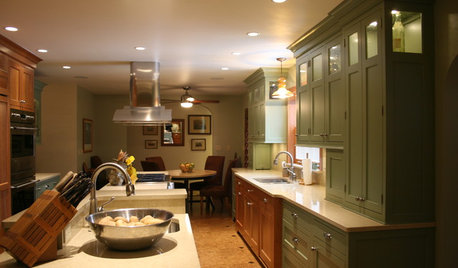
KITCHEN DESIGNSmart Investments in Kitchen Cabinetry — a Realtor's Advice
Get expert info on what cabinet features are worth the money, for both you and potential buyers of your home
Full Story
MODERN HOMESHouzz Tour: 800-Year-Old Walls, Modern Interiors in Provence
Old architecture and new additions mix beautifully in a luxurious renovated vacation home
Full Story
BASEMENTSRoom of the Day: Swank Basement Redo for a 100-Year-Old Row House
A downtown Knoxville basement goes from low-ceilinged cave to welcoming guest retreat
Full Story
UNIVERSAL DESIGNMy Houzz: Universal Design Helps an 8-Year-Old Feel at Home
An innovative sensory room, wide doors and hallways, and other thoughtful design moves make this Canadian home work for the whole family
Full Story
LIFEGet the Family to Pitch In: A Mom’s Advice on Chores
Foster teamwork and a sense of ownership about housekeeping to lighten your load and even boost togetherness
Full Story
BATHROOM DESIGNDreaming of a Spa Tub at Home? Read This Pro Advice First
Before you float away on visions of jets and bubbles and the steamiest water around, consider these very real spa tub issues
Full Story
DECORATING GUIDES10 Design Tips Learned From the Worst Advice Ever
If these Houzzers’ tales don’t bolster the courage of your design convictions, nothing will
Full Story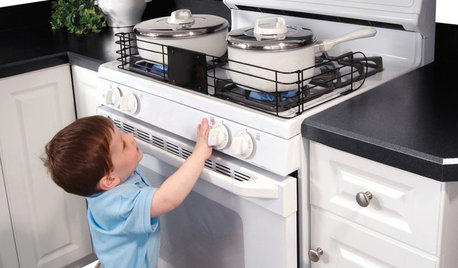
HEALTHY HOMEHow to Childproof Your Home: Expert Advice
Safety strategies, Part 1: Get the lowdown from the pros on which areas of the home need locks, lids, gates and more
Full Story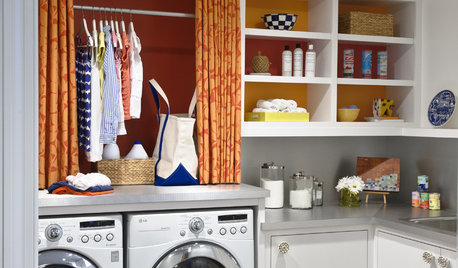
REMODELING GUIDESContractor Tips: Advice for Laundry Room Design
Thinking ahead when installing or moving a washer and dryer can prevent frustration and damage down the road
Full Story
DECORATING GUIDESDecorating Advice to Steal From Your Suit
Create a look of confidence that’s tailor made to fit your style by following these 7 key tips
Full StorySponsored

mom_2_4