

watch out for this invasive species
16 years ago
Featured Answer
Sort by:Oldest
Comments (25)
 16 years ago
 16 years ago
Related Discussions
Australian Tree Fern Invasive Species
Comments (0)Australian tree ferns: Plant possible invasive concern by Carolyn Lucas West Hawaii Today clucas@westhawaiitoday.com Wednesday, March 18, 2009 9:07 AM HST Though prized for its distinctive looks and rapid growth, the Australian tree fern is becoming an increasingly common and alarming fixture in Kona neighborhoods, according to a recent islandwide survey by the Big Island Invasive Species Committee's early detection crew. On the underside of its triangular fronds with lacy blades are millions of spores, which breezes -- as well as feral ungulates -- carry far and wide. This tree fern (Spahaeropteris or Cyathea cooperi) is already displacing native forests on Kauai, Maui and Oahu. Watersheds are also being choked. Such propagation is just beginning on the Big Island, said Page Else, spokeswoman for the Big Island Invasive Species Committee. "The tree fern crowds out our native hapuu, the mother of the forest. The soft fibers of the hapuu nurture young native seedlings of native plants like ohia and olapa," she said. "The Australian tree fern has a harder, scaled trunk which doesn't make a good home for seedlings. Consequently, the foreign plant can take over in our forests, changing the forest structure, lessening the number of native plants and decreasing the ability to capture water and provide good water quality in watersheds." It's no wonder that the Australian tree fern appears on a list of the most invasive plants in Hawaii, prepared by the Hawaii State Alien Species Coordinator and the Department of Land and Natural Resources' Division of Forestry and Wildlife. Officials urged people to not cultivate any of the listed species anywhere in Hawaii. The Big Island Invasive Species Committee recently issued an Australian tree fern alert, spreading awareness about the weed and hoping that residents will help prevent its spread. People should report tree ferns by calling the state pest hotline at 643-7378. Those who have purchased the popular ornamental but suffered buyer's remorse and now want to remove it can either snip the bud or cut down the tree fern and treat it with herbicide. "They should be aware that their tax dollars will be put to work combating the rapid growth of this plant in public watersheds as seeds spread out of their yard into other locations," Else said. Two years ago, the Kauai Watershed Alliance contracted the Nature Conservancy to coordinate a response to the invasive tree fern. Crews on foot are sent into valley uplands to remove plants at a cost of $365 per acre. Helicopters with herbicides spray in more remote, dangerous areas. The aerial spraying costs $560 per acre, Else said. James Leary, invasive weed specialist at University of Hawaii at Manoa College of Tropical College Agriculture and Human Resources, has been experimenting with an innovative way to apply herbicide selectively to Australian tree ferns by using paintball guns with a special pesticide formulation. While people may be fond of the tree ferns, a wide variety of noninvasive alternatives, including the native hapuu, can be used as ornamentals. Because each yard is different, residents can visit a nursery and talk to an expert to find the best fit. Many nurseries -- including 15 on the Big Island -- agreed not to sell the tree fern after learning its potentially detrimental impact. For more information, call the Big Island Invasive Species Committee at 933-3345....See MoreWatch out for this weed in your local nursery
Comments (11)Hi HJ. I dont know if they are a weed in Brisbane but here in Logan you cannot buy them any where. I tried to when we started on the garden as there were a few on our block and I though them very pretty but were told by Bunnings and others that they are not allowed to sell them. I asked why and the person went away to find out, and she came back and told me that it the seeds there are thousands on every tree and once the seed pod opens up they germinate everywhere as they are those fly away type seeds, do they call them winged, something like that. So after hearing that we make sure that all the seed pods are cut off our trees, actually we did it yesterday trouble is I dont know how we are going to get them off when the trees get taller but if we pick up the pods every season at least we will be doing something, and if there comes a time we cant well we will cut the trees down, as by then all the good trees we have planted will be so much bigger....Cheers..MM....See MoreWANTED: Watch out for this weed in this forum
Comments (0)http://wwf.org.au/news/wwf-welcomes-emergency-ban-on-harmful-grazing-weed/ WWF welcomes emergency ban on harmful grazing weed 16 Dec 2005 Today's decision by the Victorian government to ban the sale of the harmful weed bear-skin fescue (Festuca gautieri) - a known grazing and environmental weed that went on sale as a garden plant in late 2004 - is a welcome development in the fight against invasive species, says WWF, the conservation organisation. "This action is the first time the government has used its emergency declaration powers under the Catchment and Land Protection Act, and so sets an important precedent for other invasive plants that have only recently been brought into Victoria but are yet to be widely distributed," said Andreas Glanznig, WWF's Senior Policy Adviser. "It shows that Victoria is serious about acting early to nip these problems in the bud," he said. Bear-skin fescue, a perennial tussock grass native to southwest France and northeast Spain, is not edible for grazing animals and ends up dominating grasslands in its range. In the UK and US, the invasive plant has already jumped the garden fence and started to encroach on native vegetation. The weed poses a risk to lowland temperate grasslands, one of Australia's most threatened native ecosystems - a good portion of which are found in Victoria. WA has already banned the import of the weed, which also presents a risk to biodiversity in SA, NSW and TAS. WWF has alerted the NSW, SA, and TAS governments of the weed risk posed by bear-skin fescue but they are yet to act. Invasive garden plants are the major source of Australia's weeds and make up 70% of environmental and agricultural weeds. Australia's weed problem costs the government $4 billion a year. For more information Andreas Glanznig, Senior Policy Advisor, WWF-Australia Mobile: 0417 020 174 ______________________________ Andreas Glanznig Senior Policy Adviser WWF-Australia Level 13, 235 Jones St Ultimo NSW 2007 GPO Box 528 Sydney NSW 2001 T: 02-8202 1228 F: 02-9281 1060 E: aglanznig@wwf.org.au www.wwf.org.au...See MoreCalifornia Invasive Species Action Week
Comments (3)Writing FB posts, so will share more here too. Today’s thought for California Invasive Species Action Week - Do No Harm. Individual choice can have disastrous affects on wild lands and the ecology. Did you know that Citrus Greening - the disease that has almost wiped out Florida citrus crops and is now in California was most likely brought into CA illegally by a backyard gardener? http://ipm.ucanr.edu/PMG/PESTNOTES/pn74155.html And, to Florida through illegally imported plant material? https://www.invasivespeciesinfo.gov/microbes/citrusgreen.shtml Other states have Japanese beetles that feed on about 300 species of plants, flowers, and fruit; squash vine borers that attack vine crops of summer squash, winter squash, and pumpkins (I know gardeners that can’t get any summer squash at all anymore without a great deal of extra work, most just give up) and Tomato yellow leaf curl where it is not uncommon for losses of 100% to be experienced in fields with heavily infected plants. The host plant can be very different than the ones we see infected. There is solid reasoning behind our laws and quarantines that no plant material (living, dried, bulb, tuber, rooted cuttings, cuttings) may be shipped in to California unless it is from a company with phytosanitary certificates. https://www.cdfa.ca.gov/plant/PE/transport_animals_plants.html We are free from many invasive insect, weed and disease species that wreck havoc on agriculture and environments in other states and countries. Our State is surrounded by natural barriers — towering mountains to the north and east, scorching desert to the south, and vast ocean to the west. Most plant pests cannot cross these barriers on their own; however, the State is under constant threat of pest introductions by man. Do No Harm. Please continue to spread the word that trading out of state plants into CA is illegal and a really really bad idea. (last bit from https://www.cdfa.ca.gov/plant/pe/ExteriorExclusion/borders.html ). Thanks!...See More- 16 years ago
 16 years ago
- 16 years ago
- 16 years ago
- 16 years ago
- 16 years ago
 16 years ago
- 16 years ago
 16 years ago
- 16 years ago
- 16 years ago
- 16 years ago
- 16 years ago
- 16 years ago
- 11 years ago
 11 years ago
- 11 years ago
 11 years ago
 11 years ago
 11 years ago
 11 years ago
- 11 years ago


Related Stories

DECORATING GUIDESOn Trend: Invasion of the Blobs
And what a welcome invasion it is, with furniture and accessories in organic forms that mimic nature's simplicity
Full Story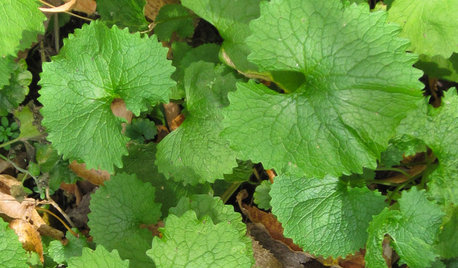
GARDENING GUIDESDo You Have This Invasive Plant in Your Yard?
Garlic mustard is spreading across the U.S. Here’s how to spot it and what to do
Full Story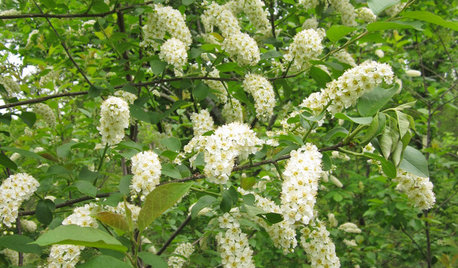
TREESNative Plant Alternatives to Invasive Common Buckthorn
Learn how to identify and control this aggressive plant, and what to grow in its place
Full Story
CONTRACTOR TIPSContractor Tips: 10 Remodel Surprises to Watch Out For
Know the potential setbacks before you start to save headaches and extra costs in the middle of a renovation
Full Story
GARDENING FOR BUTTERFLIESA Quick-Start Guide to Bird-Watching for Fun and Learning
Set out some seed and grab your field guide. Bird-watching is an easy, entertaining and educational activity for the whole family
Full Story
GARDENING GUIDES6 Plants That Beat Butterfly Bush for the Wildlife Draw
It's invasive, a nonnative and a poor insect magnet. Check out these better alternatives to butterfly bush in the garden
Full Story
GARDENING GUIDES13 North American Backyard Birds to Know
Find out about these enchanting native species and learn how to attract them to your yard
Full Story
GARDENING GUIDESGreat Design Plant: Bugle Weed, a Quick Ground Cover
It’s highly adaptable, suppresses weeds, reduces erosion and provide weeks of bright flowers. Just watch for invasiveness
Full Story
GARDENING GUIDESPut Out the Welcome Mat for Leafcutter Bees in Your Garden
Provide a diversity of flowering plants from spring through fall for these charismatic native bees, and you won’t be disappointed
Full Story
WINDOW TREATMENTS6 Ways to Deal With a Bad View Out the Window
You can come out from behind the closed curtains now. These strategies let in the light while blocking the ugly
Full Story

rredbbeard