

Cowpeas (Southern Peas)
18 years ago
Featured Answer
Sort by:Oldest
Comments (21)
 18 years ago
- 18 years ago
Related Discussions
What has surprised you that you'll grow forever more?
Comments (49)I discovered swiss chard when I lived in San Diego, an asian neighbor dug up some of her plants and gave me 2 big plants. I LOVED them. They had big huge leafs, I would steam and then briefly saute in fresh garlic and butter..YUMMMY...Now for some reason, the chard I have planted here in GA is not as good to me, the flavor is very different. I got a bunch of seeds in a seed exchange, so maybe the varieties were just not the same. I'm going to try to plant more of the big green ones, the shorter more colorful (more red stemmed ones) just dont have the same buttery taste to me. I also got seeds from a neighbor last year of what i was told was a climbing okra...turns out that it is something else which I cannot recall the name, I know that they are used when left to dry out to make luffa's?, and since they were planted so late last year, I did not get a chance to try them out..but they were really big long pods. I'll try them again this year and see what happens. I LOVE Okra, planted Emerald for the first time this year, last year and the few years before, I planted Clemson Spineless, hope I am not dissapointed with Emerald, as I have NO Clemson's planted at all this year. My first year here, I planted 6 yes SIX okra plants, I'll never forget, I was admiring the very lush garden of a neighbor of my MIL's , he's an older gentleman and I was so proud that I too had planted OKRA, he asked me how many plants I had, and I told him SIX...and he chuckled outloud and says "well you might be able to get a mess from them" I learned quickly, there was NO MESS of any kind with just six plants...the next year I planted 20 and even then never had enough to put any up...and it took a week to get a "mess" to cook up. this year I have planted 3 rows (15 feet each), I'm hoping this is enough :) I also have for the first time successfully grown garlic, I bought a mixed bag (she sent me a few of each of several different varieties) from a lady who sells on the farmers bulletin from Atlanta, I think I planted like 6 or 7 different types. they are all over my garden..cant wait another surprise that I just love are the multiplying onions. got free bulbs from someone on freecycle, and now I have more of them than I know what to do with.. last year I also for the first time successfully grew PEANUTS!! that was WAY COOL...harvested and put up a dozen gallon bag full of them. of course here in the south we boil them in salty water, yummy!! I have volunteers all over my garden!! I have enjoyed mustard greens and love having parsley in my garden...I found some growing in the cracks in my lower patio, I had let some in the flower beds go to seed, and I dont have the heart to pull them up!! And finally sweet potatoes! no hassle great reward!!...See Morenewpea
Comments (12)Pnbrown, I don't believe I fully understand factors which affect the growth of cowpeas. But at least with some varieties, *the opportunity to climb* does seem to stimulate longer vines. I'm growing only two of the Vigna unguiculata family, this year: Georgia Long, which is for snaps; and Penny Rile, a "cream pea." They are separated by several hundred feet. Of those, Penny Rile is the only one which behaves like the normal "southern peas." My June 24 planting of Penny Rile is barely starting to send out runners, but it is loaded with flowers. I'm pretty sure, if I planted this one without support, it would simply act like a robust half runner. Perhaps next year I'll try it. That's how I understood it was to be grown, when I first received the seed. However, it just happens that even when not trying, I've always planted it by some sort of support, and... up it goes. My first planting of Penny Rile(May 14) is starting to really cover the corn, where I planted it. The corn is drying down, letting in more light, and it looks like all of my cowpeas, even those in the most interior parts of the corn patch, have survived and are beginning to climb out the top of the corn. There are lots of "peas" to pick on that planting. I continue to battle Bermuda grass and have yet to get my whole garden (this is only our 2nd year here) under cultivation. But I've discovered that the corn/cowpea combo is very practical and satisfying. I can run a rototiller over a new patch of ground and plant corn (robust field corn) in that new ground. It will, with only one cultivation, outgrow and shade out weeds and Bermuda grass. At that first cultivation, I inter plant with Penny Rile Cowpeas (I'm sure most others would work as well). Then, when the corn begins to dry down, the cowpeas take over, continuing to crowd out weeds and yet, producing a delicious crop, for very little work. In the fall, when I clean up that patch, the soil will be ready for serious cultivation for other crops, in the coming year. This is a wonderful technique for my circumstances (limited time, hot climate, large area to conquer... amidst hostiles like Bermuda and Johnson grasses which threaten to overtake me and undo my hard earned progress). George Tahlequah, OK...See MorePea variety for split-pea soup?
Comments (9)Dave, the field peas as per dilla's link and of what are typically used for "split-pea" soup are of the same family as "english peas" or "green peas", brought from europe to NA: pisum sativum. Southern peas or cowpeas of course as you know are the family Vigna from africa and have a dramatically different taste from pisum(IMO), Yeah, I know. Thus the use of "moniker" as opposed to genus or family since many use the common labels interchangeably, incorrectly but still interchangeably. A long discussion over on the Harvest forum some months back came up with several more alternate labels for them but I can't recall all the "we call them" names folks came up with. Sorry if any confusion. But whatever one calls them, they still are not productive enough in the typical home garden to off-set their inexpensive store-bought cost. Dave...See MoreI shouldn't have to ask this!
Comments (14)"I have grown the Red Noodle Asparagus Beans. I found them to be aphid magnets (I mean COVERED with big fat aphids!), which, in turn drew ants. They are beautiful plants and incredibly prolific, no matter how hot it gets. Unfortunately, my family didn't much like the taste and the beautiful red beans turn ebony black when cooked, which are somewhat unappetizing to my group." There is a trick to restore most of the color... all it takes is a little vinegar. The vinegar will turn the cooked Red Noodle beans back to a burgundy red, and make a deep red sauce. If the vinegar flavor is too strong, you can pour it off after the color change. It's possible lemon juice would restore the red color too, but I haven't tried it yet (an experiment I will try this year). If eaten as a side dish, my family likes yardlongs seasoned with vinegar, soy sauce, and garlic powder. Yardlongs cook quickly, so for the best color & texture, don't over-cook them. You can blanch & freeze them too, but due to their low moisture content, they get freezer burn very quickly. I freeze the cut up beans first in plastic freezer boxes, then remove the frozen block & place it in a vacuum sealed bag. (Pre-freezing this way also reduces the chance of seal failure in the vacuum bag, caused by liquid & debris being pulled over the seal as air is evacuated.) The "hollowness" of yardlong beans can be caused by water stress - even if the plants don't show other symptoms. Yardlongs are at their best when the soil is not allowed to dry out. My best year ever for yardlongs was a year of record rainfall; while much of my garden languished during the flooding, only two things flourished - yardlongs, and edamame soybeans. I highly recommend a thick layer of mulch around yardlong beans, to preserve soil moisture locally at a high level. For me, this heavy mulch - along with frequent irrigation - makes the pods consistently longer & more succulent. When picking yardlong beans, be careful not to break off the delicate tip of the flower stalk. That is where new flowers will form, so if you treat those tips with care, you'll get a larger crop. About yardlongs & ants. The nectar given off by the by the extrafloral nectaries (the bumps on the stem below the flowers) attracts several insects. Ants are the most common, and are often the source of the aphid infestations, since they "farm" the aphids. These ants will defend the plants very aggressively, which is probably the reason the plants evolved to attract them. Generally, the ants are only an annoyance... I just thump the pods prior to picking to knock off the ants. But some years, carpenter ants colonize the vines, in which case I take measures to control the ants. But in my garden, wasps and ladybugs are also attracted in large numbers. This makes them great plants to maintain a ladybug population within the garden. If you purchase ladybugs, time their release for when flowering begins, to make them "stay home". Contrary to the hyperactivity of the ants, wasps feeding on yardlong nectar become very docile, almost as if they are intoxicated. I can move among the plants & harvest even when there are wasps there in large numbers. I was stung only once - when there was a wasp sitting on the back side of a pod I was picking, and I accidentally grabbed it. Even then, the wasp only stung me lightly, then flew back to the vines. Personally, I like to attract wasps, since they are valuable insect predators... but if you are allergic to wasp stings, you might not want to grow yardlongs. Yardlongs are just climbing cowpeas (Southern peas) that were bred for their pods instead of seeds, so all of the above pertains to cowpeas as well. Bigoledude, in your hot climate, there are two other climbing beans you might be interested in. Hyacinth beans love tropical heat, and as the name implies, have beautiful fragrant blossoms. There are both green and purple podded cultivars, I would recommend the purple due to their thicker pods. The pods are cooked & eaten much like snap beans... they must be picked young, though, before seeds develop. You might also want to try Winged Bean, which forms interesting 4-sided pods. Not sure how they would hold up, but they might make some really interesting pickles. The flowers, young leaves, and tubers of Winged Bean are also edible....See More- 18 years ago
- 18 years ago
- 18 years ago
- 18 years ago
- 18 years ago
 18 years ago
- 18 years ago
- 18 years ago
- 18 years ago
- 18 years ago
- 18 years ago
- 18 years ago
- 17 years ago
- 8 years ago
- 4 years ago
- 4 years ago
 4 years ago
- 4 years ago
Related Stories

GARDENING GUIDESSouthern California Gardener's September Checklist
Before prime planting time, clean out the old garden, prepare for the new, and dream up ideas for fall flowers and veggies
Full Story0
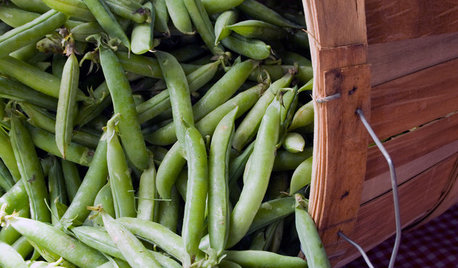
GARDENING GUIDES11 Favorite Edibles for Your Cool-Season Garden
Plant crunchy carrots, crisp radishes, tender peas and other vegetables for fall and spring harvests
Full Story
OUTDOOR PROJECTSBring In the Birds With a Homemade Bubble Rock
An avian expert from Southern Indiana shows how to make a burbling fountain that migrating birds will love
Full Story
HOUZZ TOURSMy Houzz: Bohemian Cottage and Vegetable Garden
Family heirlooms, original art and a verdant edible garden are at the heart of this eclectic cottage in southern Utah
Full Story
COOL-SEASON CROPSCool-Season Vegetables: How to Grow Collards
Look out, spinach. For fall and spring gardens with a little heat, collard greens may be the better choice
Full Story0
GARDENING AND LANDSCAPINGVertical Gardens Raise the Limits for Landscapes
Turn a small garden space into a towering success with an upward-bound collection of edible delights
Full Story
GROUND COVERSGround Force: 10 Top Ground Covers for Your Garden
Protect your soil from weeds and drought this summer with a living mulch of ground covers
Full Story
GARDENING FOR BUTTERFLIESGreat Design Plant: Senna Hebecarpa Puts on a Magical Show
Furry white tongues that develop into seeds? That's just one of this bee-bringing summer perennial's many talents
Full Story
GARDENING GUIDESGreat Design Plant: Wild Lupine Dresses Up Rocky Gardens
Spiky blue flowers and a high tolerance for poor soil make this plant ideal for tough sites
Full Story

arley_gw