

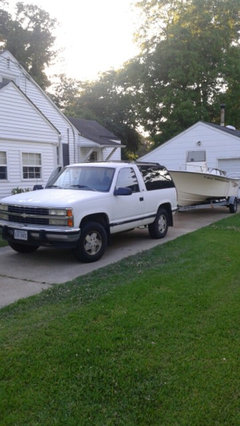
1992 Chevy Truck 1500 running BAD!
19 years ago
Featured Answer
Sort by:Oldest
Comments (75)
 11 years ago
- 11 years ago
Related Discussions
dodge or chevy 2500 ?
Comments (10)"The 5.7 L in the 1500 should be perfectly adequate and get better mileage.." That is a inaccurate guess many consumers make. Just because it is a smaller engine they think that it gets better milage. Truth is, in the real world they dont. The smaller engine has to work twice as hard to get the same job done as a 2500 with a 6 litre engine. I am talking if you take a 1500 and a 2500 hook up a trailor to each of them that weights the same. With the same amount of fuel in the tanks. I will bet anything that the 1500 will have to stop for fuel way before the 2500 with the 6 litre engine will. "The 2500 rides like a dump truck.." If you are talking about a Chevorlet, You could not proove that by me. The Dodge 2500 and Ford F250 and F350's I have had did not give a comfortable ride at all. They were rough riders. DuraMax, Cummins, Power Stroke diesel's? Sure they are strong powerful engines. Cant afford to use them. 8 to 10 miles per gallon. Maybe 12 if you drive down hill a lot. Insurance nearly twice the cost of a gasoline in the same class. Parts..lol.. Take one $850 dollar fuel pump for a Power Stroke diesel, add a $250.00 cam sensor (wont run without one). I will stick with my Chevy 2500HD's....See MoreChevy Pickup Rod Knock
Comments (22)Hey, you can't have all of this fun without me!! VBG Seriously some of what is being said about piston slap is true. Piston slap alone is NOT a reason to tear an engine down and do a repair. Piston slap is in fact normal on a cold engine because aluminum expands faster than the cast iron engine block. if the piston is tight enough cold, it will be too tight when warmed up. Piston slap should a repair actually be indicated actually does not even mean that a piston needs to be replaced! If the problem is a collapsed skirt, it can in many cases be "knurled" and reshaped to take up the slightly excessive clearance. A knurled piston is one that has many tiny marks made into it's surface, that cause the outer edges of the mark to rise up. Sort of like the way a center punch makes a "crater" in a piece of metal. These two links give both a description of knurling, and an actual application. http://en.wikipedia.org/wiki/Knurling http://www.hastingsmfg.com/ServiceTips/international_v8_engines.htm Now the one big problem I have with this thread is the idea that $100 in parts, a saturday, and a twelve pack of beer is all that is required to make the noise go away. I do understand the perception that to the right person pulling and reinstalling a piston isn't difficult to do but the reality is to do it right is in fact much different. This is a job where a very simple mistake can cause a major engine failure after the attempt. Plus if it's 4WD just getting the oil pan off and back on will take up most of your staurday, and that's if you have a hoist. People have been successful simply replacing a piston(s) in chassis but not always successful at eliminating piston noise or slap. That's because the piston is only half of the equation, cylinder wear or taper could easily be coming into play, and I would leave those checks/measurements up to a qualified machinist. Plus we still have the little issue of pressing the piston pin through the rod. Very few shops have the equipment to do that, let alone DIY's. There are many traps lurking in this repair that can make the whole attempt go south in a hurry. One common trap is as simple as not torquing the intake manifold in the correct order! An incorrect torque sequence distorts the engine block, and that changes the line bore of the engine resulting in main bearing/camshaft bearing wear. The $64,000 question from there is, does the resulting wear end up causing the engine to actually fail? Sometimes it does, and sometimes it does not. Lastly, stroke length plays a role in piston slap issues. The longer the stroke, the more often a piston skirt has to be shortened for clearance issues. Cylinder block deck height and other design issues can also impact piston design. The longer that the skirts can be, the less likely it is that piston slap is likely to occur. Although think about it, the longer the skirts, the greater the piston mass and you start impacting engine efficiency due to inertial, and frictional losses. Plus you can impact RPM and horsepower. It's all an intricate dance that even the manufactures are not going to be perfect at every time. That's why we have tolerances, and some things (noises) are allowable even if they are not completely desireable....See More99 Chevy Blazer hard starting when cold
Comments (11)Isn't this kind of work fun? The only time you can measure and test for the problem is while it's happening. Any other time that the car actually starts, everything you test will be "spot on" as you put it. Which is a reference to the most likely suspect for your mothers car's symptom. Low fuel pressure I.E. a bad pump. These things will not start with 54PSI of fuel pressure, they must achieve 56PSI! Your gage has to be accurate within 1PSI in that range to actually see this occuring. The thing is, hitting this with a little ether (I prefer propane) will give it some fuel to burn and increase manifold vacuum, and often times allows the car to start, because the vacuum actually helps open the poppet injectors. The poppet injectors are why this thing needs a minimum of 56PSI to start. Other things to consider. "Spark volume" I know you replaced secondary ignition, did you clean the breathers in the base of the distributor? They tend to clog, and then crankcase gasses will collect in the distributor causing corrosion, and then the spark will short to ground inside the distributor. Fuel: It takes more than just fuel pressure to ensure the engine is getting fuel. The injector must be triggered on by the PCM. I have had the two wire connector between the engine harness and the injector corrode and cause a loss of injector command. Plus you need to have a good crank signal trigger to not only tell the computer to drive the injector, but to command the module to trigger the coil. Tell me, when the car acts up. Key on, you hear the pump run for two seconds. Start cranking the engine, do you hear the pump turn back on? This would tell me if the PCM sees the signal from the crank sensor....See More1992 Chevy 1500 no injector pulse
Comments (3)When a shop posts a help request similar to what is above, the normal reply is to tell them to substitute a known good technician. VBG... Test this and change that is not how to diagnose and repair a problem like this, well, by now you probably realize that because it simply doesn't work. Now sure there are times that this method does work, and occasionally you don't even spend a fortune doing it. But as a pro, you'd fail so often you would not last as a technician. A "noid" light is not an accurate test of the systems ability to turn the injectors on. The injectors initially start to draw current at such a level that if they were allowed to stay turned on long enough they would each draw twenty amps+ of current. To prevent overheating the injectors the computer uses what is called a peak and hold system. How it works is one transistor (also referred to as a "driver") turns on and starts to open the injector. Once a sufficient current flow is reached, a second transistor turns on that has a resistor in series with it, the first transistor turns off and that limits the current flow to around 1.8 amps. The "peak" part of the voltage waveform causes the injector to open, and the hold portion allows the injector to remain open long enough to dispense the right amount of fuel. A noid light will flash with as little as 1ma, or .001 amps. This type of testing has tricked just about everyone who relies on it at least once. The right way is to measure the current flow with a low amps probe an an oscilloscope. You can also use the scope to monitor the ground side of the injector to watch for both drivers signatures, and their inductive kick on turn off which is an indicator of the strength of the magnetic field that was created when the computer turned the injector on. Now just because current is flowing that does not mean that the injectors physically opened, nor does having fuel pressure guarantee there is fuel at the injectors under sufficient pressure to be injected into the engine. There are screens on the injectors themselves that serve as a last defense filters, as well as there is usually an inlet screen to the throttle body just inside of the fuel inlet nut. Once you prove that electrically the injectors should be opening, by measuring the current flow with them connected, and/or measuring their inductive kick. Plus you re-confirm that there is fuel pressure, AND volume. Then you have proven that problem is inside the throttle body, and you will need to take it apart to find out what is going on....See More 11 years ago
- 11 years ago
- 11 years ago
- 11 years ago
- 11 years ago
- 11 years ago
- 11 years ago
- 11 years ago
 10 years ago
- 10 years ago
- 10 years ago
 10 years ago
- 10 years ago
- 10 years ago
- 10 years ago
- 10 years agolast modified: 10 years ago
- 10 years ago
- 10 years ago
- 10 years ago
- 10 years ago
- 10 years ago
- 10 years ago
- 10 years ago
- 10 years ago
- 10 years ago
- 10 years ago
- 10 years ago
- 10 years ago
- 10 years ago
- 10 years ago
- 10 years ago
- 10 years agolast modified: 10 years ago
- 10 years ago
- 10 years ago
- 10 years ago
- 10 years agolast modified: 10 years ago
- 10 years agolast modified: 10 years ago
- 10 years ago
- 10 years ago
- 10 years ago
- 10 years ago
- 10 years agolast modified: 10 years ago
- 10 years ago
- 10 years ago
- 10 years ago
- 10 years ago
- 10 years ago
- 8 years ago

Related Stories
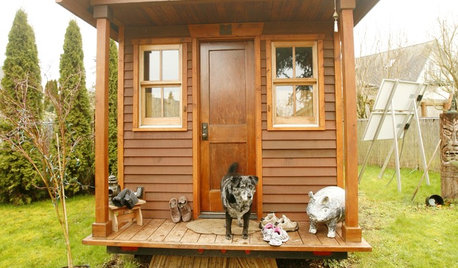
SMALL SPACESLife Lessons From 10 Years of Living in 84 Square Feet
Dee Williams was looking for a richer life. She found it by moving into a very tiny house
Full Story
GREEN BUILDINGHouzz Tour: Going Completely Off the Grid in Nova Scotia
Powered by sunshine and built with salvaged materials, this Canadian home is an experiment for green building practices
Full Story
LIFEHow to Prepare for and Live With a Power Outage
When electricity loss puts food, water and heat in jeopardy, don't be in the dark about how to stay as safe and comfortable as possible
Full Story
MOST POPULAR15 Remodeling ‘Uh-Oh’ Moments to Learn From
The road to successful design is paved with disaster stories. What’s yours?
Full Story
DECORATING STYLESIs Your Home Ready for a 1970s Revival?
Seventies chic is a trend that’s been brewing for some time, but this year it could hit big — with a few modern tweaks
Full Story
MOST POPULARHouzz Tour: Going Off the Grid in 140 Square Feet
WIth $40,000 and a vision of living more simply, a California designer builds her ‘forever’ home — a tiny house on wheels
Full Story
GARAGESKey Measurements for the Perfect Garage
Get the dimensions that will let you fit one or more cars in your garage, plus storage and other needs
Full Story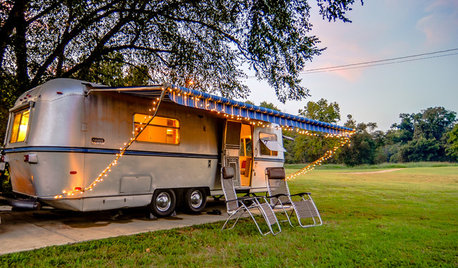
VINTAGE STYLEGet Away From It All in a Glamper
A glammed-up camper can transport you to a happy place, whether in your yard or on the highway
Full Story
KITCHEN CABINETS9 Ways to Save Money on Kitchen Cabinets
Hold on to more dough without sacrificing style with these cost-saving tips
Full Story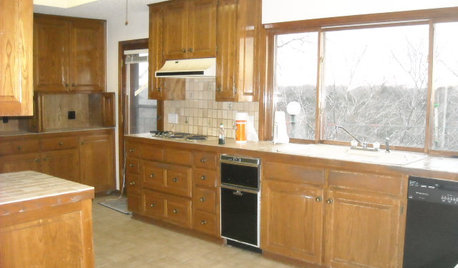
GREEN BUILDINGHow to Recycle Your Kitchen
Instead of adding to the junk pile — and paying landfill fees — get rid of old appliances, cabinets and countertops the ecofriendly way
Full Story
arkansas girlOriginal Author