

solar power while camping?
20 years ago
Featured Answer
Sort by:Oldest
Comments (22)
 20 years ago
Related Discussions
Solar-powered landscape lights: Suggestions?
Comments (3)My son got me some for a gift that are on the shepard's hook (which are metal, not plastic). I have had them in the ground for about 7 years. Where we use to live, we had very cold freezing winters and I never brought them in. Now we live in very rainy weather in the spring and warm in the summer, still leave them out year round. Have not changed the batteries yet either. They look old fashion, too. The newer ones he has bought me, with just the stakes with lantern on top (plastic), two have broken already. Hope this helps....See MoreThin Film Based Solar PV Power Plant � Pros and Cons
Comments (0)With the recent crashes in the prices of polysilicon ( from $450 per Kg to $50 per Kg!), there were a number of questions whether the cost advantage that thin film solar panels had over crystalline solar panels would erode. Possibly not. Well, lesser material requirement is certainly one of the key advantages that thin film cells have. As this post on thin film solar from the EAI Blog says, "All of the thin-film technologies have the advantage of requiring much less semiconductor material. It can be less than 1 percent of silicone used in crystalline cells. And they can be manufactured using high-speed techniques such as roll-to-roll printing. Their disadvantage is their lower efficiency. Even so, many new manufacturers in each three types are coming online every month." However, lesser cost of silicon is not the only thing that makes thin film less costly. In fact, many thin film technologies do not even use Si and instead use CIGS or CdTe etc. It is the entire process by which the thin films are made that result in the significant cost differences. However, it should be admitted that crystalline solar has advantages over thin films when it comes to utility scale power plants. For one, the cost of power production is almost the same for both. Two, crystalline solar is a tried and tested technology, while thin film is not. On the other hand, thin films have significant advantages when it comes to non-utility power plants - especially in flexible applications such as BIPV. So, this is what I expect for the next ten years: Thin film adoption will grow dramatically, but its adoption for grid connected power plants will remain a small percentage of the total. For other flexible and emerging applications of solar PV however, thin film will have a significant dominance over crystalline solar. What are your thoughts on this? Here is a link that might be useful: Thin film...See MoreMonitoring Systems for Solar PV Power Plants
Comments (0)It costs a heck of a lot to put up a 1 MW of solar PV power plant - a minimum of $3 million per MW. A solar PV power plant produces an output of about 1.5 million kWh per year. But all these units might not be realized if you do not have proper monitoring systems in place. As this Blog says, "The simplest monitoring involves simply checking the inverter, and this is done by reading values on the display, which is typically the LCD part of almost each grid-connected inverter. The variables which can be monitored include PV array power, AC (grid) power, PV array current etc. For sophisticated monitoring and control purposes, environmental data, such as module temperature, ambient temperature, solar radiation, wind speed etc., can also be logged in data loggers, stored, and later analyzed. Remote control and monitoring can be performed by various remote connections, such as ISDN, GSM, analog modem etc. More important inverter or grid related parameters can hence be made available on-line" Cutting a long story short, monitoring systems can ensure that a solar PV power plant is able to have minimal breakdowns, thus resulting in the production of the expected output. While a monitoring system is unlikely to increase the output of a solar farm, the absence of such a system is likely to significantly decrease the output from the stated output of the farm. Here is a link that might be useful: Monitoring Systems for Solar PV...See MoreUse of "Power Walls" and solar panels
Comments (14)Sorry this post is long. If you get too bored, just skip to the next-to-last paragraph. So far nobody has yet found the perfect battery. All of them are balances of cycle life, cost, safety, temperature range tolerance, specific energy (Wh/kg), energy density (Wh/l), specific power (W/kg), charge efficiency, and probably some factors I've forgotten about.. No one battery type has them all nailed down, and probably none ever will. The battery that might make its way into a home power system today would most likely be lead or lithium ion. A few others have been used but are now mostly on the sidelines. These include nickel cadmium, nickel iron, and nickel metal hydride (which is really just improved nickel iron). Lead is the traditional battery for home power systems, but it has significant downsides. Specific energy and energy density are low. Flooded types need watering and periodic testing. Cycle life is good for heavy, expensive tubular plate types, not so great for conventional flat plate batteries. Lead used to be the uncontested leader in cost per watt-hour delivered, but in recent years lead metal prices have increased and it's no longer as competitive as it once was. Nickel iron is legendary for extremely long cycle life. I've read that some of the original NiFe cells built by Thomas Edison are still in service! Their specific energy and energy density are better than lead, but not dramatically so. Efficiency is a weak point because they gas too freely (too much energy going into electrolysis), and this also requires careful ventilation. The few NiFe manufacturers charge nosebleed prices, which limits their use. Nickel cadmium has long cycle life and decent specific energy and energy density. Their big problem is that cadmium is nasty, toxic stuff. Because of this they face severe restrictions in the EU. Nickel metal hydride batteries have sort of been lost in the lithium shuffle in recent years. They have long cycle life and quite good specific energy and energy density. The problem has been that they're encumbered by restrictive terms issued by the patent holder, but I think the relevant patents may expire later this year. The other big negative with NiMH, as with other nickel chemistries, is that nickel is expensive. If given a chance, I think NiMH could still become competitive, but don't hold your breath. Recently lithium ion batteries have grabbed the spotlight almost to the exclusion of any other type. Note though that they aren't all alike. There are several different chemistries with different balances of those concerns I mentioned above. Beyond that, each chemistry is optimized differently by different manufacturers with different design goals. In general I'll agree that lithium ion can be a bit touchy about temperature, certainly more so than lead. Some lithium ion cells shouldn't be charged below freezing (0C / 32F). Others can accept a charge down to -10C, and a few are OK as low as -30C. Again, it depends on what the battery manufacturer is optimizing for. In most home power systems this isn't a problem, especially if the battery is located in conditioned space. The battery's own internal resistance will keep it warm with any normal current use. Insulation and controlled ventilation will keep the temperature in the acceptable range. OTOH very warm temperatures can reduce lithium batteries' cycle life. The more fully charged they are, the more they suffer. So you limit the charging rate at low temperatures, charging slower and slower as the temperature falls, and eventually not at all. On the upper temperature end, you don't charge the battery completely if you expect, or already have, very hot temperatures. Because lithium batteries are fussier than other types about over-charging and over-discharging, they almost always are sold with battery management systems (BMSes). Good lithium ion BMSes know what their batteries are capable of. They monitor the cells' state of charge (or at least their voltages, which is not quite the same thing) and usually also temperature. They control the charging and discharging functions to suit, for a compromise between capacity and cycle life. To cut to the chase, based on Tesla's track record (no pun intended) with their cars, I expect that they'll be more than competent when it comes to their Powerwalls' battery management. As for whether a Powerwall or two can store enough energy for your household needs, that depends on many factors, including how you heat and your overall energy efficiency. Most off-grid folks have to make some lifestyle adjustments when they're no longer drawing their energy from an apparently bottomless source (the grid). If they don't, it probably means their pockets are pretty much bottomless. :-\...See More- 20 years ago
- 20 years ago
- 20 years ago
- 20 years ago
- 20 years ago
- 20 years ago
- 20 years ago
- 20 years ago
- 20 years ago
- 20 years ago
- 18 years ago
- 18 years ago
- 17 years ago
- 17 years ago
- 17 years ago
- 16 years ago
- 10 years ago
- PRO10 years ago
 10 years ago
 10 years ago
Related Stories

GREEN BUILDINGSunlight Used Right: Modern Home Designs That Harness Solar Power
Embracing passive heating principles through their architecture, siting and more, these homes save energy without skimping on warmth
Full Story
ARCHITECTUREArchitect's Toolbox: Solar-Powered Design
See how your home's design can take advantage of the sun's natural energy all year
Full Story
MODERN HOMESHouzz Tour: Updating an Eichler While Preserving Its Spirit
Architects and builders keep this home’s integrity intact while remodeling the kitchen, creating a master suite and adding energy efficiency
Full Story
LIFE10 Ways to Keep Your Home Safe While You're Traveling
Set off on your trip with peace of mind, knowing you've taken the right steps toward keeping your home secure
Full Story
REMODELING GUIDESHow to Remodel Your Relationship While Remodeling Your Home
A new Houzz survey shows how couples cope with stress and make tough choices during building and decorating projects
Full Story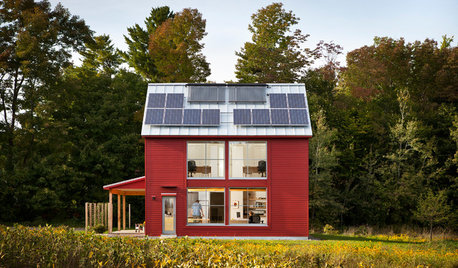
GREEN BUILDINGGoing Solar at Home: Solar Panel Basics
Save money on electricity and reduce your carbon footprint by installing photovoltaic panels. This guide will help you get started
Full Story
LIGHTINGHow to Choose the Right Solar Lights
Learn about different types of outdoor solar lights, where to use them and why you might want to avoid the bargain bin
Full Story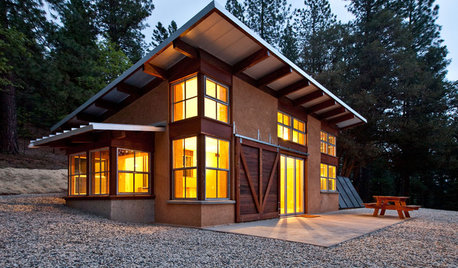
HOUZZ TOURSHouzz Tour: California Cabin Ditches the Power Grid
Solar energy powers a modern, expandable vacation house among the trees for a family with two children
Full Story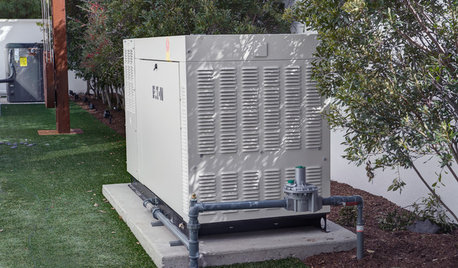
DISASTER PREP & RECOVERYMore Power to You: How to Pick the Right Generator
If your home's electricity goes, don't let it take your necessities with it — keep systems running with this guide to backup power
Full Story
LIFEHow to Prepare for and Live With a Power Outage
When electricity loss puts food, water and heat in jeopardy, don't be in the dark about how to stay as safe and comfortable as possible
Full StorySponsored
hippy