Houzz Logo Print
hobbitmom

Hit Me With Your Low Salt

5 months ago

Due to an unfortunate medical incident, DH must begin a low sodium diet. This and fluid restriction and weights every am, documenting all fluid intake and urine output to establish the best dose of water pill going forward. Im learning a lot these days. Eating, cooking, and shopping have suddenly become very ...different. We have learned that we prefer just the lite salt, 50% less (just the lightest of sprinkles) vs. all the many no salt flavors of this and that. They just taste weird.

Also in shopping (scrutinizing every little bitty label) I have been advised to, after noting serving size, look just at the % of DV (daily value) and keep that as low as possible, vs getting hung up in adding up total mgs of sodium, which would drive anybody nuts, and lead to getting lax, then giving up. Dang. I understand that this life style change will take some getting use to, and it will get easier over time. (I see he's already cheating a bit behind my back).

Anybody else in this boat?

Comments (55)

  • 5 months ago
    last modified: 5 months ago

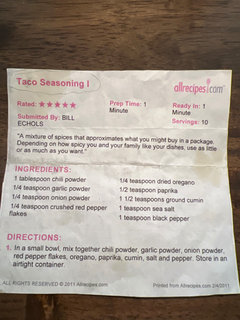
    This is the taco seasoning mix I make, I cut the salt in 1/2, but you could do 1/4 or eliminate it altogether.


    I store in empty spice jars.

    hobbitmom thanked Sherry8aNorthAL
  • 5 months ago

    Stay away from prepared foods as they tend to use a lot of salt. The day comes when they taste so salty you wont want to eat them any way. It does limit easy food choices. Use your daily salt limit in places where it really counts. A little salt in the eggs for instance. You get used to this and will not miss the salt. I watch those test kitchen food shows and they load everything with a ton of salt because their taste buds are zapped. I always want to tell them to go on a salt diet. Food will taste fresher and better sooner than you think. It really works. Just stick with bland food until it wont taste bland anymore.

    hobbitmom thanked Patriciae
  • Related Discussions

    Two canning questions: low salt? and measurements?

    Q

    Comments (17)
    Only when you ferment pickles do you have to use salt. Otherwise it can be left out. You can download a nice drying publication from Univ. of Idaho. I cannot send the link as it is a PDF file and it won't let me ! If you search online for the Univ. Of Idaho drying fruits and vegetables you should easily find it. Same publication we sell and also use in our training classes here. Very nice publication. If you want to dry meat, the only safe way is to use a current recipe and method. No eggs, seafood, hamburger, etc. are safe to dry. I know a few people who do dry hamburger and a few that do shrimp, but it is dangerous. Why would someone take risks like that ? I have never figured out why people try canning and drying things that are deemed unsafe. You should hear some of the stories I have heard over the years ! Someone tried canning mayonnaise, even ! They showed me a picture of the results. A terrible oily, seperated mess ! I tried to tell them..
    ...See More

    Low salt diet

    Q

    Comments (10)
    -If you are under a doctor's care, I would check with them and possibly get with a nutritionists for some guidelines as well as all the great information shared here. -Do you have a sodium limit or is this a do-it-yourself project? The average American Diet often as much as 3,500 mg of sodium in it. There's a big difference in a low-sodium diet of 1,000 mg sodium per day and a restricted diet of 500 mg sodium, so you may want to understand the numbers to begin with. Our bodies need between 180 and 500 mg per day. It is an essential mineral and easy to get from whole fresh foods. Your drinking water may have as much as 30 mg of sodium per quart in it, as just one of those unexpected sources. -Make a trip to your local public library and check for low-sodium / low-salt cookbooks. -Choose recipes that have the nutritional information so you know how much sodium is in them, especially if you have to restrict your sodium to a specific amount. -Choose fresh and frozen whole foods over highly-processed prepared foods. -Put the salt shaker away. -If you normally use canned foods, like green beans, rather than buying the low-salt version (which I think you will find unpalatable in comparison), use something entirely different like frozen or fresh green beans instead. There are all kinds of tips and options that will make the switch to a low-sodium diet more pleasant. Good luck on your new diet challenge. -Grainlady
    ...See More

    low cya level in salt pool

    Q

    Comments (2)
    The only downside is that the cell may not last as long. Typicall cell life is 15,000 hours. The more it runs the faster it is depleted. Personally I like to keep the CYA ~50ppm the chlorine tends to be far more effective (measured in orp) at this level. "I've seen plenty of pools with your level which were crystal clear and had no free chlorine reading. The chlorine introduced into the pool was gone just as quick as it hit the water. It was doing it's job as sanitizer but left no residual reading." Similar to how ozone functions. It will detroy the bacteria that it comes in contact with, but leaves you no buffer for when more bacteria is introduced.
    ...See More

    Hit Me With Your Best........

    Q

    Comments (4)
    This is a tried and true recipe. It's DH's favorite meal in all the world! Deep Fried Chicken Wings 1 large pkg chicken wings 1 C buttermilk 1 C Louisiana Hot Sauce (this does NOT make it spicy, only flavoured) Flour for dredging Whatever combination of seasonings you like (I use S & P, a bit of Old Bay, and a few scrapes of a nutmeg) Oil for deep frying Combine buttermilk and the hot sauce in a large bowl and dip wings in sauce. Combine flour and seasonings and dredge dipped wings till well coated. Carefully place in hot deep fryer and cook until they are a deep golden brown, turning occasionally, for approx. 10 minutes. Drain on paper towel and thoroughly enjoy! Note: Honestly, these wings are not spicy hot at all. I was very surprised but delighted. They are absolutely the best wings IÂve ever made. The recipe originated from Paula Deen, except hers uses eggs instead of buttermilk. It is also delicious, but if you have leftovers, the egg-coating doesnÂt translate well the next day. The buttermilk idea came from Tyler Florence.
    ...See More
  • 5 months ago

    Restaurants are also high salt. There are seversl that are my favorites in town, but I gulp water all night and the next day.

    hobbitmom thanked Sherry8aNorthAL
  • 5 months ago

    DH is low salt due to his health issues. Home made is far lower in sodium. I use other herbs and spices. He never adds salt to his food, but if you do want to add a little, use something like kosher salt with larger crystals at the very end so the salt grains directly hit the tongue. You can get more salt taste with very little salt added.

    hobbitmom thanked Annie Deighnaugh
  • 5 months ago

    Thanks for the very good suggestions.

  • 5 months ago
    last modified: 5 months ago

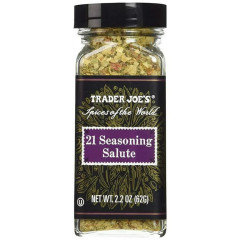
    The most important thing is to up the other seasoning. Sounds obvious, but when the goverment mandate about allowable salt levels went out recently, the restaurants cut the salt but didn't sub in any flavor. I use very little salt, and get enough from eating some salty things (my number is below the scale, though). You both may find everything a bit drab for awhile, but stick to it and your senses should readjust and brighten up. That's where spice blends can help you a lot. If you have the energy for it, you can get the most flavor when you start from whole spices, toast and grind them as appropriate, and make your own blends. Sleevendog does this and has posted often about it. If you're not up for that, Penzey's spices are less dry than others and can be tastier, but don't keep as long. Or just get TJ's 21 Salute, or Mrs. Dash, or something, but do check the sodium content, Fling away! Have some green blends, pepoer blends, alium blends, etc., to have different flavor profiles and don't get tired of just one.


    Experiment with the spices and herbs you have now. Don't be afraid of using a heavy hand. The right amount of salt makes food very appealing. Lack of salt often makes food appalling. Beware of tasty vegetables like celery and onions which are naturally salty, in a wild and unmeasured way, if they're going to affect the zero salt rule. Y'all need some salt to be healthy, but it's easier to count if you can see it.


    Re recipes, it's best to avoid old favorites. They're going to taste all wrong. If you adapt something, give it a whole new name first, and change some other flavors. Use lime or orange instead of lemon. Use cardamom instead of cinnamon. Use fennel instead of onion, or ginger instead of garlic. Make it new, so you're not dissapointed, whike feeling comfortable making "the same old chicken" or whatever,


    Good luck to you both!


    (Are you allowed diuretic foods in the meantime? Like hibiscus (jamaica), hops or coffee? Or will that screw up the program?)

    hobbitmom thanked plllog
  • 5 months ago

    FWIW, I never add salt to pasta water.

    hobbitmom thanked carolb_w_fl_coastal_9/10
  • 5 months ago

    Thanks. No more salting the pasta water for sure. He needs to move too. No more”honey can you get me a pudding?”

  • 5 months ago
    last modified: 5 months ago

    Salt has a bit of a "wake up" effect on taste buds. Adding salt to an item of food doesn't just make it "salty" - because of this stimulation effect, even a small amount can serve to enhance the perceived flavor of the food item. I think in a similar way but with a different mechanism that adding umami rich ingredients (that are otherwise tasteless) can do.

    Acids (lemon juice, vinegar, etc) can have the same effect. Some herbs and spices do, some don't (and just add their flavor to the dish)

    I'm not a physician, a nutritionist, nor a food expert. If I were told by my medical doctor to completely cut out salt from my diet, that's what I would do. I don't use much, I eat few salty foods, and I never put it on food without tasting it first (other than a light grind of sea salt on meat before cooking it). But I would miss the flavor highlights that even a slight amount of salt can contribute.

    hobbitmom thanked Elmer J Fudd
  • 5 months ago

    @Elmer J Fudd.... Fortunately, it needs to be a low salt diet, not no salt. Probably because a no salt diet would be difficult to maintain and enjoy life.

  • 5 months ago

    This would be an awful problem for me. I salt everything and enjoy salty snacks way more than sweet ones. I salt corn on the cob, my panini sandwich, baked potatoes, and just about everything. I use pink Himalayan sea salt, and I grind away. Probably not a good thing.

    hobbitmom thanked lily316
  • 5 months ago
    last modified: 5 months ago

    I love a salty snack sometimes, but am otherwise pretty careful about sodium in my diet. I buy no salt added foods when available, tuna, peanut butter, canned broths, butter, vegetable juice, canned black beans or garbanzos, etc. It took a little getting used to and sometimes I would combine one regular sodium food with one low sodium version of the same food to reduce the sodium of the finished product.

    I eat a few prepared foods from Trader Joe’s that are always loaded with sodium, but try to skip the worst ones . If I eat something fairly high in sodium, I make sure that’s the only significant sodium I get for the day, which still keeps my daily total very low.

    Some of the worst offenders that always surprise me are cottage cheese and cheese sticks, which I like to snack on. I also love Lawry’s seasoning salt on a few things (like hard boiled eggs) and it works well for me because it’s easy to see how much you are using. I sprinkle the tiniest amount in my palm and then just pinch a few grains to sprinkle over my food. Maybe more psychological than sodium!

    hobbitmom thanked olychick
  • 5 months ago
    last modified: 5 months ago

    Im with you, lily. Salt in and on everything. The pink is divine. Actually, I don’t really need to limit mine. But since Im the one planning and preparing our meals, I need to learn this new way of approaching food. And I have absolutely no doubt that my body will benefit by cutting back as well.

  • 5 months ago

    As a newly diagnosed cardiac patient with a stent installed last fall, I'm learning to keep salt to a minimum. As Still Trailing mentioned, one of the first things I was told was that I couldn't have salt substitute either, one of the "platelet" drugs they give me causes the body to retain potassium and the half salt and such are mostly potassium. Fortunately, I may be able to give up the offending drug next fall, after a year, so I'm crossing my fingers for that.


    I have absolutely no good advice, other than put away the salt shaker, don't eat out and do most of your cooking from scratch, where you can control the sodium in it. I heard all the "reset your taste buds" and "after a few months you won't miss salt" and "everything will taste too salty after a while". I have not found any of those things to be true, unfortunately and it's been 6 months. I stopped eating many foods altogether because they just don't taste good without salt. I've tried the herb blends, the Mrs. Dash stuff, lots of black pepper. It's easier to just give up some foods altogether for me. Other things already have sodium in them, like the aforementioned cottage cheese, and it's very difficult to find low sodium alternatives for that. It kind of makes me glad that I never liked it very much anyway!


    Good luck to your husband, it's definitely a learning experience and you kind of learn as you go.


    Annie


    hobbitmom thanked annie1992
  • 5 months ago
    last modified: 5 months ago

    Annie, I hope the salt thing changes for you. It takes a lot longer than six months for people used to a lot of salt to reset, and there still needs to be a little salt in the food, once you do. Good luck to you as well!


    ETA: I was curious and procrastinating, so I looked up how long it's supposed to take to adjust to way lower salt. The official versions say 4-8 weeks. The anecdotal versions and individual testimonies say anything from 4 months to 1-2 years, with some never adjusting. I'm more used to talking to people about this from a culinary point of view, rather than a serious health mandate, which puts it more in the 12-14 months but they get to eat more salt while they're reducing the quantity overall. I have to eat salty things just so the world outside my kitchen doesn't turn into a salt-lick.

    hobbitmom thanked plllog
  • 5 months ago

    Many years ago, while on a cruise, I got a really bad sore throat! Went to the Doc, wasn't strep, but when I got better, everything tasted salty! My FIL, a neurosurgeon, told me yes, tastebuds can be fried! I couldn't use salt for more than a year! Haven't used salt for 25+ years! We use Mrs. Dash, or have been going with COSTCO brand. Also ask eating places to NOT use finishing salt!

    hobbitmom thanked Nancy Todd
  • 5 months ago

    Using salt lightly, just on the surface, instead of while cooking, gets to your taste buds quickly, and may be somewhat satisfying.


    Acids, lemon, vinegars can help

    hobbitmom thanked denise8101214
  • 5 months ago

    @denise8101214 That's so true. I haven't salted while cooking for years; I never salt water when cooking pasta, or veggies (while cooking or eating). Switched to unsalted butter long ago, never salt meat when cooking and often don't even sprinkle any on while eating (tho I do like a little on steak).

    hobbitmom thanked Olychick
  • 5 months ago

    Funny as I found cutting back on salt, my taste buds changed in a matter of a few weeks and things can be too salty for me now.


    If you do eat out, especially avoid soups! I was in one restaurant where I had to send the soup back...it was like eating a tablespoon of salt instead of a spoonful of soup! Pizza too is very salty. That's one reason why we eat it only about 3x a year.


    Beware of sandwich meats too. It's why we essentially eat only turkey. The sodium levels in processed lunch meats is so high as they use it as a preservative.


    Love Penzey's and they offer a lot of no-salt blends that you can play with: https://www.penzeys.com/shop/spices/?categoryId=115


    I love cumin too which adds a flavor punch without any spicy heat.

    hobbitmom thanked Annie Deighnaugh
  • 5 months ago

    I don't know if you buy prepared meals or frozen meals, at places like Costco or Trader Joe's, but if you do, stop buying them. Their sodium content is sky high and you get used to thinking that this is what food should taste like.

    hobbitmom thanked justmyopinion
  • 5 months ago

    For me, salty soup or salty anything in a restaurant, when the salt content is optional and not a function of ingredients used (like cheese), is a sign of a careless kitchen. If they have an "excess saltiness" problem, there are likely other problems too.

    A few of our favorite restaurants, not upscale but for sure the upper level of midrange, are known for using very little salt in the dishes they present. So little, that even for me (a very limited user of salt), I often need to reach for the salt shaker. Which reminds me of something:

    How or why in the world do people think they automatically need to add salt to their food without tasting it first? That's a mind blower when I see it. It's not rare.

    Similar but different - I think clam chowder screams for black pepper and sometimes a smidgeon of salt. Our favorite clam chowder place at the beach puts in very little of either. "Make it how you want it yourself". I think that's the best apprach but as just mentioned, there's no way to know if either or both are needed without first tasting it.


    hobbitmom thanked Elmer J Fudd
  • 5 months ago

    Another thing to consider that I forgot:

    Salt with larger-size and (some with even flaky) crystals is less dense and heavy than regular table salt. A given volume of it will contain less actual salt than an equal volume of table salt. Sprinkling a few pieces of large crystal (sometimes called Kosher) salt on or into something will provide less actual salt than a shake or two from a shaker of smaller, denser table salt. But tasting-wise, can provide an equal degree of "saltiness" using less salt.

    I personally use a salt mill (looks like a pepper mill) into which I put the largest crystal size sea salt I can find. A short twist or two provides a very, very light sprinkling of ground salt, still in much larger than table salt crystal size, that offers an adequate addition of saltiness using less salt.


  • 5 months ago

    Yeah. So often soup can wind up in the danger zone. Protein and veg cooked until mush, so the individual flavors were lost long ago. So salt comes to the rescue. Still bland? Add more! How about a truck load?

  • 5 months ago

    We really need better names for salt. All salt is sea salt since the underground salt domes from which most tablesalts are made are ancient dried up seas where water is pumped into the ground to melt the salt and the resulting salt water is evaporated off to produce salt that is ground to the fine sort we normally put in shakers. I suppose most people use the term to indicate salt made from living ocean water which is one of the other ways to make salt. Such salts are not always purified to pure salt. Whether or not you can taste the differences is a subject of debate. Kosher salt is pure salt with no iodine added and can be made from the same salt domes or brine wells but allowed to crystalize in different forms or rolled or pressed or even made from purified sea water. It was created for corning or koshering meat to preserve it. I dont know why it is the salt flavor of the day for TV cooks.

    hobbitmom thanked Patriciae
  • 5 months ago

    They use "kosher" salt because they can pinch it and feel how much they have, and because it is pure. The incidence of goiter is up some places because people are avoiding iodized salt because it's bitter or "impure". (Salt is kosher by definition. As Patriciae refered to, it's properly called "kashering" salt, with the large, firm grains for pounding into the meat to remove any lingering blood, and mostly washed out, though some remains--nowadays, most kosher butchered meat is pre-sakted for your convenience, but not a good choice for a salt restricted diet.)

    hobbitmom thanked plllog
  • 5 months ago
    last modified: 5 months ago

    patricia, I think for the purposes of non-geological conversations, the terms "sea salt" and "rock salt' suffice to distinguish where a particular container of salt comes from. These aren't necessarily rigid because I think large crystal salt that's been evaporated can also be called rock salt. While rock salt usually suggests it was mined.

    Any differences from one kind to another, as I understand it, can have to do with the type of crystal structure the salt has and what impurities/other minerals it does or doesn't have.

    I happened to use the term "sea salt" because that's what's on the label of the product I found (the coarse version, labeled in Italian as "sale marino grosso" - big sea salt but referring to crystal size) that has large pieces suitable for grinding.

    I think the labelling "Kosher" is really seen today as a product differentiator, not a reference to what some people may use it for in ritual practices. Large crystals, not small crystals typical of table salt.

    Why is it "salt flavor of the day". I'm not sure that's a fair description. Using larger sized crystals makes it easier to see how much is actually being added (compared to small grain, it's harder to see table salt). For chefs, easier to pinch between fingers and spread evenly.

    hobbitmom thanked Elmer J Fudd
  • 5 months ago

    I have heard people say that kosher salt tastes better or sea salt tastes better. I get that it is easier to measure and I use it myself but partly because for a while you couldnt get table salt here I dont go through a lot of salt.I use a sugar shaker to salt things including shaking it into my hand to rough measure.

    Iodine is low in the soils of some parts of the US particularly the south but todays food is from all over the place so I would expect that it is not as important today as it used to be to add iodine.

    hobbitmom thanked Patriciae
  • 5 months ago

    Most salt labeled as kosher salt or coarse salt that I tried with my salt mill was too fine and passed right through. Think of putting ground pepper in a pepper grinder, just like that. I'm indifferent about the flavor of the coarser grade brand I found that works with what I have- Borrometi Sea Salt from Sicily. It's fine. But I'm happy with the result and the handling, and that I can get the results I want using less salt.

    I do have a small salt shaker with iodized salt, that I use occasionally on my own food (not for others) as a backstop. We eat fish and other sources of iodine regularly (yogurt and cheese) and it may not be necessary.

    hobbitmom thanked Elmer J Fudd
  • 5 months ago
    last modified: 5 months ago

    It can be surprising. Goiter is endemic in New Zealand. There's low iodine content in the soil, and I guess they're not into nori. They do have iodized salt, which took care of the problem, post WWII, but there was a resurgence in the '90's, which was reported to be likely because of the the trendiness of culinary use of non-iodized salt. I remember, when I first read about it, thinking how sad it was in a bump in the ocean. It's still an issue there, and I read about something like a mandate that iodized salt had to be used in commercial bread. There's still a lot of goiter in mountainous and landlocked regions throughout the world, even in wealthy countries like Germany. We also had an uptick in goiter in the USA, but I don't remember the specifics.


    If iodine becomes an issue, there are suplements--and nori snacks, though they might have hidden salt. But that's for the doctors. I only brought up goiter in reference to why the chefs aren't using iodized ("it's bitter").

    hobbitmom thanked plllog
  • 5 months ago
    last modified: 5 months ago

    ^^Very interesting. ^^

    hobbitmom thanked Elmer J Fudd
  • 5 months ago
    last modified: 5 months ago

    My mother was born and raised in Seattle, her dad fished regularly, her uncle was a merchant seaman who regularly brought back cases of the most delicious Alaska canned salmon, the family dug and canned an abundance of razor clams every year, yet she had a goiter I remember her having removed when I was a child. She is no longer alive to ask, but I have always been curious as to how that could have been possible-I know she ate all kinds if seafood. There must be other causes, too.

    hobbitmom thanked olychick
  • 5 months ago

    Does the iodine content of seafood vary from one kind to another, from place to place?

    hobbitmom thanked Elmer J Fudd
  • 5 months ago

    Yes, all ocean fish and seafood have iodine, but levels vary by breed, location, and diet. Mich lower levels in freshwater. (This is not a comprehensive answer, but all I know for sure about it). You can also get goiter as a consequence of other kinds of thyroid disease (also not comprehensive), and I think I've heard that certain kinds of toxic exposure affect it too.

    hobbitmom thanked plllog
  • 5 months ago

    In the areas of the south where low iodine is an issue they had very limited access to seafood back in the day. It was usually an issue with the poor but not always Two of my Grannie's (step grannie) sisters had thyroid issues. I think because they grew up eating local. Thiamine defficiency is a related problem. Now that our food is global and such things recognized and accounted for by the government many despise as intrusive we dont normally experience this any more.

    hobbitmom thanked Patriciae
  • 5 months ago
    last modified: 5 months ago

    Trader Joe's has this salt free seasoning blend I like very much - I make 'salads' with canned chicken or salmon, a squirt of Dijon mustard, mayo and this:


    With chicken, I add finely chopped celery.

    hobbitmom thanked carolb_w_fl_coastal_9/10
  • 5 months ago

    I had an experience a few years ago, whereupon a very dear friend had us over for dinner. She had prepared a lovely osso buco. When she took her first bite of it, she exclaimed "whoa. has a bit of a kick to it, hope it's OK."

    Well, the veal was nice and tender, but try as I did, I really, truly, could not detect any flavor in the sauce what so ever. It certainly looked pretty, but was beyond bland to me. Of course, I would never-ever say anything off, and had nothing but praise for her efforts, but silently in my head, I thought "how very weird." I just thought of this while we have been discussing salt.

  • 5 months ago
    last modified: 5 months ago

    You remind me of when a cousin wandered in and helped himself to the single portion of guacamole I'd made for my lunch (I think I've told this before). It was like a cartoon. His face turned red abd you could just about see the steam coming out of his ears. This is a world traveller who ate in the streets in Asia and South America. It was just some medium heat jarred salsa picante. Serves him right!

    That's what I've been talking about, where people add up their experiences and that's what their perceptions get used to. You can reset them, but it's hard when you're reducing a flavor, especially one of the tastebud basics.

    For the salt reduction, I highly suggest adding lots of other strong flavors like ginger and garlic--and chilis if you like them. If that's too much, go deep with the onions, if they don't have too much natural salt in them: raw, caramelized, pickled, etc.

    hobbitmom thanked plllog
  • 5 months ago

    It’s my understanding that in the professional culinary world there is an emphasis on layering salt throughout the cooking process, and I suppose this can add up by the time a dish is served. It also would seem that restaurants cater to their clients’ tastes so they’ll be more interested in what appeals to most people, than appealing to someone like me who prefers less salt. Ever watch cooking competitions on Food Network, and notice how often dishes are criticized for being under-seasoned? I’d be willing to bet I’d disagree with the judges most every time. That doesn’t make me wrong or make them wrong, they’re probably just calibrated to appeal to a wider base. Unless it’s blatantly excessive such that most people would agree it’s bad cooking, I’d generally be hesitant to label it a ”problem” just because I don’t care for it; I can’t claim to be the objective standard. As far as taste goes that is.

    Out of curiosity, I just looked up per capita sodium/salt consumption by country, and for a change the US was not among outliers. Right about in the middle, per the World Population Review website. Many Asian and Eastern European countries higher, Latin American, African, Arab countries lower. These are generalities, to be clear.

    hobbitmom thanked foodonastump
  • 5 months ago

    That reminded me of one of those cooking competition shows where one of the judges stated that salt needed be 'cooked into' foods and I just saw an article in my feed stating that one must add plenty of salt to pasta water or your food won't taste good.🙄

    hobbitmom thanked carolb_w_fl_coastal_9/10
  • 5 months ago

    I NEVER add salt to pasta water and it tastes just fine. In fact I never add salt to anything while it is cooking. We salt if wanted at the table.

    I did try it, but had recook new pasta, the first went in the garbage.

    hobbitmom thanked Sherry8aNorthAL
  • 5 months ago
    last modified: 5 months ago

    We had a very nice restaurant open near us and dined there several times...Farm to table type food, $$$. Two different friends, at two different times requested salt for their dishes (there was none on the table) and received a dressing down by the chef, because he felt the food was perfectly seasoned - and refused to provide salt! Of course, both refused to return and bad mouthed the place...they couldn't be the only ones! The place didn't last, though the food was quite good.

    hobbitmom thanked Olychick
  • 5 months ago

    Olychick, that "chef" forgot the mantra for any type of retail, "The customer is always right!". If they wanted salt or a bottle of catsup, so be it.

    We have a very $$$$ restaurant here that the owner argues about deveining shrimp, they don't. Well, I grew up on the coast and my grandmother never deveined a shrimp in her life! I do not see the point for me. My husband who never ate shrimp until we married in 1970, but likes them now, wants them deveined, so I do.

    I do not expect this place to last.


    hobbitmom thanked Sherry8aNorthAL
  • 5 months ago
    last modified: 5 months ago

    I guess I’m opposite, Sherry. I salt when I cook, but don’t even own any salt shakers or mills for the table. I’d say my tolerance range for salt is pretty broad, so outside of reasonable limits I’d consider it a cooking flaw to under or over-season something. If I under-season something I have to bring my salt cellar or pinch bowls to the table as that’s all I’ve got! And they’re offered with apologies.

    Many years ago I had a Chinese girlfriend and she told me that sprinking soy sauce on a dish could be interpreted by the chef as a criticism, potentially insulting. I kind of feel that way about adding salt at the table. Sounds like Olychick’s chef felt that way, too, and got upset rather than give considerarion to the critique.

    I’d be curious to read reviews of restaurants “for sure the upper level of midrange, are known for using very little salt in the dishes they present.” If they’re known to go light on salt then I’d assume it’s with intent and they’d not mind being named publicly. Since my own requirements to be happy salt-wise are low, I’d probably avoid a restaurant where I repeatedly had to add my own.

    hobbitmom thanked foodonastump
  • 5 months ago
    last modified: 5 months ago

    I like one level of salt, my hubby likes another. There is NO way one dish could taste good to us both!

    ETA; I like very spicy, he does not. I like Chinese, he does not. One dish does not suit us both!

    ETA2: You are lucky that the ones you cook for like food the same way as you.

    hobbitmom thanked Sherry8aNorthAL
  • 5 months ago
    last modified: 5 months ago

    Hey, whatever works! I’m assuming you’re the high salt one? If that’s the case I’m very surprised you found salted pasta water to be so unpalatable. Unless you added a ton. Salted water is pretty much the norm I think.

    hobbitmom thanked foodonastump
  • 5 months ago
    last modified: 5 months ago

    It is not just salt. If I cook with any hot peppers or garlic or celery or onions, I have to use very little and add to mine. Actually, any spice at all, ????

    hobbitmom thanked Sherry8aNorthAL
  • 5 months ago

    No, I am the low salt.

    hobbitmom thanked Sherry8aNorthAL
  • 5 months ago

    “ETA2: You are lucky that the ones you cook for like food the same way as you.”


    Ha, hardly! My daughter is extremely picky and is also one who salts before tasting. Unfortunately. My wife enjoys food that’s fairly mainstream. My son, I’m not sure where he lands these days but I’m about to find out. I definitely limit my cooking to what’ll make others happy

    hobbitmom thanked foodonastump
  • 5 months ago
    last modified: 5 months ago

    Good job award to kevin and mrs. kevin. westsider40 westy

    hobbitmom thanked HU-864750314
  • 5 months ago

    Re: de-veining shrimp - always for me - there's often sand or some type of grit in there, which I cannot stand 😝