

Question from a gardener re: wildfire ash in CA
last year
last modified: last year
Featured Answer
Sort by:Oldest
Comments (9)
Related Discussions
ashes, deer and potato questions
Comments (9)The minerals in hardwood ash are mostly in salt form, which means they release quickly, and is best applied to soil well built up in OM, or else apply compost also. Ash is a good source of K, and K is quickly depleted during the growing season. Even more though it has Calcium, which tends to stick around and so levels build up. The calcium in my oldest garden is consequently very high. It is the addition of calcium which raises the ph in acid soils; that's why limestone raises the ph, it is very rich in calcium. Apparently as the ph increases it requires geometrically more calcium to raise it, because even though my calcium levels are very high, the ph is not excessive. More of a problem is that high calcium makes it hard for K to exist at adequate levels in the soil. My K tested very low, even though my OM percentage is high. So my opinion based on experience is that wood ash is useful in modest amounts, and it would be best if one used additional sources of K such as well-made compost or even sul-po-mag or sulfate of potash. If your soil is heavy then you want to be all the more careful. In a year or two you will benefit from a soil test, if not earlier. A way one can continue to use ashes even after the Ca is high is to sift it through a screen; most wood stoves leave a lot of charcoal in the fly-ash (which has the salts). Take the charcoal and powder it a much as possible. This is an excellent medium to mix minerals into, like mag sulfate, manganese sulfate, sul-po-mag, Boron, etc. Charcoal stores minerals....See Morequestion re the 'ivy question.'...
Comments (33)Yard - my initial question presupposed that, since I don't remember reading anything in English sources about dire effects on trees etc., there must be some reason for that in terms of something different there than here (e.g. pests of some sort or other unidentified conditions...) It was probably misleading of me to use the word garden when I was interested in the bigger picture also - although I did also wonder about it in gardens too... (Bahia and Ink's input helped answer that question, as well as a recent post on GW that included comments from an English gardener on controlling ivy in the garden - she does much the same things as I do to control the ivy coming from my neighbours...) It just occurred to me to check the RHS web site re ivy. Interesting... While this doesn't explain why the ivy would be more damaging in areas of North America, it's interesting to see the English perspective on it: "Just how harmful is ivy? Here are some facts that will help you decide; - Ivy growing on trees is often thought to be a serious problem, endangering the health of even very large trees. However, its presence on the trunk is not damaging and where it grows into the crowns this is usually only because the trees are already in decline or are diseased and slowly dying - If the branch canopy becomes thin and allows sufficient light to enter, the ivy will develop into its arboreal form. Fraxinus (ash), a naturally thin, open-crowned tree may suffer heavy infestation, and for this reason ivy on ash trees is often controlled - When trees grown for their stem or bark, such as birch and some acers, keep the stems or trunks free from ivy - On other trees, ivy can be allowed to grow on the trunk, although one problem with very old or damaged trees is that the ivy may hide cavities which, in time, could gradually enlarge and possibly affect stability - Ivy is not a parasite; the short, root-like growths which form along climbing stems are for support only. Its own root system below ground supplies it with water and nutrients and is unlikely to be strongly competitive with the trees on which it is growing - Ivy has much wildlife value. As ground cover in woodland, ivy greatly lessens the effect of frost, enabling birds and woodland creatures to forage in leaf litter during bitter spells. Growing on trees, it provides hiding, roosting, hibernating and nesting places for various animals, birds and insects (including butterflies), particularly during the winter months and in areas where there are few other evergreens. Note: If you are concerned about an old or diseased tree, always seek professional advice from an arboriculturist or tree surgeon." Their recommendation on how to control it when it is an unwanted groundcover and you don't want to use chemicals: "Dig up all stems and woody roots. This may be difficult on heavy soils or where vegetation is very dense. Where the site is not needed for planting, an alternative control method is to clear away all top growth before laying weed-control fabric and a 10-15cm (4-6in) deep layer of bark mulch. Leave in place for at least two growing seasons." I would bet that a big part of the problem here is likely due to the greater presence of evergreen conifers here that are not evolved to live with evergreen vines. I'm not sure about the PNW, but most forest vines here are deciduous, so are likely less stressful on the trees when they climb on an evergreen conifer. And I wonder if the local bird populations have developed a strong preference for this 'exotic' food source... :-) Note that the RHS info only seems to be talking about deciduous trees and makes reference to ivy having value particularly in the absence of evergreen trees. So I think the the difference in the type of trees in forests between here and there is very much likely to be a key factor in how ivy performs in the environment here relative to there....See MoreGot the REAL Wildfire!!
Comments (51)Jen, It may not be someone who knew it, it was after a PSA Garden Tour at her house, she may have mentioned to people she was going on Vacation...don't really know. Again this was years ago. But many have had theft where people even dug their way in under a fence. Hetty had her stuff ripped off years ago also, Doug Jones told me when he had his nursery in Solano Beach, someone I believe dug their way in and stole from him...more than once... I know someone else in Orange County CA that had posted last year on MPG that someone was cutting branches off his prized plumies in his back yard, that his 8ft tall block wall did not stop them. I think there was an alley way in back of his property, someone probably had a van or SUV and was on the roof and was able to reach over and cut big branches off. Thanks for sharing the info about AB and Paula. I did see the Pansey Ring pic, but AB didnt look the same as it does her color wise... Cheers...See MoreVentura Evacuated due to Wildfire, Am Worried about Jeri and Clay
Comments (120)There is good news, of course - NO ONE has died, at least not from the actual smoke or fires. That is remarkable. In the Northern CA fires, the death toll is I think up to 44. That is because the fire storm started in the middle of the night, and the authorities (unlike those in Southern CA, who used it immediately) decided not to use the emergency cell phone alert system which was in place, not wanting to "spread panic". (I have noticed that government agencies frequently use this excuse to not share bad news with the public, who could have used a little panic, i.e. fight or flight reaction, in this situation). So, no one knew what was happening, and unless people were awakened by phone calls from friends or relatives, or fire fighters or neighbors actually banging on their doors, they slept until the fires were right on top of them. Some cities in the region are digging their old fashioned fire/aerial attack warning sirens out of mothballs and setting them up again. At least they would wake people up! Jackie...See More- last year


Related Stories
INSPIRING GARDENSFrom Concrete Lot to Gracious Organic Garden in Seattle
Plants, pests and even weeds have a place in this landscape, which offers an edible bounty and a feast for the eyes
Full Story
EARTH DAY12 Sustainable Gardening Ideas From Landscape Design Pros
Create a more earth-friendly garden by planting for pollinators, ditching pesticide use and more
Full Story
LANDSCAPE DESIGNCreate a Secluded Garden With Ideas From These 13 Gems
Lose yourself in these lovely outdoor retreats, designed to help you forget the rest of the world
Full Story
LANDSCAPE DESIGNGarden Walls: Gabion Evolves From Functional to Fabulous
The permeable rock-, concrete- or glass-filled steel cages are showing up as retaining walls, planters, benches and more
Full Story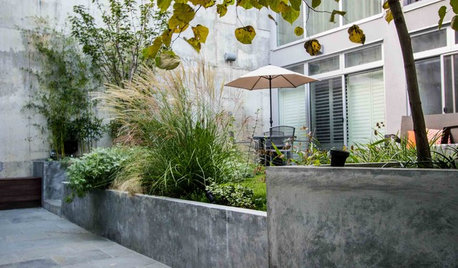
URBAN GARDENSFrom Concrete ‘Jail Yard’ to Lush Escape in Brooklyn
Once stark and uninviting, this urban backyard is now a welcoming retreat for relaxing and entertaining
Full Story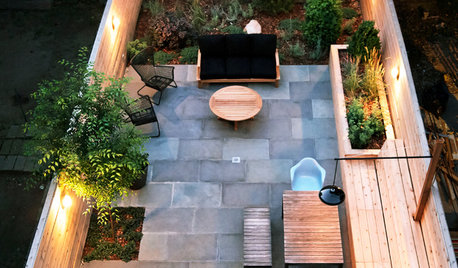
MOST POPULAR16 Ways to Get More From Your Small Backyard
Make a tight or awkward yard a real destination with these design tricks from the pros
Full Story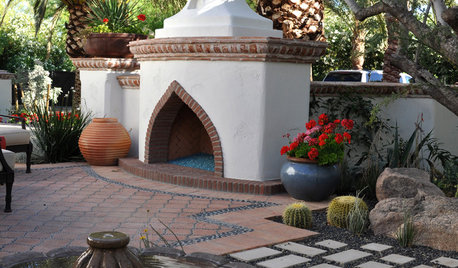
GARDENING GUIDESCreate a Fire-Safe Garden — With Style
Defend your home against wildfire with a well-planned mix of plants, materials and open space
Full Story
ORGANIZINGPre-Storage Checklist: 10 Questions to Ask Yourself Before You Store
Wait, stop. Do you really need to keep that item you’re about to put into storage?
Full Story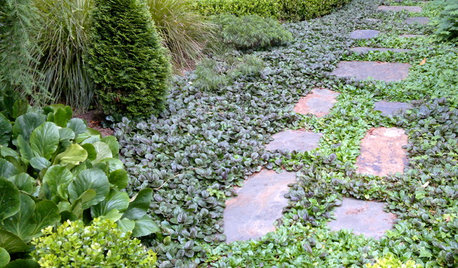
GROUND COVERSGround Force: 10 Top Ground Covers for Your Garden
Protect your soil from weeds and drought this summer with a living mulch of ground covers
Full Story
FALL GARDENING9 Ways to Refresh Your Summer Container Gardens for Fall
Transition potted displays from summer to fall with long-lasting foliage, dramatic grasses and standout blooms
Full Story
plllog