

Coffee Percolator?
6 years ago
Featured Answer
Sort by:Oldest
Comments (32)
 6 years ago
 6 years ago
Related Discussions
Landers Frary & Clark percolator
Comments (11)I too own an old Universal Landers Frary Clark Mf'd. percolator. Mine is quite rare and was produced in the mid-20's, I believe. I prefer my pot to the urn solely for transportation ability and you don't have to tip it to get to the last drop. These coffee makers are perhaps the best ever manufactured, and produce an exquisite cup of joe. The reason is the base of these percolators are solid copper and coated with nickel plate for aesthetics. Copper produces much better heating properties than stainless steel. In theory, should a dent or two be made in these or the nickel plating come off, they can be fixed on both levels. Several other comments have been made that they are NOT automatic. This is quite true. They have no thermostat inside nor any integral shut off built in. You have to do the timing of your coffee. 7 minutes for weak, 10 for strong. These were designed to not require filters, however, I suggest using filters - the standard natural brown accordion, push them down over stem in center - for two reasons. One, you will not have grounds stuck in the basket holes, and two, Cafestol and Keowohl in regular quantities are bad for you; Google them. These pots may take longer to brew, but make coffee much more correctly. Newer percolators - since the 1940's - had larger holes in the basket. This meant that although the water went thru faster and coffee was done sooner, you often ran the risk and ended up over-boiling your coffee. You also usually ended up wasting a half-to-a-full-cup of coffee due to grounds passing by the filter and thru the basket holes. Companies loved it... you ran out of coffee faster and had to buy more sooner. If you ever buy one of these and it has the original - or close to original - cord, inspect and voltage test thoroughly. I had one that had an on/off switch but later bought one that was period appropriate and had no switch. These coffee pots do not suck energy when first plugged in... when unplugged, they do not draw enough to be a problem, no need to upgrade to a switch cord. Clean by putting baking soda without filter in basket, run 10 minutes, then do with 1:1 ratio of distilled white vinegar, same time, then distilled plain water. These last a lifetime....See MoreOld Coffee Making ,Memories
Comments (31)Rachael: " California Black Flies ". That's where they are from. I told my Niece in Laguna Beach, Ca. that. She said how did I know they were from CA.? I said," I asked one of them, it answered, I'm from Ca." so I smashed it with a hammer. - - - - - - - - - - - Here is an Article. I Googled " California Black Flies " - - - - - - - - - - - Black Flies Vector Services & Information Black flies are small, menacing, biting flies that are a nuisance to people and animals living, working, or playing near running rivers and streams. These small flies are commonly called "buffalo gnats" because of their humped back appearance. They are typically dark in color and appear in a variety of neutral shades from light gray to black. They belong in the order Diptera (Flies) and in the family Simuliidae. The Bite The painfully itchy bite of the black fly is created when the female cuts a hole in the skin to suck blood from animals and people. Females will attack incessantly around the eyes, ears, scalp and occasionally on the arms and exposed legs. The pain and swelling of the bite are due to allergic reactions to foreign proteins and toxins that the female injects when feeding. Black flies transmit diseases in the tropics, such as River Blindness. Fortunately, they do not transmit any diseases to humans in California, but can cause extreme discomfort and irritation due to their biting habits and/or great numbers. Black Fly Life Cycle Black flies breed in flowing water from rivers and streams to irrigation ditches. After mating the female deposits the fertilized eggs on rocks or other substrate in swift flowing water. Larvae emerge from eggs and develop aquatically, feeding on algae and organic matter flowing by in the moving water. In 7-10 days they develop into pupae. Adults emerge from the pupal case through a slit and float to the surface on a bubble of air. Emerging adults live from 2-3 weeks. They are usually found from spring through fall, with the greatest numbers appearing in the late spring and summer. They are active during the day, with peak activity in the morning and early evening. Personal Protection Avoid areas where black flies are active during the day. Wear (long pants and long sleeves) light colors, especially whites and tans. Wear a light colored hat. Apply insect repellent when outside. If you are bitten, avoid scratching and apply topical products to reduce itching. Black flies are sensitive to weather conditions. They are most active on cloudy, humid days with low wind. GLACVCD's Black Fly Control Program The District controls black flies along an 18-mile stretch of the Los Angeles River - from the Sepulveda Basin in the San Fernando Valley to the junction of the 5 and 110 freeways, northeast of downtown Los Angeles. The black fly control program began in 1994 as a result of a severe black fly infestation along the river corridor that affected horse owners, golfers, and even baseball players at Dodger Stadium. The black fly population that breeds in the river is composed primarily of Simulium vittatum. In 1997, the District created a special benefit assessment zone to fund the black fly control program. An annual assessment of $0.15 was levied on all properties located within two miles of the Los Angeles River and the Arroyo Seco, a small adjoining tributary. Smaller black fly sources within the District, such as creeks and streams are treated on an as-needed basis. GLACVCD's black fly program includes: Monitoring for black fly larval occurrence and abundance. Applying Bti when larval numbers get above predetermined thresholds. Monitoring the effectiveness of treatment. Control Agents Used to Combat Black Flies Black fly management is accomplished by applying a natural soil bacteria called Bti to water sources where black flies breed. Bti stands for Bacillus thurigiensis israeliensis. Bti is a special formulation of common soil bacteria that is highly effective in controlling Black flies and mosquitoes. Because it is extremely specific, Bti is considered one of the safest insect control agents ever developed. Other insects, birds, fish and mammals (including humans) do not have the stomach chemistry to be affected by Bti. If you have a black fly problem, please contact the District at (562) 944-9656 and schedule a free inspection. What would you like to learn about?What is a Vector?MosquitoesMidgesBlack FliesMosquitofishWest Nile Virus West Nile Virus Statistics Tips to Protect YourselfSubmit Service Requests There are a number of Mosquito Species and Mosquito-Borne Diseases known to occur within the Greater Los Angeles County Vector Control District. Click here to learn more. Copyright 2008 GLACVCD. All Rights Reserved. Website by topLingo, Inc Greater Los Angeles County Vector Control District Promoting Community Health, Comfort and Welfare Through Effective and Responsive Vector Control Since 1952 About UsWelcome Message from District ManagerOverview of DistrictDistrict Area MapDistrict HistoryStaff / ContactEmploymentFAQsDistrict Programs & DepartmentsScientific-Technical Services Disease Surveillance Operations Underground Storm Drain Community Affairs Public Information Education Program Facilities & MaintenanceAdministrationVector Services & InformationWhat is a Vector?MosquitoesMidgesBlack FliesMosquitofishWest Nile Virus West Nile Virus Statistics Tips to Protect YourselfSubmit Service RequestsNews & EventsWhatÂs New at the DistrictLatest NewsMedia & PublicationsBrochures & PublicationsVideoAudioPodcastsHealth LinksMVCACAMCACA Dept. of Public HealthL.A. County DHSSouthern CA DistrictsLocal Agency Contacts for Fire Ants, Bees, etc.Board of TrusteesMeet the Board of TrusteesBoard AgendasBoard MinutesContact UsNewsletter & Email Alert SignupSubmit a Service RequestHome...See MoreOT: percolator or coffee machine?
Comments (15)Not yet a coffee snob but I'm on the journey. I think a percolator is probably not the way to go. If your a Keurig user I'm assuming you don't have a grinder so your buying pre-ground coffee. If you go french press you need the coffee ground for that method (a bit courser than for drip I believe). I like coffee from a french press but you might consider going with a manual drip. Inexpensive, fairly compact, you can use pre-ground coffee (though I would suggest grinding a 1\2 lb of beans at the grocery store or better get your beans at decent coffee shop where they will grind them for you) and by heating the water in a kettle and controlling the pour you will get better extraction than from most drip machines. Transfer to an insulated carafe and you have decent coffee that some guests will probably be very grateful for....See Moremaking percolated coffee
Comments (7)It's really a preference on how strong you like your coffee. A non-electric percolator can be left to perk a little longer and get the coffee stronger by getting "more" out of the grounds. An electric one is usually times but normally has a strength control on it. I always put the strength control all the way to max and adjusted strength by the volume of coffee in the basket. And I always used a coffee measuring scoop so I couldn't tell you for sure how many teaspoons/tablespoons it it. When camping and using the stovetop percolator I judged it by the color in the glass top. Not much help for you I know but really it's like saying how much ketchup on a burger? A lot or a little, there's no hard and fast rule, what you have are guidelines. I'd split the difference, figure one per cup & a half and have hubby try it for strength. The coffee itself will make a big difference too, depending on the grind. It's pretty forgiving really though. You can also ask your brother and his wife if they use a percolator. BTW, water makes a big difference in the taste of coffee so if you start with bad water, you'll have bad coffee. Good luck. Wait a sec, just hit me, a tablespoon per cup? Hmm. Sounds pretty strong. I often would fill the basket about a 1/3 if I recall. It's been a long time since I used the percolator. On my drip one, to make about 10 cups I used 3.5 of the coffee measure scoops I have. Guess it's to experiment. Other percolator users can share their "formulas". Give it a try, a perked cup of coffee is IMO much better than drip most of the time....See More 6 years ago
 6 years ago
- 6 years ago
 6 years ago
 6 years agolast modified: 6 years ago
 6 years ago
- 6 years ago
 6 years ago
- 6 years ago
 6 years ago
 6 years ago
- 6 years ago
- 6 years ago
- 6 years agolast modified: 6 years ago
- 6 years ago
 6 years ago
- 6 years ago
- 6 years ago
- 6 years ago
 6 years agolast modified: 6 years ago
- 6 years ago
- 6 years ago
- 6 years ago
- 6 years ago
- 6 years agolast modified: 6 years ago
- 6 years ago
- 6 years ago
- 6 years agolast modified: 6 years ago
- 6 years agolast modified: 6 years ago
Related Stories

KITCHEN DESIGNHot Ideas and Tips for Coffee and Tea Stations
Let options like drawer inserts and built-in coffeemakers percolate now, so your hot-drinks station can best serve holiday guests
Full Story
KITCHEN DESIGNToday’s Coffee Stations Have All Kinds of Perks
Some of these features are so over the top that they will give you a jolt
Full Story
LIFEHow Do You Make Your Tea and Coffee in the Morning?
A morning cup is a must for many, and preparation comes in many guises. We look at coffee and tea habits across the Houzz community
Full Story
KITCHEN DESIGNSimple Pleasures: Wake Up and Smell the Coffee
Slugging down any old sludge while pulling on socks is no way to start the day. Learn to brew amazing java and savor the experience here
Full Story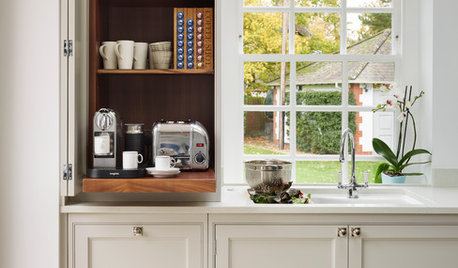
KITCHEN DESIGN15 Coffee Stations Bubbling Over With Clever Ideas
Built-in coffee makers, coffee pod storage and appliance garages are among the features of these great coffee stations
Full Story
LIFESimple Pleasures: The Art of Lounging at Home
Restore your spirit and encourage creativity by daydreaming, meditating or napping in the comfiest spot in the house
Full Story
FEEL-GOOD HOMESimple Pleasures: Scent and Memory
Fragrant jasmine, fresh-brewed coffee, baking bread. Scents can evoke memories and bring sensory pleasure to our homes
Full Story
REMODELING GUIDESHow to Survive a Kitchen Remodel
Washing mugs in the tub and getting hooked on Pop-Tarts. Here’s what to expect if you stay at home during construction
Full Story
LIFEHow to Prepare for and Live With a Power Outage
When electricity loss puts food, water and heat in jeopardy, don't be in the dark about how to stay as safe and comfortable as possible
Full Story
DECORATING GUIDESHow to Get Your Furniture Arrangement Right
Follow these 10 basic layout rules for a polished, pulled-together look in any room
Full Story
gardengal48 (PNW Z8/9)