

Decaf coffee - Swiss water process
9 years ago
Featured Answer
Sort by:Oldest
Comments (7)
 9 years agolast modified: 9 years ago
 9 years agolast modified: 9 years ago
Related Discussions
decaf coffee grounds
Comments (3)Did you drink the coffee that came from those grounds? If you find it tolerable to consume, then your pile should too. There are People who wouldn't compost them, but they wouldn't drink the coffee, either. I say better in your compost than in a landfill....See MoreCoffee Maker Advice, pls
Comments (28)Another Technivorm fan here. We'd been using (and enjoying the coffee from) the Cusinart 12-cup coffee maker we'd gotten when we'd reno'd the kitchen almost 4 years ago. Early last month, DH and I were in the kitchen, and we heard a sizzling or crackling sound, not unlike the sound of coffee that has dripped onto the hot plate. Only thing was, coffee had long since finished brewing and neither of us had poured any coffee in awhile. When I walked over to the coffee maker to take a look, I noticed the display (clock) was out and thought it best to unplug the coffee maker. As I did so, I saw a thin wisp of smoke curling up from the bottom of the machine--eek! Despite the coffee maker being long out of warranty, BB&B took it back (we no longer had the receipt and we absolutely did not want another of the same model, so they issued us a store credit that we'll surely use on something). We were also leery about buying another similar type of coffee maker (e.g. Made in you-know-where). Having read rave reviews about the Technivorm (when we did the kitchen and more recently when W-S started carrying/advertising it), we decided to check it out despite the high price tag. What won us over (besides the glowing reviews) were the facts that it is a very simple machine to set-up (to brew) and take apart (for cleaning after use) and a biggie; Technivorm coffee makers are made by hand, in the Netherlands (not you-know-where). We were drawn to the thought of good, hot coffee to start our days, and just as drawn to the thought of purchasing an appliance that was made well. We thought we'd miss having a timer (we set our coffee maker up the night before--a no-no for coffee afficianado's), but the Technivorm brews so quickly, it's literally ready in minutes. There's no automatic shut-off (brewing mechanism/heater shuts-off at the end of brewing, but the hot plate stays on until it is manually shut off). The lack of an automatic shut-off gave us pause, but we decided the benefits outweighed that one "flaw." Still makes me a little nervous that one of us will forget to flip the switch to off after pouring a last up of coffee, but we're very conscious of being careful about that. All in all, we're enjoying it (ours has the glass carafe, BTW), and feel that it was money well-spent....See MoreGrain Coffee
Comments (18)I occasionally drink a coffee substitute called "Bambu" (that is the brand name). It is an instant product that you mix with hot water, and it contains rye, chicory, barley, malted barley, figs, and acorns. It is dark brown, and very savory (it is not sweet at all on it's own, despite the malted barley and the figs). It lacks the bitter quality of coffee. It doesn't really taste like coffee, but it is pleasant enough and hit the spot those times I wanted coffee but didn't want the caffeine. Now I tend to drink it more just as an alternative hot drink, more than to replace anything. As far as giving up coffee completely, I agree a person that drinks pot after pot might be overdoing it. But studies show that up to a couple of cups of black coffee a day might even up the odds for heart health etc. Maybe instead of giving it up completely, he can cut back on the amount or reduce the cream and sugar if he uses it?...See MoreDo you drink coffee or tea?
Comments (34)Snookums, interesting find. But the abstract just says the researchers found small amounts of formaldehyde in commercially brewed and instant coffees in aqueous forms. It doesn't explicitly say anything about decaf coffee, and it certainly doesn't prove that formaldehyde is used to decaffeinate coffee (or rather, we can't discern that from the abstract.) As this report is 27 years old, I wonder why there has been no follow up or more extensive research if there is a formaldehyde issue. Too bad we can't read what's in the report to know if the coffees sampled were a broad spectrum of brands or even if it's an American study (brands readily available to us in our markets). I'd like to know if the study team postulated how the formaldehyde got into the coffee. Perhaps it occurs naturally? I found this in article via library online databases: "Natural carcinogenic and DNA damaging chemicals present in a cup of certified organic coffee (4) Aectaldehyde, benzaldehyde, benzene, benzo (a) pyrene, benzofuran, caffeic acid, catechol, 1,2,5,6-dibenz (a) anthracene, ethylbenzene, formaldehyde, furan, furfural, hydroquinone, d-limonene, 4-methylcatechol, styrene, toluene." ( Gold LS, Slone TH, Stern BR, Manley NB, Ames BN. Rodent Carcinogens: Setting Priorities. Science 258, 261-265, 1992., cited in "Organic Food Sales Increasing 20% Annually Last 20 Years," Hale, Jamie. McClatchy - Tribune Business News [Washington] 05 Nov 2009.) In researching, I thought this was interesting: "Another argument raised against formaldehyde as a human leukemogen [cause of leukemia] has been the presence of potentially significant amounts of formaldehyde or formaldehyde precursors in food. However, food is a complex mixture of chemicals. For example, coffee contains caffeine that would be metabolized to formaldehyde, but among the close to a thousand other chemicals components identified in coffee, some are antioxidants that might well have anticarcinogenic activities. It is difficult to predict the toxicological effects of simple mixtures, let alone mixtures that have thousands of chemicals nor can the possibility be ruled out that formaldehyde derived from food intake plays a role in the existing background incidence of leukemia." (Hematological and toxicological evaluation of formaldehyde as a potential cause of human leukemia Goldstein, Bernard D. Human and Experimental Toxicology30.7 (Jul 2011): 725-35. )...See More- 9 years ago
 9 years agolast modified: 9 years ago
 9 years ago
- 9 years ago
Related Stories
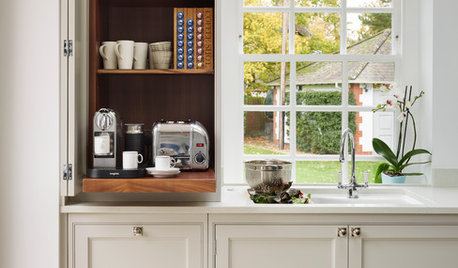
KITCHEN DESIGN15 Coffee Stations Bubbling Over With Clever Ideas
Built-in coffee makers, coffee pod storage and appliance garages are among the features of these great coffee stations
Full Story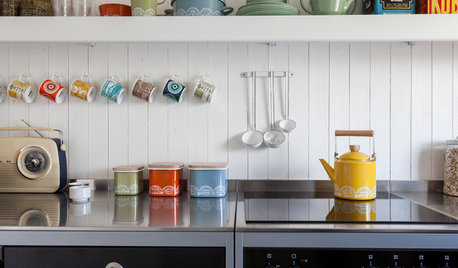
LIFEHow Do You Make Your Tea and Coffee in the Morning?
A morning cup is a must for many, and preparation comes in many guises. We look at coffee and tea habits across the Houzz community
Full Story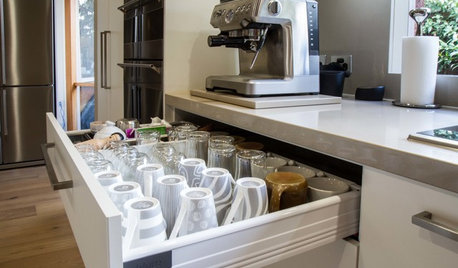
KITCHEN DESIGNToday’s Coffee Stations Have All Kinds of Perks
Some of these features are so over the top that they will give you a jolt
Full Story
MOST POPULARAn Architect's Guide to Color
Color is beckoning this season, and one architect is heeding the call with variations on his favorite color to tempt your house's palette
Full Story
LIFEHouzz Call: What Does Summer Look Like at Your Home?
Kids, water, sunshine, backyards, cold drinks — share photos of what summer at home means to you
Full Story
GARDENING GUIDESMake Your Garden a Haven for Backyard Birds
Create a bird-friendly habitat in your yard with food, water and shelter
Full Story
MOVINGThe All-in-One-Place Guide to Selling Your Home and Moving
Stay organized with this advice on what to do when you change homes
Full Story
WHITEHow to Pick the Right White Paint
White is white, right? Not quite. See 8 white paint picks for 8 very different effects
Full Story
DESIGN DETAILSDesign Workshop: The Modern Wall Base, 4 Ways
Do you really need baseboards? Contemporary design provides minimalist alternatives to the common intersection of floor and wall
Full Story
ROOTS OF STYLEDesign Through the Decades: The 1970s
Concern for the planet spurs a shift toward ecologically and socially responsible architecture and products
Full Story


Elmer J Fudd