

Are Electric Cars An Environmental Win?
9 years ago
Featured Answer
Sort by:Oldest
Comments (13)
 9 years ago
 9 years agolast modified: 9 years ago
Related Discussions
The deer win. the deer win!!!
Comments (36)Maybe the deer that are most common east of the Mississippi are more agile than those in the West. Here, if the intent is to use ordinary fencing to protect against deer damage, it's recommended that the fence be at least 6 ft tall, preferably taller. For a number of years now, farmers and other rural residents in this area have constructed anti-deer fences that slant at a 45 degree angle. It's a design that's effective because, while deer can jump quite high and can jump considerable distances, they're apparently unable to execute jumps that simultaneously attain height AND cover distance. I'm linking to a WVU release on slanted fences with specs for building one. Obviously, slanted fences aren't a practical solution for most, but they're interesting as an example of the extreme measures taken by some to control an ongoing problem. Here is a link that might be useful: Slanted Fences...See MoreCarbon footprints and environmental responsibility
Comments (57)tsmith, none of this was news to those sufficiently interested to look into it several years ago. Reading something like the Shock Doctrine by Naomi Wolf might make sense of the revelations you are apparently just now having. Stressbaby, pit greenhouses really seem to be quite a bit more efficient given you have some slope on your property to allow for drainage. I have a design that I have been playing with which takes advantage of the insulative qualities of the soil which should give me quite a bit of the height I need without all of the insulation necessary for knee walls. South facing with a solid north wall and nearly half height knee walls to the east and west (block masonry painted a dark color or faced with dark red recycled brick). Triple glazing for the clear walls and roof (old french doors sandwiched with plexiglass), with automatic passive vents in the south knee wall and roof peak (knee wall vents composed of standard automatic foundation vents and roof vent cupola (same?)). Heated by circulating water pipes in the gravel floor (for dispersion of heat and humidity), underlain by a cement pad with drainage pipes leading down grade. The one factor missing was a good solar hot water heater system, these evacuated solar tubes just sounded like they would be a perfect fit! I could probably bury the hot water storage tanks behind the back wall so that they would have the soil for insulation as well. Plastic oil drums would probably be sufficient for storage. I think that they are a neat idea to play with. Probably pretty cheap too with craigslist recycled materials. The most expensive things would be the pad and the tubes. The only ongoing expense seems like an electric pump, probably hooked up to a thermostat, for water circulation!...See MoreHydrogen fuel distribution and storage for cars
Comments (18). The hybrids I am aware of do indeed use a combination of gas / electric. An odd fact is that they tend to have signifigantly BETTER city than highway mileage. This is due to the fact that in stop and go driving; when you stop some of the braking action is actually using the momentum of the rolling vehicle to in effect turn a generator. This slows the vehicle; and the energy is put back into the batteries. With conventional vehicles; ALL the momentum is simply turned into heat in your brakes. They also have the advantage that the gasoline engine is "optimized" to run pretty efficiently at a single speed . . . doesn't have to run well at many different speeds like we expect in a conventional car. The engine runs a "generator", and I believe most of them use CVT . . . Continuously Variable Transmissions . . . they in effect have an "infinite" number of gears; it automatically puts it into a gear such that no matter your speed; the engine runs at virtually the same speed no matter what. This is good technology and certainly offers some benefits . . . . but sadly does not relieve us of our dependence upon oil. The reality of collecting enough solar to recharge your car, or to run your house; whatever . . . depends upon two things in the simplest terms: How much energy you "need" to do whatever the task; and how much can you collect with a given size "collector". With the costs of things now; it is quite easy to reduce your consumption to where you can extract enough energy with solar whatevers; but it is VERY difficult to extract enough based upon what the average person uses in energy. The more you can reduce your consumption; the less you need to extract from WHATEVER source. I've recently gone solar powered ( solar PV panels ) that will on an annual basis generate more than I use. Interested friends have inquired about my electric usage before going solar; and are amazed how low it is. They fail to understand that one can have running water, clothes washer, TV, computers etc . . . AND have low power consumption. You simply have to look into things well; and understand where the big hogs in energy consumption are in a household and deal with them in some fashion. If you're talking about plugging a "car" into the grid at night to charge it up; well .... somewhere is a power plant that's putting out some kind of crap; the fact that it is not in your back yard does not mean it isn't in someone else's . . . . The pollution out of the tailpipe of your electric car is zero; but you've put extra into someone else's air somewhere. The best thing any of us individuals can do is to reduce our usage in whatever ways we can . . . to stretch oil that is left . . and to continue to pursue new ways of doing things that are more sustainable. It will truly impact what our children, and their children; will have for a world many years after we've begun pushing daisies . . . . . Bob...See MoreElectric Cars -- A good thing?
Comments (22)The all electric car will not decrease our dependence on foreign oil, or for that matter, domestic oil. BTUs (British Thermal Units) burned per mile may be greater that a gasoline fuled car. If you start at the power plant and compute system efficency, it is not very good. fuel is burnt in the plant to generate electricity. The conversion of energy to electric power in the best plants do not exceed 36%. Some car engines are approaching this efficiency. The power is tranformed to very high voltage for cross country tranmission, and then stepped down to local distrubution voltages, and finally stepped down again just before feeding a house. I don't have all the numbers for these transmission losses, but if you believe one ad, it runs to near 50% loss. I think its in the neighborhood of 20% to 30% loss. And now, the energy arrives at the battery. (There are losses within the home plus charging equipment. Let's say we have a relly efficient charger on the order of 92% and the line losses is 1%. This works out to a 91% efficiency.) There is a big loss in charging a battery and another loss when the battery discharges. This can be as great ss 50% loss overall, but let's be generaous and say it is only a 25% loss. The setimated overall efficiency between burning fuel in the power plant to energy used to urge the car down the road is 0.36 x 0.70 x 0.91 x 0.75 or 17%. In other words, 17% of the energy burned in a power plant is utlized to pushing the electric car down the road. (It's actualy less than this. I was generous with some of the estimates.) I can't see how this reduces energy consumpion per mile! All the elctric car has done is to transfer its energy comsumption to the power plant and the delivery system is not efficient. This is why I believe that the hybrid car presents the better solution. Overall, it is much more efficient than an all-electric car when you compare BTUs burned per mile, and it retains some of the advantages of the gasoline or diesel engined autos. Baker Electric made eletric autos ca 1920 - 1920s and these flopped. Since that time, huge advancements have been made in electical - electronic controls, but the basic battery chemistry and thermodynamics have changed little, so it is still an uphill battle. Electric vehicles do have and will have their place in urban life in the future; It won't be a direct replacement for the personal automobile as we know it today....See More- 9 years agolast modified: 9 years ago
 9 years ago
 9 years ago
- 9 years agolast modified: 9 years ago
- 9 years ago
 9 years ago
- 9 years ago
- 9 years agolast modified: 9 years ago
- 9 years ago
- 9 years ago
Related Stories

SMALL HOMESMicrounits Are Coming to NYC. See the Winning Design
Say goodbye to only arm-and-a-leg Manhattan rents. This plan for small prefab units opens the door to more affordable housing
Full Story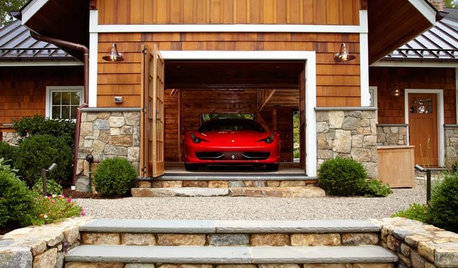
DREAM SPACESA Car Lover's Man Cave Kicks Into High-Luxury Gear
Fast cars, fine wines and a high-tech bathroom elevate this backyard outpost to the realm of dream space
Full Story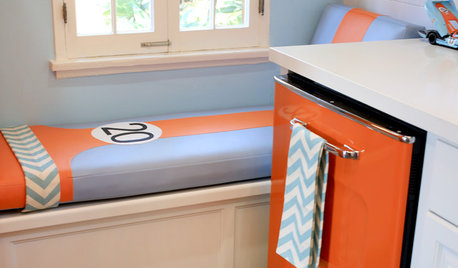
KITCHEN MAKEOVERSReader Kitchen: A Stunt Driver’s Race Car-Inspired Remodel
Her kitchen color scheme pays homage to Steve McQueen’s classic auto-racing flick
Full Story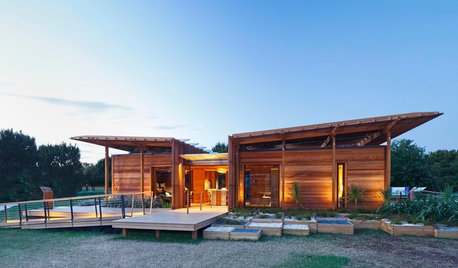
GREEN BUILDINGStudents’ Award-Winning Home Leaves Small Footprint
A cost-effective, solar-powered New Zealand prefab home has good looks to match
Full Story
LANDSCAPE DESIGN10 Ways to Make Your Landscape More Environmentally Friendly
From creating wildlife highways to planting pretty pollinators, there are lots of simple ways to be green in the garden
Full Story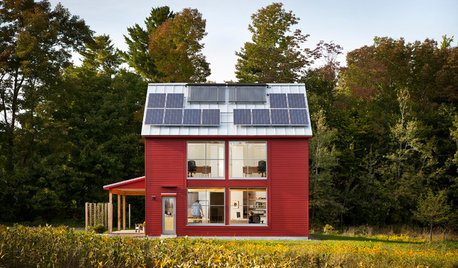
GREEN BUILDINGGoing Solar at Home: Solar Panel Basics
Save money on electricity and reduce your carbon footprint by installing photovoltaic panels. This guide will help you get started
Full Story
ARCHITECTUREBlue Heron’s Modern Desert Design in Las Vegas
See 2 homes from the award-winning design-build firm that were highlighted at this year’s AIA conference
Full Story
LIFE6 Tips for Teaching Your Kids to Be Good Neighbors
Everyone wins when your children learn to respect boundaries, get help when they need it and show others they care
Full Story
HOUZZ TOURSWorld of Design: 9 Energy-Smart Australian Homes
With their innovative features and diverse surroundings, these 9 award-winning homes have struck gold on the Aussie design stage
Full Story
FARMHOUSESHouzz Tour: German Tradition Deep in the Heart of Texas
Rooted in architecture from the 1800s, this award-winning home mixes history with the vernacular of today
Full Story



rob333 (zone 7b)