

Am interested in armchair diagnoses.
10 years ago
Featured Answer
Sort by:Oldest
Comments (52)
Related Discussions
help diagnosing problem with my rhodie
Comments (13)Yellowing and spotted in not root rot. Yellowing of a leaf between dark green veins is called chlorosis and is usually caused by an iron deficiency. Many conditions can be responsible for an iron deficiency. Poor drainage, planting too deeply, heavy soil with poor aeration, insect or fungus damage in the root zone and lack of moisture all induce chlorosis. After these conditions are eliminated as possible causes, soil testing is in order. Chlorosis can be caused by malnutrition caused by alkalinity of the soil, potassium deficiency, calcium deficiency, iron deficiency or magnesium deficiency. Iron is most readily available in acidic soils between pH 4.5-6.0. When the soil pH is above 6.5, iron may be present in adequate amounts, but is in an unusable form, due to an excessive amount of calcium carbonate. This can occur when plants are placed too close to cement foundations or walkways. Soil amendments that acidify the soil, such as iron sulfate or sulfur, are the best long term solution. Foliar sprays of iron sulfate or chelated iron can reduce symptoms. A combination of acidification with sulfur and iron supplements such as chelated iron or iron sulfate will usually treat this problem. Chlorosis caused by magnesium deficiency is initially the same as iron, but progresses to form reddish purple blotches and marginal leaf necrosis (browning of leaf edges). Epsom salts are a good source of supplemental magnesium. Chlorosis can also be caused by nitrogen toxicity (usually caused by nitrate fertilizers) or other conditions that damage the roots such as root rot, severe cutting of the roots, root weevils or root death caused by extreme amounts of fertilizer. There is a tonic that remedies some cases of chlorosis. Yellow mottling on the upper surface of leaves and black sooty mold and transparent insects on the bottom are symptoms of Azalea Whitefly (Pealius azaleae.) and Rhododendron Whitefly (Dialeurodes chittendeni.). These may also cause the following symptoms: Small white spots on the underside of leaves and small white flies on under-surface of leaves is also an indication in infestation of Azalea Whitefly (Pealius azaleae.) and Rhododendron Whitefly (Dialeurodes chittendeni.). They are more prevalent on certain varieties and on plants grown in protected areas. These small white flying insects look like an aphid with wings and suck on the underside of foliage, leaving white spots where it has been. Heavy infestations cause the margins of terminal leaves to cup. These infested leaves will eventually turn yellowish and appear wilted. The lower leaves become covered with honeydew, followed by sooty mold (a black coating). To check for the presence of whiteflies, shake the terminals of white azaleas to flush out adult whiteflies which look like tiny white moths. Examine the lower surfaces of leaves for the presence of nymphs, which are flat, yellowish green, and resemble scale insects. All stages occur on the under sides of leaves. This whitefly is usually limited to varieties of the snow azalea, Rhododendron mucronatum. If the infestation is light, little or no plant symptoms are evident, and if beneficial insects are present, spray the undersides of leaves with insecticidal soap or a horticultural oil at the 2%summer rate. If the infestation is heavy use a registered residual insecticide such as Malathion, Diazinon or Orthene. Yellowing of leaves surfaces, often with brownish burned areas, occurring on leaves that are more exposed to sun, is caused by more sun exposure than the plant is able to tolerate. Some varieties need shade, while all plants that have been protected from direct sun will be tender until hardened off by gradual exposure to sun light. Possible solutions are to give the plant more shade or move it to a more protected site. Yellowing and dropping of leaves is normal toward the end of the second summer on the small-leaved lepidote rhododendrons. These should have dense enough habit that this doesn't matter. The larger-leaved elepidote rhododendrons keep their leaves for 3 or 4 seasons. Like all evergreen plants, rhododendrons and azaleas periodically lose some of their foliage, and the leaves may turn yellow, red, or purple before they fall. Often the only leaves that remain are those that surround the flower buds at the tips of the branches. This characteristic is linked to the genetics of the parents used to breed garden azaleas. The degree of leaf coloration or loss is a function of parentage and not the severity of the winter. In unusually cold winters, certain azaleas may lose more leaves than they would in mild winters. Uniformly yellowish-green leaves is often just the need for more nitrogen. This will be more noticeable in the full sun. Some less sun tolerant varieties will always be light green in full sun. Yellowing of leaf edges has been noted in gardens where sandy soil conditions or root competition with other plants caused insufficient soil moisture and nutrients. Usually incorporating organic material in the soil and removing the plants with the competing roots solved the problem. Care must be taken not to disturb the roots of the rhododendrons and azaleas. Hence it is best to prepare the soil adequately before planting. The tops of most competing plants can be removed leaving the offending roots in the ground and the offending roots will simply decay and pose no problem....See MorePlease help me Diagnose leaf problems
Comments (14)Dear lsst, I don't know whether this is any consolation, but I also garden in Zone 7b (SC) and have about forty young seedling camellias in gallon-sized plastic pots that look similar to yours. The leaves are spotted and brown around the edges. I'm hoping that they're showing cold damage and will recover in the next few weeks. The seed parents of our seedlings are 'Berenice Boddy,' 'Christine Lee,' 'Imura,' 'Leucantha,' and 'Lady Vansittart.' A few are from unidentified seed parents. A few of our older camellias that have been in the ground for a number of years show a little cold injury, most noticeably a variegated 'Adolphe Audusson.' We've also had a poor blooming season due, I think, to the drought and a couple of periods of extreme cold during which we experienced a couple of nights with temperatures near ten degrees Fahrenheit. 'Governor Mouton,' which is, for us, normally a spectacularly beautiful and dependable variety, had, at best, a mediocre showing this year. Our forty-four-year-old 'Governor Mouton' was fairly pretty, but not up to par. However, its foliage looks fine. Our camellias that bloomed best this season were two 'Magnoliaeflora' japonicas, a 'Flame,' an 'Adeyaka,' and a 'Pink Perfection.' I've got to make a trip out to the northside of the yard to check on the 'Diddy Mealing' and the 'Turandot' japonicas. Our very late blooming 'Pink Champagne,' or 'Camellian,' japonica has a number of swollen pink buds that look as though they will be gorgeous. However, the nearby 'Eleanor Hagood' and 'Yuki Botan' have had poor quality blooms. 'Imura,' which normally blooms well for us, has had a poor season. And even 'Berenice Boddy' hasn't been up to par. One of my favorite seedling camellias that is about forty years old was on the verge of opening a huge number of blooms just as one of the cold fronts swept through. It was blackened by the cold. It came up underneath a 'Lady Clare' and a 'Governor Mouton' in my aunt's garden in the 1960's and produces a profusion of imbricated and rose-form dark pink tinged purple medium-sized flowers. But not this year. _Mais c'est la vie_. Another sad note is that our 'Lady Clare,' which in normal years blooms from November till March, also bloomed very poorly this year. In the past few days, however, I've noticed a number of fresh blooms on it; and its leaves look fine....See MoreDiagnose my Drosera. Pics inside.
Comments (14)Thank you all for the helpful feedback! I thought I would share with you some pictures of the arrangement I have for my Droseras...Droserae...plants. This shows the Drosera I've been having the most trouble with, and the life support system I've built up around it. Clipped onto an old CD rack are two work lights, each sporting a (recently purchased) high intensity CFL that is equivalent to 100W. Combined they put out 3000 lumens, which acts to supplement the light coming through the large windows I have in my living room. The windows face NW. In the little plastic deathbox in front and to the left of the self-watering orchid pot is yet ANOTHER sundew. This one I swore I'd do right. It looked good in the store, and the polymer container was solid, so I'm using this as a temporary terrarium / tray watering unit. The lid to the deathbox is gradually being opened further and further to ease the humidity down to the ambient levels. I've had the new Drosera for about a week, and it's just as green and dew-laced as the day I bought it. Temperatures in my living room hover around 75F. The next picture shows the other Drosera, the one doing the palm tree impression. This is the dining room / atrium of my house. The window faces SE, and catches the morning sun. I relocated the Drosera so that it is closer to the window, but took some precautions by arranging my ivy so that its biggest leaves provide a filtering / shade source. We'll see how that works out. What are the symptoms of sun burn on Drosera? I want to be able to move quick if I spot this as a problem. My little Drosera palm tree has developed more pronounced hairs on its leaves, which I think is a good sign. To the right is a plastic jack-o-lantern that one of my neighbors tossed onto their garbage can. A gust of wind knocked it into the street, and I picked it up, fixed it, and added some improvements. On the windowsill to the left of the plants is the guts of what is soon to be a "sunjar." They're fun, cheap to make, and make good hand-made gifts. Anyway, comments and advice are always welcome! I'll let you know how things are progressing. Happy Halloween!...See MoreNewly Diagnosed with Fibromyalgia, Tips please
Comments (2)I have Ankylosing Spondylitis, and most of the symptoms of AS and FMS are very VERY similiar, so I can give you good advice. Alot of people with AS also have FM. I second the Vitamin D reccomendation, I think that is the first importants step and cannot stress enough you need to have your levels checked ASAP. Low vitamin D is common in AS and FMS and indeed low vitamin d causes, you guessed it, muscle pain. The reason you are tired and fatigued, even if you get a good nights sleep, is because your body is in a state of inflammation. This makes your body fight hard. Try eating a healthy, balanced diet free from processed foods. Change your white pastas to the whole grain kinds, some even have added omegas from flax. I dealth with this since I was 20, trying to find a diagnosis. I was diagnosed at 37. I know. Long time. Gps told me its in my head, I am too young to have arthritis, blah blah. I had a cat scan to check on some fluid in my abdomen after having my gallbladder out, and the radiologist happened to notice that my Sacro-illiac joint ( the bottom part of your spine) was fused- which is why I had pain in that area, all that inflammation and pain as my AS was turning cartiliage into bone. That radiologist suggested I might have AS, and BANG- my life has changed. I have pain releif to take as needed, I am experimenting with different treatments, but the most beneficial thing was researching and finding a routine that works for me. My best friend is my heating pad. I have a large one- and I also have a full body one- ask if you are interested in where to find a full body heating pad. Every morning I get my coffee, and recline on my heating pad. I eat well, I get excersise - even when it hurts, the fresh air and sun really help. ANother good thing you can do is join a support group- But go get your vitamin D tested....See More 10 years ago
- 10 years ago
- 10 years ago
- 10 years ago
- 10 years ago
- 10 years ago
- 10 years ago
- 10 years ago
- 10 years ago
 10 years ago
- 10 years ago





Related Stories
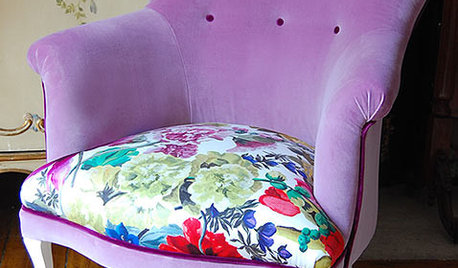
FURNITURE16 Exuberant Armchairs to Give a Room Splash and Dash
Matching living room sets? Yawn. Change things up with armchairs arrayed in bright colors and bold patterns
Full Story
PRODUCT PICKSGuest Picks: 20 Summery Chairs for a Patio or Garden
Pull up a stylish seat in your outdoor room. These splurge-worthy rockers, loungers, armchairs and more are ideal for warm-weather relaxing
Full Story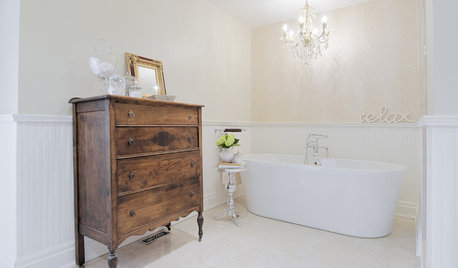
BATHROOM DESIGN10 Living Room Touches to Bring to the Bath
Go ahead, borrow those bookshelves. Unexpected elements can boost interest and comfort in your bathroom
Full Story
LIVING ROOMSRoom of the Day: Addressing the Green Piano in the Room
A homeowner’s favorite furniture item presents an interesting design challenge and reveals a fascinating history
Full Story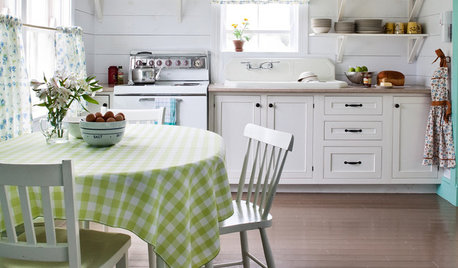
KITCHEN DESIGNThe Cure for Houzz Envy: Kitchen Touches Anyone Can Do
Take your kitchen up a notch even if it will never reach top-of-the-line, with these cheap and easy decorating ideas
Full Story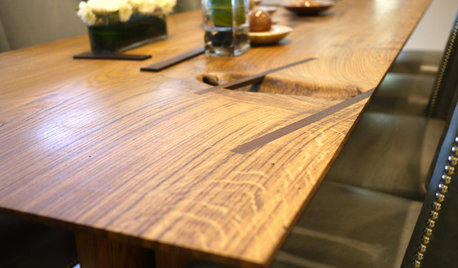
FURNITUREWood Furniture Has Root Cause
Sustainability is just the beginning with Robin Wade's lovingly made 'rustic modern' wood furnishings
Full Story
DECORATING GUIDESHoneycomb Shapes Are the Bee’s Knees
The hexagon is everywhere in nature — in honeycombs, tortoiseshells, snowflakes. Why not replicate it in home design?
Full Story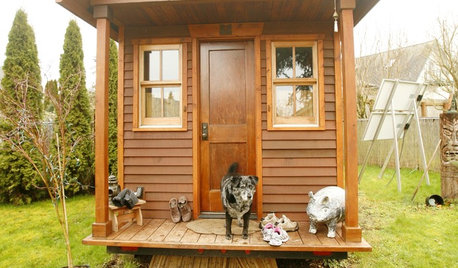
SMALL SPACESLife Lessons From 10 Years of Living in 84 Square Feet
Dee Williams was looking for a richer life. She found it by moving into a very tiny house
Full Story
PETSSo You're Thinking About Getting a Dog
Prepare yourself for the realities of training, cost and the impact that lovable pooch might have on your house
Full Story
PRODUCT PICKSGuest Picks: Easy Updates for Neutral Rooms
Bright home accessories based on 4 colorful throw pillows let you change your accent palette in a snap
Full Story
nannygoat18