

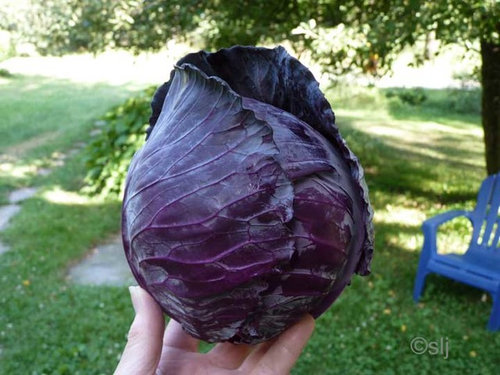
And then there's red cabbage!
10 years ago
Featured Answer
Sort by:Oldest
Comments (11)
Related Discussions
Red peper flakes around new cabbage plant roots?
Comments (13)Trapping update: 5 voles, 1 mouse, 1 shrew. I feel a bit sorry about the shrew since they eat so many bugs. Anyhow, I've refined my method a bit. The voles here, at least this time of year, are using the mole tunnels. In fact they keep the tunnels open after their makers have ceased to be. You can tell when a mole tunnel is used by voles because they make frequent little exit holes, often quite noticable since they chew down the plants right around the hole. So I fill a lot of holes, set the trap station around one, wait a few days, checking each day. If they are no longer using that hole it starts to fill in. If they are active somewhere I've filled then I spot the holes getting reopened and move the traps to there. Since I started doing that I have been catching voles again. I also stomp the tunnels as I go along, for good measure. It's rather gratifying to see the area getting flat and less hole-y... And staying thtat way....See MoreHmmm... my red cabbage isnt so red...
Comments (3)oh darn. Well thanks for telling me, I would have just kept waiting for it to turn red, lol. It worked out I guess, I wanted green to make sauerkraut with anyways. : ) Thanks!...See MoreCheapest way to test soil pH using red cabbage
Comments (42)I don't put any sulfur in the holes of the roses pictured. The other holes with sulfur didn't bloom well. My heavy clay is very retentive, there is no leaching here. Here's a quote from Nutrient Stewardship site: "Phosphorus is the nutrient most affected by pH. ..Nitrogen, Potassium, and sulfur are less affected. At alkaline pH values, greater than pH 7.5, phosphate ions tend to react quickly with calcium (Ca) and magnesium (Mg) to form less soluble compounds. At acidic pH values, phosphate ions react with aluminum (Al) and iron (Fe) to again form less soluble compounds." It's good to test if one's tap water is alkaline, some cities add lime to water so pipes won't corrode. Calcium in lime will bind with phosphorus, and less is available. In my 12 years of growing flowers in pots, the year that I got continuous MOST blooms despite my pH 8 water was when I used high phosphorus SOLUBLE fertilizer, and low nitrogen. Granular phosphorus like bone meal and 46% superphosphate are useless in the planting hole here in alkaline clay. My results confirmed what University of Colorado stated "bone meal and rock phosphate can only be utilized at or below pH 7". My pH 7.7 soil was tested most deficient in phosphorus. Here's a quote from David Neal, CEO of Dyna-Grow Plant Nutrition in CA: "There is some evidence to believe that low N helps to convince a plant to stop its vegetative growth and move into its reproductive phase (flowering), but environmental factors are probably more important. P is typically 5th or 6th in order of importance of the six macronutrients. There is little scientific justification for higher P formulas, but marketing does come into play ...." He's right, just a tiny bit of SOLUBLE phosphorus made more blooms and more roots - but beyond that is wasteful. The site, Robert Morris NOBLE plant foundation, rated the mobility of NPK: "Let's compare the mobility of NPK on a scale of 1 to 10. Nitrogen is a 10 ... extremely mobile and can be lost to leaching. Potassium is a 3. It has limited movement in the soil. Phosphorus has a rating of 1. It is immobile in the soil and is likely to stay wherever it is placed." Here is a link that might be useful: Soil pH and availability of plant nutrients...See MoreRed cabbage pH test of blood meal, corn meal, compost, etc.
Comments (30)Sharon: THANK YOU FOR THOSE FANTASTIC PICTURES !! I also did red-cabbage test today Sat. 7/25/20. Distilled water boiled in red cabbage is actually acidic according to on-line info. "Pure distilled water should be neutral with a pH of 7, but because it absorbs carbon dioxide from the atmosphere, it's actually slightly acidic with a pH of 5.8." From your pictures above, the grayish blue solution is alkaline with pH 7.5. My pH 7.7 clay is a bit bluer (tested by Earth Corp. soil testing company). Black, gray, or clear solution is neutral pH .. means it's a fantastic buffer (good for plants). I tested COMPOSTED grass clippings and it's clear water above black solution. Buffer is great to neutralize the acidity of rain. Clay buffers better than sand/loamy soil, but the best buffer is composted organic matter. Coffee is also a buffer (at first pinkish, but after 20 min., it's a clear solution). COMPOSTED plant-matter is very alkaline and neutralizes acidic rain well. COMPOSTED leaves decompose to alkaline pH, when I stuffed a bunch of leaves in LOAMY & fluffy soil .. the next year that got converted into HARD CLAY, very alkaline. Green grass clippings stay fluffy longer (more nitrogen & more acidic). Brown leaves are considered "carbon" in a compost pile, and decompose to alkaline pH & hard like clay. My tap-water in red-cabbage is VERY BLUE, it's at pH 9 as stated on village's website. I also tested baking soda and it's more blue than my tap-water. I tested paver's sand or yellow coarse sand, and it's slightly alkaline. I tested composted manure and it's very alkaline (from the lime added to deodorize and kill weeds in the bag). The pH of composted manure is just as alkaline as my clay at pH 7.7. Your LAST pic. is slightly acidic. Rain-water is even more acidic & reddish purple. Rain water here is pH 4.5. I also tested some drops of vinegar and it's fuchsia red around pH 3. All my rooting-soil for cuttings are black or clear solution at neutral pH (they have lots of yellow sand or vermiculite mixed in). The clay taken from diseased & black spotted roses are slightly acidic, rather than blue like my pH 7.7 clay. I had tested 5 different roses with black spots in the past, and the soil taken from the root level is pinkish in red-cabbage juice. It's either acidic rain can't drain well from that spot, or else there's NOT enough buffer to neutralize the heavy rain going down....See More- 10 years ago
 10 years ago
 10 years ago
 10 years ago
 10 years ago




Related Stories
COOL-SEASON CROPSCool-Season Vegetables: How to Grow Cabbage
Give soups and stews an unbeatably fresh flavor with this ever-popular fall garden favorite
Full Story
GARDENING GUIDESGreat Design Plant: Cabbage Tree
Happiest in plentiful sun, this tropical-looking tree gives a pool area or backyard landscape an exotic view all summer long
Full Story
WINTER GARDENINGGreat Design Plant: Ornamental Cabbage and Kale
Yes, you can actually eat them. Or you can just marvel at their striking, unusual foliage during all four seasons in the garden
Full Story
CONTAINER GARDENSNew Colors for Your Fall Planters
Take a break from the same old orange, red and yellow plants and enjoy some fresh colors in your pots this fall
Full Story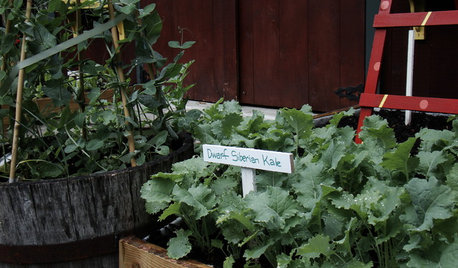
EDIBLE GARDENSCool-Season Vegetables: How to Grow Kale
This leafy green superfood is also a superhero in the garden through fall chills and winter snow
Full Story
MOST POPULARThe Not Naturally Organized Parent's Guide to the Holidays
This year get real about what you can and cannot handle, and remember the joys of spending time with the ones you love
Full Story
FURNITUREWhy It's OK to Hate Your New Custom Sofa
It takes time to get used to bold new furniture, but dry your tears — the shock can be good for you. Here's what to expect
Full Story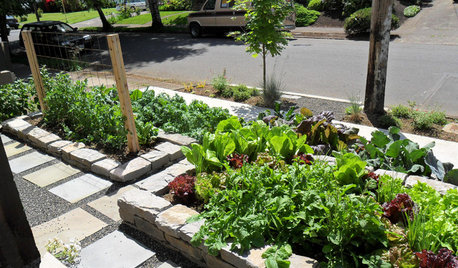
FRONT YARD IDEASWelcome Edibles Into the Front Yard for Fresh Food and More
Give your front yard design a boost and maybe even make new friends by growing fruits and vegetables
Full Story
PRODUCT PICKSGuest Picks: Subtle Gray Tableware Gives Food the Spotlight
Let your holiday feast stand out against understated gray and silver dishes, platters, linens and cutlery
Full Story
KITCHEN DESIGNKitchen of the Week: A Separate Peace for a Manhattan Studio
Savvy design tricks help a petite urban kitchen look not just separate, but visually distinct
Full Story
caflowerluver