

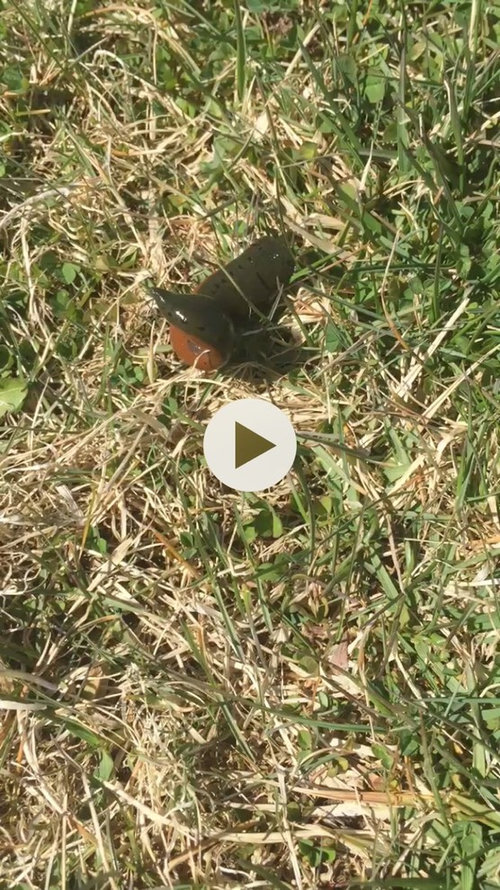
Worm/Reptile ID please
10 years ago
last modified: 10 years ago
Featured Answer
Sort by:Oldest
Comments (6)
 10 years ago
Related Discussions
Please ID this worm (pic)
Comments (10)Holy crap! Ticks that size?! I cut the leaves off and put them into the trash bag in the garage. Clearly they were just following the leader. They were in a very uniform line, one next to the other, each chewing their share of the outer edge of the leaf. Only a couple of them were found on the downside of the leaf. They are not touching my fruit. Fruit is beautiful and dark purple. They really didnt look like a beetle to me. It is possible that the backside of the body is larvae-looking, almost like a grub-looking beast. I cant take them out of the trash, they are goners now....See Moreplease help me id this worm...
Comments (11)I get several varieties too. Last summer I spent several months collecting and killing rose slugs and budworms. Have no idea which are which, I have ones dark green, sage green color and a tomato green. At least the pics I sent Baldo were ID'd as budworms. Had a big problem in CA last year, LA area down south and in the north. Mine definetly ate the buds, I could handle leaf damage, but I started going out twice a day collecting the caterpillars and feeding them to the toads. I put out houses for them and throw the worm down on the ground by their pot and knock on the top to get their attention. My SIL was very amused by this. I found it more satisfying that squishing them:) If I hunt I might be able to come up with a better pic. I don't have any mature trees, mine are all only a couple years old. The neighbors don't have any trees at all yet. So, I think I can definitely rule out the cankerworm. If some of them are hover fly larvae, I can't tell the difference and I'm not going to give them a chance to eat the buds and disappear....See MorePlease help with worm ID - Lumbricus Rubellus?
Comments (1)Also, I've been thinking that since these guys are living in and eating rotting leaves, they should be functional for vermicomposting, even if they're not superstars. I've been adding those I find to a new worm bin I'm trying to start with a small number of ENC, and using the leaves I found these guys in for bedding (along with shredded paper and CCB). I've been seeing conflicting reports about whether l. rubellus (if that's what these worms are) is a suitable bin worm: everything from "they kick ass," to "they'll live low in the bin and be slow, but they do the job," to "they won't work at all." Most of it sounds like best guess, too. Does anyone have an opinion backed up by experience or hard facts?...See MoreWorm ID please
Comments (5)It is generally impossible to identify earthworms to species level from photos of live specimens. In order to properly identify an earthworm it needs to be preserved and examined under a microscope. Worms cannot usually be identified unless they are adult specimens with a clitellum. From your photograph, the worm shown does not appear to be clitellate and is probably a juvenile. Its colouring suggests it is an endogeic earthworm, which means it lives in the soil where it eats soil and forms shallow horizontal burrows, Composting worms are epigeic (they live on the soil surface and eat organic matter) and tend to be red in colour rather then the pinky grey of the specimen in your picture. The worm is certainly not Eisenia fetida or Eisenia andrei, which are the worms sometimes called "red wigglers" in the USA. I could attempt to identify the worm for you if you are able to send me an adult specimen with a clitellum. What country are you in?...See More 10 years ago
 10 years ago
 9 years ago
- 9 years agolast modified: 9 years ago
Related Stories


HOUZZ TOURSHouzz Tour: For the Love of a Cat in Philadelphia
Pet-friendly features integrated into a mod, eclectic and colorful home mean everyone in the family is happy
Full Story
RUSTIC STYLE10 Cabin Rental Basics for City Slickers
Stay warm, dry and safe while you’re enjoying winter cabin life with this valuable advice
Full Story
GARDENING FOR BUTTERFLIESBe a Butterfly Savior — Garden for the Monarchs
Keep hope, beauty and kindness alive in the landscape by providing a refuge for these threatened enchanters
Full Story
GARDENING GUIDESGarden Myths to Debunk as You Dig This Fall and Rest Over Winter
Termites hate wood mulch, don’t amend soil for trees, avoid gravel in planters — and more nuggets of garden wisdom
Full Story
PETS15 Outdoor Pet Projects You'll Lap Up
These bubbling fountains, shelters and other creations by Houzzers are treats for pets and inspiration for other owners
Full Story
LIFE21 Things Only People Living With Kids Will Understand
Strange smells, crowded beds, ruined furniture — here’s what cohabiting with little monsters really feels like
Full Story
EARTH DAY5 Ideas for a More Earth-Friendly Garden
Consider increasing the size of garden beds, filtering rainwater and using plants to reduce energy use
Full Story
LANDSCAPE DESIGNGreat Design Plant: Retreat to the Shade of Hardy Catalpa
Big foliage and a towering height provide a shady respite in summer, but that's not all hardy catalpa offers dedicated gardeners
Full StorySponsored
Sharon McKenzie