

climbing aster/Ampelaster carolinianus seed propagation
10 years ago
Featured Answer
Sort by:Oldest
Comments (6)
 10 years ago
Related Discussions
My WS list...any feedback?
Comments (8)My notes from those I sowed last year. Blackberry Lily - spouted, transplanted well. Has not bloomed. Still small. Buddleia - almost all of my ws butterfly bushes bloomed. Coreopsis Early Sunrise - got two plants from oodles of seed I collected. I blame the seed. Did not bloom. Eryngium - Germinated very well. Grew only a little. One plant bloomed. Gaillardia - one bloom from a couple of plants. Weedy looking. Rudebeckia Green Wizard - Nice large clump of basal growth, no blooms. Monarda Violet Queen - Bloomed a little the first year. Did not like the shade I gave it. Has spread to about 2' across. Passion Vine - Two of six seeds germinated. Died before blooming. We had a lot of rain. Planted in a container. Scabiosa - almost all of them bloomed the first year. I'm in 7b, my perennial bed is mostly shaded until around 1pm, then after 6pm in summer....See MoreHighly Recommended Nectar and Ornamental Aster
Comments (6)I'm happy to hear that you're having such luck with that kind of aster, Susan! I planted New England Asters and Smooth Blue Asters this year, but the problem is that I have them so far away from the house that I seldom got to see if there were any butterflies on them or not. I don't have any butterflies around anymore other than the Monarchs and Giant Swallowtails I've been releasing this week. I'm so happy that it has been warmer than normal for this time of the year so that the butterflies I'm releasing will hopefully live long enough to keep flying from one location to another to find nectar, maybe continuing to fly further and further south. I really don't know what happens to them this time of the year. I mean I don't know if the Giant Swallowtails and Monarchs (well, and Black Swallowtails too actually) will at least live a few weeks somewhere or if they'll only live a very short time and die. I keep hoping they fly further south at least long/far enough to live a pretty good butterfly life. That's much better than eclosing when it's cold and not having any flowers to go to or even being able to fly at all if it's gotten cold outside for the year and it's stuck here in the house. When that happened last year and I tried to keep some living here in the house hoping they would nectar on the tropical milkweed I brought inside, they died anyway. I still have some Monarchs left to release. I had intended not to bring any eggs inside after a certain date because of the late ones last year that didn't make it; however, I had some that would hitch a ride as an egg and I wouldn't even check the leaves when I'd feed them to the Monarch cats that I was raising, and I'd find smaller cats in the container later on. Well, what do you do then, just say too bad, you're leaving?! :-O I couldn't, so I ended up raising those too. Hence, I have real late ones even though I didn't want them here this late. Getting back to what I was thinking to ask you, what made you decide to plant that particular kind of aster? Does it happen to be a host plant of the Pearl Crescent? If I'd be up for more digging, which I can't do, I'd consider planting that kind. I'll be happy with the kinds that I have though. The reason I got them was for the PC's. I know that the butterflies have been around here for a few years now (probably even before that but I hadn't been into butterflies previously), but I'm just not sure what plants at or near my place they've been using as a host plant. There are some kind of plants down along the stream that look like asters but I don't know what kind. I'll have to post a pic later on and ask if anyone knows. I hope you keep having success with your flowers! Cathy...See MoreZone 7b bed to peak in late summer/fall?
Comments (13)My main flowerbed has many large clumps of Rudbeckia fulgida 'Goldstrum' (or maybe it's R. hirta, whatever the common wildflower is) and they put on quite a show. My only complaint is that they tend to rest in between flushes of blooms - so there are long periods where I don't have any color. And the pattern of when they bloom or not bloom is totally up to the weather and is different every year. Mixed in with them is every color of Garden Phlox available and they bloom up til the first hard frost in my yard (which is usually November). I also have Obediant plant. In my bed it isn't much of a thug. I planted it last so it isn't winning the turf war with the phlox or black eyed susans. The bed endures long periods of dryness and only gets 4 hours of stong light in the late afternoon so that may be why it just sorta limps along and pops up here and there between all the tall bloomers. I grow a lot of Goldenrods and especially like 'Fireworks' which tends to bloom around mid September. Stokesias do well for me as long as they are out in front of everything else. They tend to bloom now and then rest and rebloom in Sept or Oct. I really like using baby palms (Sabal minor) as foliage accents mixed in with all the bloomers. Once they get tall they tend to dominate everything - but with my lack of strong sunlight that takes forever. You don't really see the 'fan' shape of the leaves just long pokey spikes sticking up and through the clouds of blooms. I know, most folks would want the palms front and center but I like them this way. I have two perennial mums and I don't know either of their names. One is a pale apricot, sorta wild flower looking and very stunning with the right shades of yellow or oranges around it. The other is like stubby white daisies and it blooms way late in the year - like after first frost and on til Christmas if the weather stays mild in the daytime....See MoreFernbank Science Center native plant sale - Sept 20
Comments (11)mayland, since you were so kind to post the list for me, here is a list with the scientific names (only the natives, there are a few non-natives that I removed from the list below) - and some of these I could not be sure based on the common name: Anise, Florida Illicium floridanum Anise, Yellow - Illicum parviflorum Ash, Green - Fraxinus pennsylvanica Ash, White - Fraxinus americana Aster, Woods Pink, Woods Purple Aster, Climbing - Ampelaster carolinianus Aster, Yellow Stokesia - Stokesia laevis Azalea, Native spp. Rhododendron spp. Basswood - Tilia americana Beards Tongue Husker Red - Penstemon digitalis 'Husker Red' Beautyberry, American Callicarpa americana Bee Balm, Jacob Cline Monarda didyma 'Jacob Cline Beech, American Fagus grandifolia Black Eyed Susan Goldstrum/Herbstonne - Rudbeckia fulgida Goldsturm Blackgum Nyssa sylvatica Blazing Star Liatris sp. Buckeye, Bottlebrush - Aesculus parviflora Buckeye, Painted - Aesculus sylvatica Buckeye, Red - Aesculus pavia Buckeye, Yellow - Aesculus flava Butterfly Weed Asclepias tuberosa Buttonbush - Cephalanthus occidentalis Cardinal Flower Lobelia cardinalis Carolina Buckthorn - Frangula caroliniana Catalpa - Catalpa bignonioides (southern form) Cedar, Atlantic White - Chamaecyparis thyoides Chokeberry, Red - Photinia pyrifolia Clethra, Ruby Spice Clethra alnifolia Ruby Spice Coneflower- Purple and Pale Purple - Echinacea purpurea Coneflower, Glossy leaf - ? Cross Vine, Tangerine Beauty - Bignonia capreolata Tangerine Beauty Cypress, Bald - Taxodium distichum Cypress, Pond - Taxodium ascendens Doghobble/ Leucothoe ? could be Leucothoe or Agarista Doghobble/ Leucothoe Dwarf - ? Dogwood Cherokee Princess - Cornus florida 'Cherokee Princess'. Eastern Mayhaw - Crataegus aestivalis (a hawthorn) Elderberry, American Sambucus nigra . ssp. canadensis False Blue Indigo - Baptisia australis Fern, Christmas - Polystichum acrostichoides Fern, Cinnamon - Osmunda cinnamomea Fern, Dixie Wood - Dryopteris x australis (native hybrid) Fern, Southern River - ? Filbert, American - Corylus americana Fothergilla, Mt. Airy - Fothergilla Mount Airy (native hybrid) Fringetree/Grancey Gray Beard Chionanthus virginicus Ginger, Wild and Callaway Hexastylis arifolia and Hexastylis shuttleworthii 'Callaway' Goldenrod Solidago sp. Gordonia/ Loblolly Bay - Gordonia lasianthus Hawthorn, Parsley - Crataegus marshallii Hearts-a-bustin - Euonymus americana Hibiscus, Swamp Hibiscus coccineus (perhaps) Hickory, Mockernut - Carya tomentosa Hickory, Pignut - Carya glabra Holly, American Carolina No.2 Ilex opaca Holly, Apollo (male) deciduous holly (native/japanese hybrid) Holly, Sparkleberry (female) - deciduous holly (native/japanese hybrid) Holly, Dahoon (female) Ilex cassine Holly, Dwarf Yaupon Ilex vomitoria (various dwarf cultivars) Holly, Savannah Ilex Savannah (native hybrid) Hophornbeam, American - Ostrya virginiana Hoptree - Ptelea trifoliata Hydrangea Annabelle Hydrangea arborescens Annabelle Hydrangea, Climbing - ? (several plants have this common name, could be Decumaria barbara) Hydrangea, Oak Leaf Hydrangea quercifolia Jacobs Ladder perhaps Polemonium reptans (if it is the native one) Joe-pye Weed - Eupatorium purpureum Magnolia, Ash Magnolia ashei Magnolia, Bigleaf Magnolia macrophylla Magnolia, Bigleaf Hybrid Magnolia, Pyramid Magnolia pyramidata Magnolia, Sweetbay Magnolia virginiana Magnolia, Umbrella Magnolia tripetala Maple, Red-leaf Maple Acer rubrum Maple, Chalkbark Acer leucoderme Maple, Red Autumn Blaze - Acer x freemanii Autumn Blaze (native hybrid) Maple, Red October Glory - Acer rubrum 'October Glory' Milkweed, Swamp Asclepias incarnata Mountain Laurel Kalmia latifolia Musclewood/ Hornbeam - Carpinus caroliniana Oak, Laurel - Quercus laurifolia Oak, Live - Quercus virginiana Oak, Northern Red Quercus rubra Oak, Post - Quercus stellata Oak, White - Quercus alba Oats, Upland River - Chasmanthium latifolium Partridgeberry Mitchella repens Passion Vine, Yellow Passiflora lutea Pawpaw Asimina triloba Persimmon - Diospyros virginiana Pipe Vine, Woolly Dutchmans - Aristolochia tomentosa Redbud Cercis canadensis Rhododendron spp. Sassafras Sassafras albidum Sedum Sedum ternatum (perhaps) Serviceberry Coles Select Amelanchier x grandiflora `Cole's Select' Silverbell, Savannah River Halesia (not sure which kind) Silverbell, Big-flowered - Halesia (not sure which kind) Smoketree, American Cotinus obovatus Solomon's Seal, False - Maianthemum racemosum Solomon's Seal, Variegated (not native) Sourwood Oxydendron arboreum Spicebush Lindera benzoin Spiderwort, Danielle hopefully Tradescantia virginiana Stonecrop sedum, perhaps Sedum ternatum? Sugarberry - Celtis laevigata Sunflower, Marcs Apollo - Helianthus Sunflower, Swamp Helianthus angustifolius Sweetshrub Calycanthus floridus Sweetshrub, Athens Calycanthus floridus Athens Sycamore - Platanus occidentalis Titi - Cyrilla racemiflora (perhaps) Verbena some are native, some arent Viburnum, spp. Virginia Sweetspire Henrys Garnet Itea virginica Henrys Garnet Walnut, Black Juglans nigra Waxmyrtle, Regular and Dwarf Morella cerifera Wichhazel, Common - Hamamelis virginiana Yarrow Oertels Rose - Achillea millefolium Yellowwood - Cladrastis kentukea...See More 10 years ago
 10 years ago
- 10 years ago
 10 years ago

Related Stories
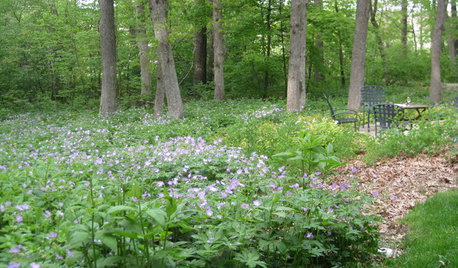
GARDENING GUIDESWe Bust 4 More Native Plant Myths
Have you been taken in by these fallacies about gardening with native plants?
Full Story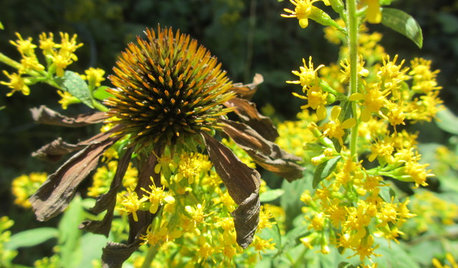
FALL GARDENINGReflecting on a Gardening Year
Mistakes and successes, surprises and comforts. The garden helps us grow in new ways every year
Full Story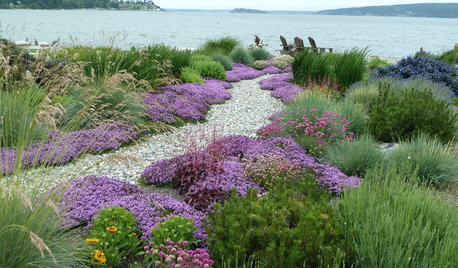
PLANTING IDEAS7 Ways to Use Drifts and Masses In Your Garden
Whether in formal or natural landscapes, grasses or succulents planted en masse elevate the garden
Full Story
More Discussions
wantonamara Z8 CenTex