

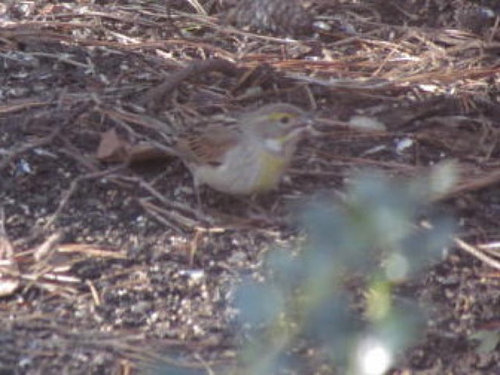
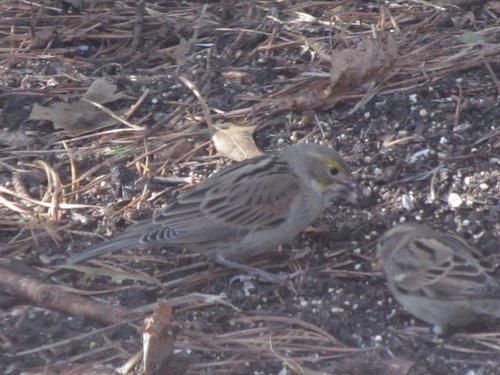
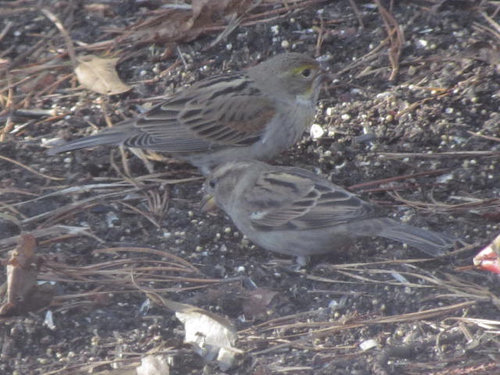
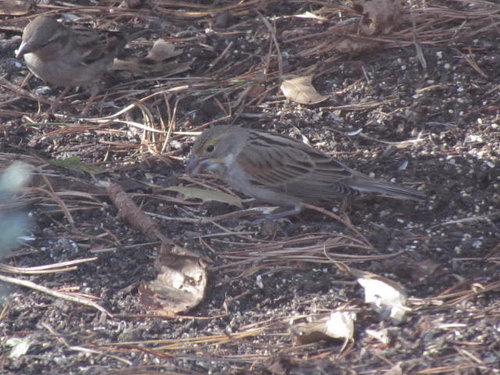
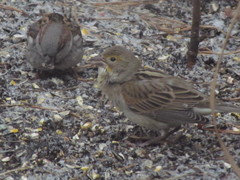
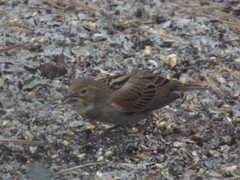
Dickcissel?
10 years ago
Featured Answer
Sort by:Oldest
Comments (6)
 10 years ago
- 10 years ago
Related Discussions
Do you know this Daffodil?
Comments (13)Chemocurl ~~ she says there's only one bloom per stem. Yes, I know, but that Division #7 'usually' has more than one bloom per stem, but it is not all that uncommon for them to just have one bloom per stem. Suecirish, Are you pretty certain that most all, (or all) of them were single blooms per stem? I believe the coloring on your daff is a reverse bicolor, meaning the petals are yellow and the cup white. I know this is not your daff, but here is my Hillstar another bicolor. The pic is clickable, I think. I do know I want Pipit now! Whoo-Hoo! I can see we may have a new daff addict here soon. Hope so! Sue...See MoreWhat is your favorite Daffodil/Narcissis
Comments (15)I love all the small doubles. I bought a mix of all doubles so I can test them all, and maybe get more of what I like. I had White Medal this year for the first time. That was the biggest darn daffodil I ever saw! It bloomed so late I thought they had not come up. I thought the foliage was that of the alliums I had planted. In my mind it was too big. I had to stake some of them. I'll keep it but I'm more interested in smaller doubles. Mary Copeland, a yellow /orange double, was very pretty but none (out of a dozen) came back this year. I love both white and yellow Cheerfulness. They bloom late so are a lovely surprise when they turn up. So dainty and graceful. Mine never spread, though. I wonder if that's true of doubles in general?...See MoreDon't know what this one is
Comments (13)In November, 2009 I saw a bird hanging around with the House Sparrows that had a bit of yellow on it. Otherwise, it looked similar to the sparrows and fit in very well. I'm in Plymouth, MA. I finally got a few photos and after searching the guides and emailing Project FeederWatch I discovered it was a female Dickcissel. Apparently Massachusetts was part of their original range but they're not often seen here now. Here the Dickcissel (front and center with the rufous shoulder patch) is feeding with a bunch of House Sparrows. Since then I look a little suspiciously at the House Sparrows wondering what else is lurking there. I've never seen a male Dickcissel. Claire...See MorePlease sign Red Tail Hawk Pale Male's Petition
Comments (5)obviously this is a little late, but here is a section of the illinois wildlife code. imho, it includes damaging nests of native and specifically birds of prey. does your state have anything similar? am i wrong? "520 ILCS 5/2.2) (from Ch. 61, par. 2.2) Sec. 2.2. This Act shall apply only to the wild birds and parts of wild birds (their nests and eggs), and wild mammals and parts of wild mammals, which shall include their green hides, in the State of Illinois, or which may be brought into the State, that are hereby defined as follows: All birds, both game and non‑game (except the House Sparrow, Passer domesticus; European Starling, Sturnus vulgaris; and Rock Dove or Domestic Pigeon, Columba livia). GAME BIRDS‑Ruffed grouse, Bonasa umbellus; Sharp‑tailed grouse, Pediocetes phasianellus; Bobwhite quail, Colinus virginianus; Hungarian Partridge, Perdix perdix; Chukar Partridge, Alectoris graeca; Ring‑necked Pheasant, Phasianus colchicus; Greater Prairie Chicken, Tympanuchus cupido; Wild Turkey, Meleagris gallopavo. MIGRATORY GAME BIRDS‑Waterfowl including brant, wild ducks, geese and swans, Anatidae; rails, gallinules and coots, Rallidae; snipe, Gallinago gallinago; woodcock, Scolopax minor; pigeons, including doves and wild pigeons (except domestic pigeons), Columbidae; and crows, Corvidae. RESIDENT AND MIGRATORY NON‑GAME BIRDS‑Loons, Gaviidae; grebes, Podicipedidae; pelicans, Pelecanidae; cormorants, Phalacrocoracidae; herons, bitterns and egrets, Ardeidae; ibises and spoonbills, Threskiornithidae; storks, Ciconiidae; vultures, Carthartidae; kites, hawks and eagles, Accipitridae; ospreys, Pandionidae; falcons, including the Peregrine Falcon, Falconidae; cranes, Gruidae; rails and gallinules, Rallidae; all shorebirds of the families Charadriidae, Scolopacidae, Recurvirostridae and Phalaropodidae; jaegers, Stercorariidae; gulls and terns, Laridae; cuckoos, Cuculidae; owls, Tytonidae and Strigidae; whip‑poor‑wills and nighthawks, Caprimulgidae; swifts, Apodidae; hummingbirds, Trochilidae, Kingfishers, Alcedinidae; woodpeckers, Picidae; kingbirds and flycatchers, Tyrannidae; larks, Alaudidae; swallows and martins, Hirundinidae; crows, magpies and jays, Corvidae; chickadees and titmice, Paridae; nuthatches, Sittidae; creepers, Certhiidae; wrens, Troglodytidae; mockingbirds, catbirds and thrashers, Mimidae; robins, bluebirds and thrushes, Turdidae; gnatcatchers and kinglets, Sylviidae; pipits, Motacillidae; waxwings, Bombycillidae; shrikes, Laniidae; vireos, Vireonidae; warblers, Parulidae; European Tree Sparrow, Passer montanus; blackbirds, meadowlarks and orioles, Icteridae; tanagers, thraupidae; cardinals, grosbeaks, finches, towhees, dickcissels, sparrows, juncos, buntings and longspurs, Fringillidae. GAME MAMMALS‑Woodchuck, Marmota monax; Gray squirrel, Sciurus carolinensis; Fox squirrel, Sciurus niger; White‑tailed jackrabbit, Lepus townsendii; Eastern cottontail, Sylvilagus floridanus; Swamp rabbit, Sylvilagus aquaticus; White‑tailed deer, Odocoileus virginianus. FUR‑BEARING MAMMALS‑Muskrat, Ondatra zibethicus; Beaver, Castor canadensis; Raccoon, Procyon lotor; Opossum, Didelphis marsupialis; Least weasel, Mustela rixosa; Long‑tailed weasel, Mustela frenata; Mink, Mustela vison; River otter, Lutra canadensis; Striped skunk, Mephitis mephitis; Badger, Taxidea taxus; Red fox, Vulpes vulpes; Gray fox, Urocyon cineraoargenteus; Coyote, Canis latrans; Bobcat, Lynx rufus. OTHER MAMMALS‑Flying squirrel, Glaucomys volans; Red squirrel, Tamiasciurus hudsonicus; Eastern Woodrat, Neotoma floridana; Golden Mouse, Ochrotomys nuttalli; Rice Rat, Oryzomys palustris; Bats, Vespertilionidae. It shall be unlawful for any person at any time to take, possess, sell, or offer for sale, any of these wild birds (dead or alive) and parts of wild birds (including their nests and eggs), wild mammals (dead or alive) and parts of wild mammals, including their green hides contrary to the provisions of this Act. However, nothing in this Act shall prohibit bona‑fide public or state scientific, educational or zoological institutions from receiving, holding and displaying "...See More- 10 years agolast modified: 10 years ago
- 10 years ago
- 10 years ago

Sponsored
More Discussions
Pat Z5or6 SEMich