

YAY we've got our forums back!!!!!!
11 years ago
Featured Answer
Sort by:Oldest
Comments (6)
 11 years ago
Related Discussions
We've lost most of our Honey Bees :(.
Comments (16)His points are well taken in some cases but seriously biased and miss entirely the point of using honeybees for pollination. There are no other pollinators - native or imported - that can be brought together in sufficient numbers to support economic pollination of the mega plantings farmers must grow to be competitive. Native pollinators are entirely inadequate for production of almonds as an example. The same is true for production of blueberries, cranberries, blackberries, cherries, and apples. There is a bit of wriggle room in this since orchard mason bees can be grouped together into nesting boxes that would permit them to pollinate some crops but the expense of doing so is currently significantly higher than the cost of honeybees. He is perfectly right that we import most of our honey. That is a crying shame in my opinion. We are perfectly capable of producing honey here in the U.S. and did produce all we could consume plus enough to export until about 30 years ago. That is when China and a few other very low cost countries began to ship honey into the U.S. at prices that were below the cost of production in the U.S. which drove our honey producers out of business or forced them to change their business from honey production to pollination. Taken all in all, they guy's arguments don't stand up to intense scrutiny, but only a beekeeper would recognize the fallacies in his arguments. My 12 colonies are doing fine thank you. I inspected one colony yesterday and reversed the brood chambers to get the queen to lay eggs in a different part of the hive. DarJones...See MoreWe've Got Ripe Corn! No Worms, No Raccoons!
Comments (17)Kirts, I feel like you are being wise to plan ahead. With the continuing modernization of some countries, like China and India, where the demand for oil and gas and other petroleum products is increasing exponentially every year, I see our energy costs continuing to rise. Since the average item in a grocery store in the USA travels about 1500 miles BEFORE it reaches the grocery store shelves, obviously the ever-increasing energy/transport costs will keep food costs rising. The changes we are seeing in the commercial agriculture industry and the food distribution network may force a lot of us to try to eat more locally. In the slow food movement, I think they refer to the effort to eat only locally-produced food as being a locavore. In addition, when you consider that a lot of the chemical fertilizers used by commercial farmers are linked to the petroleum industry, it is easy to believe that food costs will continue to go up because of rising fertilizer costs as well. I think people will turn to organic gardening as a means of lessening their dependence on foreign energy/fertilizers. There are many ways to store food and I use several of them. We have a tornado shelter and I use it to store root crops like potatoes and onions harvested in the summer as well as winter squash harvested in the fall. I have even stored winter squash on a shelf in the garage/barn and have had it last as long as 4-6 months in there. We have a large pantry located under our home's staircase. It is about 3 feet wide and maybe 12 deep. The height varies from 8' to about 2'. Back in that 2' area I store odds and ends we don't use often, like the pressure canner and my set of 4 huge stainless steel stockpots I use a lot during the harvest season. I freeze lots and lots of stuff. I always chop and slice onions and peppers and freeze them. I can usually raise a year's supply (or more) in the spring garden. I usually freeze tons of corn (I could can it if I didn't have storage space, but I do have storage space so I just freeze it.) Some years I get enough corn from the spring and fall gardens that we don't have to buy corn at all. The same is true of green beans and black-eyed peas. I even freeze tomatoes--they go straight from the freezer to the soup or saucepot in the winter. Okra is a little more iffy. We eat so much of it that I don't usually freeze much. I need to grow more, but the deer have been an issue with it for years, although I believe we've finally solved that problem. Thus, I should be able to grow more of it in the future. Carrots do best for me in the fall garden. If you have them in a well drained bed, you can leave them in the bed for months and harvest as needed. Another way to store them is in a clean trash can filled with sand. Pour a few inches of sand into the container, then put down a layer of carrots and repeat until all your carrots are stored. You also can keep them in a root cellar OR a refrigerator for months. Carrots can be frozen and even dehydrated. I dehydrate a lot of stuff. I then store all my bags of dehydrated veggies in the freezer, but you don't have to put them in the freezer. If you are careful to get out all the moisture, you can store dried veggies in the pantry. Even cantaloupes, muskmelon, watermelon and other lesser-known melons can be frozen. I usually cut them into squares, or use a melon baller to make them into melon balls and freeze them. You also can slice them into rather thin slices and dehydrate them. Their flavor and sweetness are so intensified by drying them that they are like candy. Anything that you grow in the garden can be dehydrated although some things take a pretty long time. I've never tried dehydrating corn, but I am sure it would work. Shelled beans dry naturally without dehydration and so do black-eyed peas. Many herbs can be tied in bundles and hung in a dry, warm, dark location to dry naturally. Canning is a lot of work and can be hazardous if done improperly, but as long as you follow all the recommended procedures and are careful, it is a great way to preserve food too. Cabbage will store a long time in a refrigerator or in a root cellar type situation. Back when people HAD to raise all the own food, a lot of them make sauerkraut to preserve the cabbage for winter, but I am not much of a sauerkraut person. There's always pickles too. You can pickle LOTS of veggies, not just cucumbers. You can pickle peppers, onions, carrots, beans, tomatoes, cucumbers, squash, watermelon rinds, etc. You also can make all kinds of relish and, there again, not just pickle relish but squash and others as well. Fruit can be frozen, dried or canned and you also can make preserves, jams and jellies. You can even make tomato preserves or marmalade. Storing food is not as hard as most people think, but it takes a lot of effort. If you want to expand your garden for next year, you could start building lasagna type beds this year. Although, as much as the heat bothers you and with your allergies, you might prefer to wait until fall to start laying out your garden beds. I like to clean out my garden beds in the fall and remove all debris. This is very important because many garden pests overwinter in plant debris. Usually I let the chickens roam around in the garden beds in December and they will dig and scratch and take care of lots of insects, insect eggs, weed seeds, etc. I also like to heap up tons and tons and tons of shredded leaves, gathered from our wooded areas, on top of the beds as soon as they are cleaned out after the first hard frost. The chopped-up leaves decompose into a lovely leaf mold or compost by spring. (If you don't chop them up, they break down a lot more slowly.) I also prefer to go ahead and add manure and compost to the beds in the winter months, so my beds are "ready to go" in the spring. Sometimes in a bad wildfire year, though, I stay too busy to get the garden beds cleaned up and replenished with compost, manure and leaves in winter. In those years, I really have a hard time planting on schedule because the beds aren't ready. I do all my planning and seed ordering in late fall to early winter. By the time the new seed catalogs arrive, I am usually about "done" although there is always something new that convinces me to order one more batch of seeds. Because my family understands and supports my gardening habit, my Christmas gifts are always handy useful things like gardening gloves (five pair last year, everything from goatskin to latex-dipped cotton to suede) and hand tools and such. One of my favorite garden gifts (I always ask Santa for this one) is a big cannister of electrical zip-ties. I use them to attach tomato cages to stakes, etc. There are several really, really useful vegetable gardening books and food preservation books that I find ESSENTIAL to my success as a veggie gardener. I have had most of them for years and years and years and still refer to them constantly. I'll make a list of them later. I'm off to the store to pick up some more food preservation supplies--processing all that corn wiped out my supply of freezer bags, and I need some pickling supplies before the cucumbers get out of control. I'll write later about corn and veggies. Dawn...See MoreFeeling like we've made a big, big mistake with our build...
Comments (46)First of all, you will get used to the noise. I'd visit Mom in FL whose house was a half mile away from the train tracks and the first day, I'd hear every train, but after that, hardly ever. Second, I think you need to get to know your neighbors...sounds like they are friendly types which is a good thing. I grew up in the country surrounded by lots and lots of land and few children because there were few houses. When I married and moved to an acre lot, it was terrible for awhile....all the traffic, the kids, the dogs, the mowers... Then I got to know my neighbors. And trust me, the chain saw isn't so loud when it's good neighbor Tim doing the sawing and you don't mind asking John if he could not mow on Saturday as you're planning on a memorial service for your Dad with lots of people coming.... And neighbors can be a great help, like when your snow blower breaks or when you need someone to feed the cat. I know our neighbor was glad for us when the house next to her's caught fire and the firemen wouldn't let her go home that night, so she spent the night with us. Every lifestyle has it's plusses and minuses. Change your perspective, seek the good, and then see where you're at. You may be surprised. BTW, we are now back home on 11 acres, but the area is so much more built up than when I was a kid. Even on our 11 acres though, I know when Bill is sawing or Jimmy is running his back hoe or when Norma is out mowing, or when Jessica's kids are playing with their dog. It's comforting....See MoreVery funny ! Things we've heard during our kitchen remodels....
Comments (59)OK, here's a possibility. Go to the local sign or photocopy shop and have them print, in big, bold, plain(for stupids) writing, "There is a hidden surveillance camera" or omit the surv part if you live in an area with real, real stupids, "which is recording every move(ment)"!!!!OMG, my stomach really hurts. "So, if you belong here, stay and do your duty"(!!!!ha, nah, don't say doody, unless you think it clearly applies to your locale. "Joggers, go at home or go ahead 1/4 mile, but not here"(I'm a mom of a marathoner, but a considerate marathoner) or, "If you can't hold it, go home! This ain't your home!" Plaster these signs INSIDE and outside the porta.. OOOOH, I have a great idea. Instead of 'violaters will be prosecuted... something like, violaters will be given a free, disposable, mop, plastic gloves, strong trash bags and YOU will be responsible for cleaning up your mess. Who defines what is a 'mess'? Your co-workers. If they don't think it's a mess, then they can help you clean it up. If the consensus agrees that it IS a mess, then the consensus (colleagues) can video your clean up activities!!!!This is so much fun! Pecanpie, I spit out my champagne(cheap 9.5% low carb) while reading your post! It was downhill from there......Breathing is difficult. This is a 'save for posterity'(don't go there) thread. Time capsule worthy. Love it Bev I will breathe normally soon. Ok, I can't resist. We have a beach cottage where, (I wish I had written this line...no, I'm not a snob, but) the handymen have more tattoos(sp) than teeth....See More 11 years ago
- 11 years ago
- 11 years ago
- 11 years ago
Related Stories

REMODELING GUIDESHave a Design Dilemma? Talk Amongst Yourselves
Solve challenges by getting feedback from Houzz’s community of design lovers and professionals. Here’s how
Full Story
KITCHEN CABINETSHold Everything — Your White Kitchen Cabinets Just Got Better
These design moves will add even more to white kitchen cabinets’ appeal
Full Story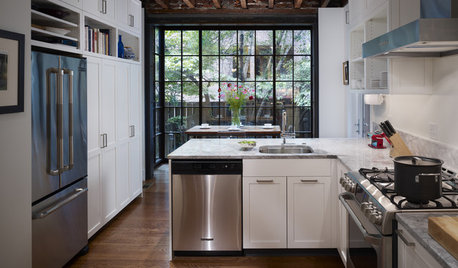
FEEL-GOOD HOME12 Very Useful Things I've Learned From Designers
These simple ideas can make life at home more efficient and enjoyable
Full Story
DIY PROJECTS12 Signs You've Caught the DIY Bug
Been making inventive things from scratch? Repurposing salvaged pieces creatively? It may be more serious than you think
Full Story
ARTBring In a View Like You’ve Never Imagined
See how art photographers turn a plain white wall into a magical window with a centuries-old camera technique — and how you could try it too
Full Story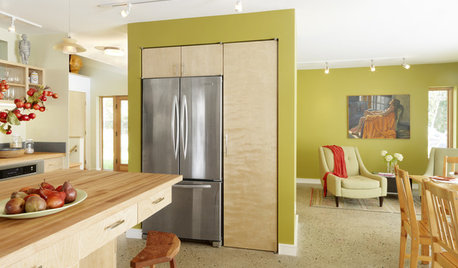
REMODELING GUIDESGet the Look of a Built-in Fridge for Less
So you want a flush refrigerator but aren’t flush with funds. We’ve got just the workaround for you
Full Story
KITCHEN DESIGNKitchen of the Week: Updated French Country Style Centered on a Stove
What to do when you've got a beautiful Lacanche range? Make it the star of your kitchen renovation, for starters
Full Story
DECORATING GUIDESKnot Again! Macrame Is Back
It's happened. A craft that typified 1970s style (the owls, the spider plants!) is back, but better
Full Story
COLORBest Ways to Use Radiant Orchid, Pantone's Color of 2014
Learn how to work in this bold fuchsia-pink-purple successfully around the home, and give it a yay or nay in the Houzz poll
Full Story
LIFEBack to the Future of the House
Can the low-tech dwellings of the past offer design lessons for homes to come? A palace curator and book author says yes
Full Story
User