

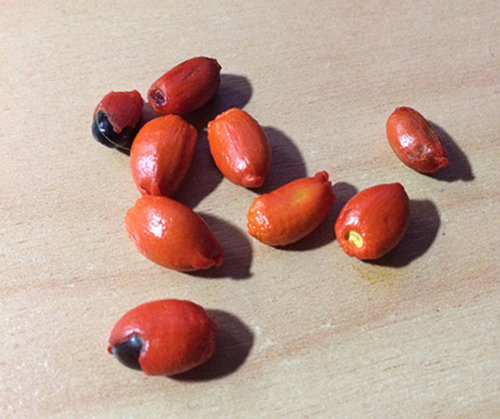
Propagating tuckeroo from seed
11 years ago
Featured Answer
Sort by:Oldest
Comments (10)
- 11 years ago
Related Discussions
How to propagating quisqualis indica (Rangoon Creeper)from seeds?
Comments (6)Good morning I bought an Indica Qusqualis. She comes in a pot but she has no sign of being alive. It's the end of April in the Iberian Peninsula. It's normal? When will it develop leaves and flowers? Thank you very much Best regards, Maria Petronilho...See MorePropagating Amaryllis from seed
Comments (44)Oleg, I have maybe three bulbs of H. psittacinum and they're pretty slow growing and they're very susceptible to rot and bug attacks, I've not had the easiest time with them but I have started to care for them more and have had an easier time! I think partially the reason H. papilio and H. cybister are so common in cultivation now is considering Fred Meyers, he crossed the best clones of each species to create a more tough and tumble plant. As well, these two species are among the easier to grow along with H. striatum, H. aulicum and H. puniceum which are also fairly common. Many Hippeastrum species I don't think could withstand cultivation in the casual growers hand UNLESS you live in an area with favorable conditions. You must study many of the species individually to know exactly what conditions are best considering they're found in a multitude of places including swamps AND deserts. I know many seasoned growers of Hippeastrum still have a very tough time with many species and many flower very seldom if at all. H. papilio is from a mild forest which is easily imitated by indoor conditions, it can be grown epiphytically, lithophytically or the usual pot of soil so it can handle a large range mediums. It grows in brightly lit places to shady areas so lighting usually isn't much of an issue. H. papilio can be maintained as an evergreen plant which gives a huge advantage against rotting too and it's resistant to many pests and diseases where as most other species are not! If you were to try growing Hippeastrum pardinum with the same idea of H. papilio you would more than likely fail, it needs a incredibly dry rest period during opposing months; any water during the dormancy will result in rotting and quite quickly! It doesn't always flower well *some sources only see flowers every ten years or so* and is usually a winter growing species, it relies on a lower amount of sunlight and ultimately much less water, put this in the hands of a typical "amaryllis" grower and they're set up for failure! This isn't to say that it's impossible to grow many of these species successfully because it isn't but you must educate yourself. While the hybrids and some species (h. papilio) are very forgiving, most others are not. I think it would be spectacular to see these grown in larger quantities but sadly I don't foresee that as most aren't willing to invest the time and energy they take. :( It's also a big misconception that ALL Hippeastrum need light water in fear of rotting, H. breviflorum, H. harrisonii, some forms of H. vittatum and H. angustifolium can be found in bogs, swamps and other wet areas, many are completely submerged throughout their growing seasons and only slightly dryer during dormancy, these species could create a more resistant plant in future breeding as well, I think these are quite beneficial as parents to new hybrids but their ease of growing is nil to none. Josh...See MoreNo germination from self-propagated marigold seeds
Comments (3)They were most likely a hybrid variety as those are usually the fancy ones with the most attractive blooms. Especially if you bought them ad bedding plants....See Morecitrus propagation from seed
Comments (14)I am currently experimenting with three different citron varieties grown from seed. My oldest tree is somewhere between 2-3 years (i was given care of it while it was a young 12" seedling and told it was about a year) and the other trees are approx 18 months old. Obviously none have fruited. Although i have never grown grafted citrus - and therefore have very little, if no understanding as to the differences - two things stand out to me as very different from a lot of what i see described on this forum pertaining to grafted trees: 1) Everyone here seems to fertilize often with large doses of FP. The few times i have tried to use FP on my trees - with less added than i see people hear use - i have had almost immediate and obvious "burn" on my trees, including yellowing tips of leaves among other symptoms. [they are very happy when i use the Lutz citrus tabs in the pots and otherwise leave them alone]. 2) the young seedlings are somewhat intolerant of direct heavy sunlight - they seem much less stressed inside the greenhouse during the hotter months and when i have attempted to add supplemental LED lighting during the late fall/early spring i also notice immediate burning of the upper leaves. Since I have not found any great answers as to why they behave this way, I am led to believe that the above issues are just due to the young age/immaturity of the trees. But that barely even an educated guess. I know nothing about "node counts" or the height of mature potted citron, but i am certainly hoping for some fruit sooner than 10 years!...See MoreRelated Professionals
Danville Landscape Architects & Landscape Designers · Medford Landscape Architects & Landscape Designers · Amherstburg Landscape Architects & Landscape Designers · Birmingham Landscape Contractors · Florence Landscape Contractors · Waterbury Landscape Contractors · Chicago Landscape Contractors · Taunton Landscape Contractors · Detroit Landscape Contractors · Rochester Landscape Contractors · Potsdam Landscape Contractors · Saint Marys Landscape Contractors · Marietta Architects & Building Designers · Chambersburg Architects & Building Designers · Newport Architects & Building Designers- 11 years ago
- 11 years ago
- 11 years ago
 11 years ago
- 11 years ago

Related Stories
CONTAINER GARDENS8 Easy Container Plants to Grow From Seed
Get beautiful blooms and herbs in summer by starting these choice garden picks from seed in spring
Full Story
GARDENING GUIDESDon’t Let These Excuses Keep You From Gardening
Stop blaming your lack of experience, space, time and funds, and get on with the joy of garden making
Full Story
LANDSCAPE DESIGNArtistic Planting Ideas From a Brazilian Superstar
His abstract designs and native plantings changed the face of landscape architecture. Could Roberto Burle Marx’s style enhance your garden?
Full Story
FALL GARDENINGBe Your Own Wildflower Nursery
Gather seeds from your garden in fall, and you'll have a selection of plants for next year — without spending a dime
Full Story
GARDENING GUIDESGreat Design Plant: Hibiscus Moscheutos
Crimsoneyed rosemallow is an ideal flowering perennial for wet sites and is ready to propagate now
Full Story
WINTER GARDENINGExtend Your Growing Season With a Cold Frame in the Garden
If the sun's shining, it might be time to sow seeds under glass to transplant or harvest
Full Story
GARDENING GUIDESMid-Atlantic Gardener: What to Do in June
Abundant sun is yielding bountiful blooms in the garden this month, but don't forget to watch for pests, package some seeds and plan ahead
Full Story
GARDENING GUIDESGreat Design Plant: Geum Triflorum
Nodding red blooms, glittery effervescent seed heads and a tough-as-nails constitution make prairie smoke a winning ground cover
Full Story
GARDENING GUIDESMid-Atlantic Gardener's August Checklist
Bring in the bounty of tomatoes, savor the show of grasses and start seeding some cool-season plants
Full Story
FLOWERSRudbeckia Mania: Go Beyond Black-Eyed Susan in the Garden
Branch out from typical nursery fare, with lesser-known Rudbeckia species that have delightfully unexpected features
Full StorySponsored
alisonoz_gw