

Excess kaffir lime fruit
20 years ago
Featured Answer
Sort by:Oldest
Comments (11)
 20 years ago
- 20 years ago
Related Discussions
Have : Citrus hystrix- Kaffir lime
Comments (1)I don't have anything to trade. But am interested in if you have any left to share. Thank you. Ivan ivan.ferdous@gmail.com...See MoreWanted Kaffir lime fruits/seeds
Comments (0)I am looking for Kaffir lime seeds. I only have dwaft pomegranite for trade. Please contact me through email if you want to trade....See MoreKaffir lime - help
Comments (7)Hey Nik I think its PM. It's like a dust that settles over the leaves. It might be sooty mildew or something else though. The first year I had my trees, I just thought it was dust and then I realized it wasn't. I can wipe it off quite easily but I use the neem oil to keep down the insects that spread it and also scale. In virginia it is very humid and when the trees are in the high tunnel, air flow is restricted despite having a fan blowing etc.... If I relax my guard, then scale and this mildew stuff goes rampant. Taking care of citrus can be labor intensive until you find a rhythm. I'm not quite there yet but I'm learning a lot and feel like I'm getting closer. I'm like a parent with child number one, trying to get everything perfect. Lol W...See MoreMy 10 yrs old kaffir lime tree does not flower
Comments (25)Like animals, trees grown from seed must pass through several phases of development before they become sexually mature and capable of producing reproductive parts (blooms/ seeds/ fruit). The plant phases of seed - seedling - juvenile - sexually mature are roughly mirrored in human developmental stages of embryonic - infantile - juvenile - adult/ sexually mature. A freshly sprouted seedling is no more capable of producing reproductive parts (blooms/ seeds/ fruit) than an infant. Too, a plant's aging process is different than an animal's. Where animals age chronologically, plants age ontogenetically. Ontogenetic aging can be thought of in terms of how many cell divisions have occurred to move the plant to its current phase of development. One might reason that the most recent new growth would be the youngest part of the plant, but ontogenetically, it is the the oldest part of the plant because it has taken many more cell divisions to produce the newest parts. Ontogenetically, the youngest part of a tree grown from seed will always be the root to shoot transition area at the base of the trunk, no matter how old the tree is chronologically. Pruning a tree back hard can easily remove all existing mature growth and return it to a juvenile phase that would require a considerable amount of new growth before the wood again becomes mature. All factors that influence growth rate have an impact on how long (chronologically) it takes a plant to become sexually mature, so thinking that a change in nutrition alone will cause a plant to bloom is misguided. The fastest seedlings to mature within any given species will depend on how proficient Mother Nature or the plant's grower is at providing ideal cultural conditions. Ideal cultural conditions = most rapid growth rate and shortest period of time to reach maturity; this, simply because ideal conditions are most conducive to cell divisions and therefore a fruitful tree at a younger chronological age. It should be noted that applying nutrients or other products in willy nilly fashion with no knowledge of whether or not there is an actual deficiency of those nutrients or no good reason to apply them is highly likely to be limiting in terms of both growth and rate of maturation. Whenever we discuss what is or isn't an appropriate part of the methodology we use to make certain our plants get all the nutrients essential to growth and good health, we would probably first want to be sure our objectives are on target. It's difficult to argue with the idea that our focus in supplying supplemental nutrition to our plants should be on ensuring all the nutrients plants normally assimilate from the soil are A) IN the soil and available for uptake at all times, B) in the soil in a favorable ratio - that is to say in a ratio that mimics the ratio at which the plant actually uses the nutrient, C) at a concentration high enough to ensure no nutritional deficiencies, yet still low enough to ensure the plant's ability to take up water efficiently, and the nutrients dissolved in that water won't be impeded (by a high concentration of solubles in the soil solution). The part in bold is where growers often run afoul of sound husbandry. By adding unnecessary nutrients we A) skew the ratio of nutrients, each to the others, such that an excess of one nutrient causes a deficiency of one or more other nutrients, and B) make it more difficult for the plant to assimilate water and nutrients. So, for plants in containers, best results can be had by choosing 1 fertilizer with an appropriate nutrient ratio and all the nutrients essential to normal growth. Forget the snake oil products and claims made on product packaging by sellers whose only goal is separating you from your money. For plants in the landscape, a soil test is ESSENTIAL for any grower aiming at providing the best cultural conditions possible. "A little extra" is almost always going to be limiting rather than beneficial; otherwise, it wouldn't be "extra". Al...See More- 20 years ago
- 20 years ago
- 20 years ago
- 20 years ago
- 20 years ago
- 20 years ago
- 20 years ago
- 14 years ago
Related Stories
EDIBLE GARDENSGrow Plum Hybrids for Your Favorite Fruit Flavors
Plums are cozying up with apricots, peaches and even cherries — here’s how to grow these hybrids for the best aspects of each
Full Story
EDIBLE GARDENSHow to Grow Your Own Peaches and Nectarines
Make gardening a little sweeter with these juicy fruits, which you can eat after plucking or preserve for later
Full Story
FUN HOUZZ31 True Tales of Remodeling Gone Wild
Drugs, sex, excess — the home design industry is rife with stories that will blow your mind, or at least leave you scratching your head
Full Story
URBAN GARDENSHarvest the Bounty of a Patio Garden
Make the most of small spaces on decks and balconies to enjoy your pick of vegetables, fruits and herbs
Full Story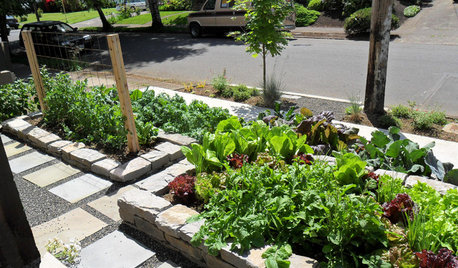
FRONT YARD IDEASWelcome Edibles Into the Front Yard for Fresh Food and More
Give your front yard design a boost and maybe even make new friends by growing fruits and vegetables
Full Story
SELLING YOUR HOUSE10 Ways to Boost Your Home's Resale Value
Figure out which renovations will pay off, and you'll have more money in your pocket when that 'Sold' sign is hung
Full Story
MOST POPULAR7 Ways to Design Your Kitchen to Help You Lose Weight
In his new book, Slim by Design, eating-behavior expert Brian Wansink shows us how to get our kitchens working better
Full Story
GARDENING GUIDESGarden Myths to Debunk as You Dig This Fall and Rest Over Winter
Termites hate wood mulch, don’t amend soil for trees, avoid gravel in planters — and more nuggets of garden wisdom
Full Story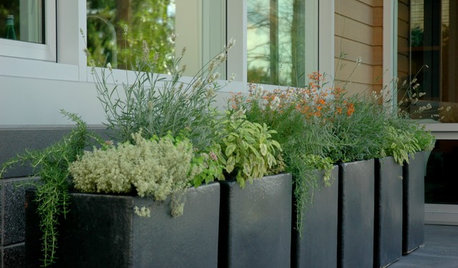
GARDENING AND LANDSCAPINGUnexpected Edible Gardens
How to grow your own herbs and vegetables almost anywhere
Full Story
KITCHEN DESIGN12 Items Worth a Spot on Your Kitchen Counter
Keep these useful tools and accessories out in the open to maintain high function without spoiling the view
Full StorySponsored
Spatzbear