

which lavender for hot and humid climates?
23 years ago
Featured Answer
Sort by:Oldest
Comments (18)
 23 years ago
Related Discussions
growing lavender in humid climate
Comments (9)Andrepap, Summer in southwest Georgia is very, very humid (great for plumping up your wrinkles). I love lavender and when I moved to south Georgia, several plant experts told me lavender did not grow well here because of the humidity. However, I have a lavender plant growing in a 2 1/2 foot section of flower bed between my kitchen door and parking pad and it is thriving. The lavender is located on the southern side of the house and receives hot afternoon sun. I have mulched the bed with pine straw and water it occasionally. I have sandy soil so the drainage is excellent. I haven't had any problems with bugs or diseases....I can't remember the variety (perhaps, Provence), but I think I bought it at Lowe's. I had another lavender planted on the other side of the kitchen door, but Yogi (my golden retriever) kept peeing on it every time he went out the door...I fixed that problem by "planting" a small stool by that side of the door. My advice is to plant a lavender and see how it does. You may need to try several locations to find the right spot. Good luck!...See MoreHot Humid Climate
Comments (6)It's not "hot" in Hawaii (maybe that's relative, but). It rarely gets over 90 degrees anywhere in the islands. Even the humidity is usually dried up by tradewinds. It's just not cold either unless you live at elevation, like Upcountry Maui. Florida's highs and lows both exceed Hawaii's by a good bit, not counting Hawaii's mountain zones which I believe go as low as zone 4 on Maui. Hawaii's climate is "perfect" for any heirloom. The problem is pests and disease, primarily fruit fly and TSWV. Cherry tomatoes do best with the flies and are popular with gardeners there. Certain types bred in and for Hawaii by UH, Kewalo comes to mind; and the TSWV resistors, Amelia, BHN 444, 640 etc., are best bets. A successful farmer named Richard Ha (youtube link) has grown 80+ varieties of heirlooms successfully on the Big Island where he gets 200 inches of rain, but he uses hydroponics and "open sided greenhouses" and sprays stuff many here wouldn't spray. Search the Hawaii Gardening Forum and you'll find growing tomatoes is a challenge there, but not primarily because of the weather, which just depends on where exactly you are in the islands, most spots being excellent climate-wise. There's even a thread disputing comparisons to Florida. Hawaii's hot humid spell is brief in some parts non existent in others; whereas, Florida's is extended and oppressive. Mojavebob, who plans to retire as Mauibob in the next ten years. ;)...See MorePlease help choose systems for hot, humid climate
Comments (26)Could you be a little more specific as to your general location? County and State would suffice. This could help with responses. Not an expert, but I have renovated many homes and built two. I have lived and owned homes in Texas, Louisiana, Georgia and Virginia. Like everyone in the South, I have allergies. I've also lived in Utah, Illinois and New York, but they aren't in the South and HVAC answers would be different. Anyhow, I've lived pretty much everywhere. I also have the world's best HVAC guy. He taught at Carrier's Southeastern training facility. He puts theory together with field practice. He's worked on and redesigned three systems for me at this point. Because your home is not a new build, a lot of choices are eliminated for your application. Proper encapsulation of the attic spaces as an after thought will be difficult to do. With new construction, you biggest bang for your buck is passive insulation. In your case, it just depends on the scope of the renovation to determine their effectiveness. Carrier is currently the best manufacturer of HVAC. In most of the South, if I had the choice, I would install a heat pump. The technology is amazing. The Infinity Units will heat successfully down to 26F. While you can back it up a basic air-conditioner with a gas furnace, unless there is one already onsite, I would simply go with all electric. Heat pumps are more expensive upfront, but save money through their operational costs. The Infinity line is the top of the line. If I were starting from scratch, I'd select the two stage variable speed units. Lots of controversy regarding spending the extra for 20 SEER versus 18 SEER and payback. Your contractor should have those figures. The mid unit is a really good choice, too. I just installed their base a/c unit as a replacement last week. I'm selling the house in five years and upgrading further wouldn't provide a reasonable payback. Thus, my choice. My guy installed April Aire dehumidifiers on all 3 of my homes. Controlling humidity is the key to a healthy house envelope. This is where I spend my extra money. Last, in my last three homes I have installed a GPS or Global Plasma Solutions unit. It acts as an air scrubber inside my systems to kill molds, dust mites and pathogens. It's generally found in commercial applications, but with my allergies it has been a huge success. Since I have installed these in my systems, my seasonal allergies are well controlled. Don't waste your money on ultra violet light systems. They aren't effective due to the volume of air that passes through the system. The GPS unit will do the trick. Most installers won't know what these are, but look it up on line and read about it. Global Plasma Solutions. We bought our previous home with a roof leak and knowledge that there was some mold. We did the repairs and removed all of the moldy material. Still, we suspected that we would never get the mold out of the ventwork. My husband is sensitive to mold. After we installed the GPS and let it do it's work for a month, his reactions to mold disappeared. These gadgets work. Last, encapsulate your basement or crawlspace. It's a good use of renovation dollars. Lots of homes in the South are not encapsulated. Do that and you will reduce a significant amount of humidity being introduced into your home. Reduce the humidity to below 45% and you make any mold inert. That's your goal. This is my 2 cents from a homeowner and not a HVAC guy....See MoreFragrant Yellow that’s HEALTHY in a Hot and Humid Climate?
Comments (124)Elena, sorry no salt rubbing intended! Regardless of what AA may say about selecting their own varieties, I strongly suspect Tantau has the final say. I bet they exert a lot of pressure on suppliers to stock their newer roses, whether that’s by using financial incentives, making it a condition of the ‘exclusive’ deal or simply saying nope, you can’t have that one. Most breeders want to push sales of their new releases over the older, potentially less profitable ones. What the customer actually wants is irrelevant, it seems. Still, I wish you luck in your campaign. Hi Carol, that was just a very brief chilly interlude we had here, we are back to more familiar, seasonal temps now and rain. Glad you are enjoying a little warmth, no such thing as normal any more....See More- 23 years ago
- 23 years ago
- 23 years ago
- 23 years ago
- 23 years ago
- 23 years ago
- 23 years ago
- 23 years ago
- 23 years ago
- 23 years ago
- 23 years ago
- 23 years ago
- 23 years ago
- 23 years ago
- 22 years ago
- 22 years ago
Related Stories
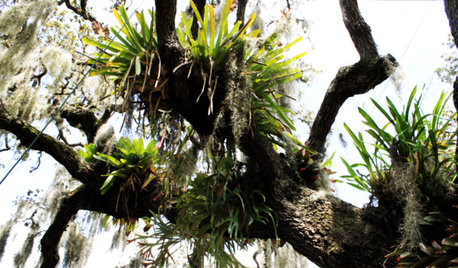
GARDENING GUIDESGot a Hot, Humid Landscape? Add Tropical Flair With Air Plants
Turn tree trunks and walls into lush canvases with plants adapted to the canopies of the rainforest
Full Story
DECORATING GUIDESGive Your Hot-Climate Home a Fall Feel
If soaring temperatures are putting a damper on your fall decorating, try these lighter takes on autumn style
Full Story
ARCHITECTURE15 Smart Design Choices for Cold Climates
Keep your home safe and comfortable in winter by choosing the right home features and systems
Full Story
GARDENING GUIDESRegal Lavender Rules Gardens Coast to Coast
Learn how to grow this fragrant, beautiful herb and show off its full beauty in the landscape
Full Story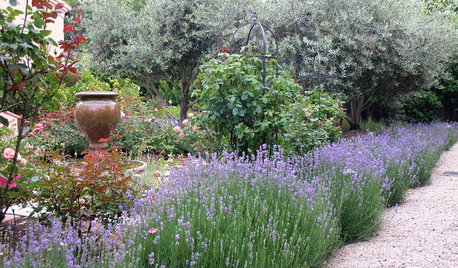
FLOWERSHerb Garden Essentials: Grow Your Own Fragrant Lavender
This do-it-all plant is ideal for almost any garden, and its uses are abundant around the home
Full Story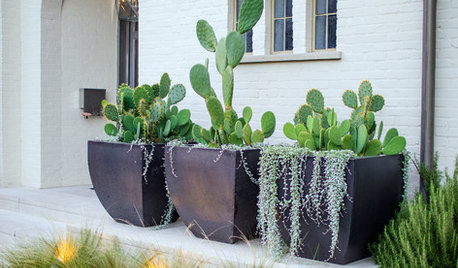
CONTAINER GARDENSCactus and Succulent Containers Are Ideal for Hot, Sunny Spots
Bring on the sun with these heat-loving succulent container gardens
Full Story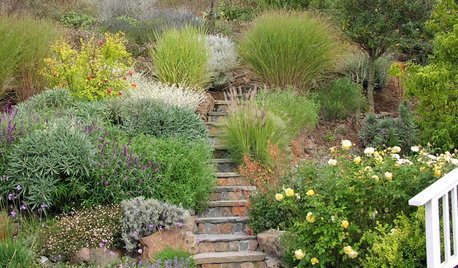
GARDENING GUIDESYes, You Can Grow an Edible Garden on a Hot, Dry Site
Difficult garden spots don’t need to deter you from planting trees, herbs and other delicious food plants
Full Story
GARDENING AND LANDSCAPING13 New Ways to Make a Splash With a Hot Tub
Check out the modern options and custom features that are making outdoor spa tubs hot again
Full Story
KITCHEN DESIGNDisplaying Kitchen Supplies — Hot or Not?
Do some kitchens just beg for a cozy row of canisters and gear for all to see? Have a look and let us know what you think
Full Story
LANDSCAPE DESIGNWhile It’s Still Hot Outside, Design a Landscape for Cooling
Summer is a good time to plan for a yard that will bring temperatures down
Full Story
Big_Hanno