

Bread Machine, but baking in the Oven
16 years ago
Featured Answer
Sort by:Oldest
Comments (25)
 16 years ago
- 16 years ago
Related Discussions
baking in bread machine using spelt flour?
Comments (2)I don't know about spelt being "healthier", because there are health benefits to consuming whole grains in general, and all whole grains have their redeeming qualities over refined flour. I only use freshly-milled spelt because that's the only way to get all the nutrients available in the grain - Fresh Is Best.... I use a large variety of freshly-milled grains/seeds/beans in baked goods. This link will give you a nutritional comparison: http://whfoods.org/genpage.php?tname=dailytip&dbid=148&utm_source=rss_reader&utm_medium=rss&utm_campaign=rss_feed Spelt is a little lower on the glycemic index of foods than wheat, probably because it hasn't been hybridized like wheat has and it has a higher protein level than wheat. Spelt is the ancient form of our modern red wheat varieties, while kamut is the ancient form of durum wheat (used for pasta/noodles). Spelt has a great nutritional profile and is often easier to digest for some people who find wheat difficult to digest. I like to feed my sourdough starter spelt flour because it is higher in carbohydrates than wheat flour. I use spelt (freshly-milled at home) mostly in baked goods like quick breads and cookies where I don't need a lot of gluten development. In fact, there are 100% spelt sugar cookies in the cookie jar this weekend. In bread recipes, I use spelt like I would other low-gluten flours (rye, barley, kamut, etc.), substituting it for 20-30 percent of the flour PLUS 1-2 T. vital wheat gluten, but there are plenty of recipes for 100% spelt bread. Vital wheat gluten is unnecessary in 100% whole wheat bread because I mill grain that is 13.1% protein, which is more than enough gluten to get a high rise. Adding too much vital wheat gluten will make bread tough. There are benefits using a sponge method when making 100% whole wheat breads, over using the more modern quick method (straight- or direct-dough method). When making whole wheat bread in the Zo, I use a sponge of at least 2-1/2 hours, but generally an overnight sponge. The loaves are as high-rising and nearly as light in texture as any white bread. However, I never bake breads in the Zo. The gluten level of spelt, and the type of gluten protein in spelt, is much different from wheat. Gluten in spelt is around 5,000 parts per million compared to wheat which begins at 50,000 parts per million and go up from there. Gluten in wheat is like a sponge in your dough soaking up hydration, so when using spelt in a recipe designed for wheat flour, you will either use less liquid or more flour to get the correct hydration using spelt. The gluten in spelt also takes less time to develop, so not as much kneading is required. If you like using spelt, I'd suggest the book "The Spelt Cookbook" by Helga Hughes. She uses wholegrain spelt flour and "white" spelt flour (with the bran and germ removed) in the book. For people who have difficulty digesting wheat (this doesn't include people who are gluten intolerant), you may find you can use sprouted spelt flour (link below), or other sprouted flours. Recipe for a bread machine... SPELT BREAD (source: Bread Machines For Dummies - by Glenna Vance and Tom Lacalamita) 1-1/2# loaf with changes for 2# in (----) 3/4 c. (1 c. + 1 T.) water 2 T. (3 T.) vegetable oil 2 T. (3 T.) sugar 1 t. (1-1/2 t.) salt 3 c. (4 c.) spelt flour 2-1/4 t. (1 T.) Active Dry Yeast 1. Have all the ingredients at room temperature. 2. Place the ingredients in the pan in the order listed. 3. Select a Basic, White, or Normal cycle and a medium crust color. Press Start. Variation: You can make a cinnamon raisin bread with this recipe by adding 2 t. of cinnamon and 3/4 c. raisins to the 1-1/2-pound loaf. If you are making the 2-pound loaf, use the same amount of cinnamon but increase the raisins to 1 c. Be sure the raisins are a bit dry or they will disintegrate in the bread. -Grainlady Here is a link that might be useful: Summers Sprouted Flours...See MoreBaking Challah in a bread machine?
Comments (15)My stacked 200 series oven and combi-steam are 45" together, with about an inch of trim between. (I think the sizes are the same as the current models.) There is a tank version of the combi-steam if you don't want to plumb it, though having the plumbing means descaling once in a very blue moon (like years) and otherwise forgetting about the water. You do have to have space nearby for the trap and valve if you plumb. Mine does go down through the floor to the main drain which starts at the cleanup sink, and meets the prep and combi- at the island, then runs through the laundry. If it's not easily retrofitted, it's probably not worth the bother. I did get a little "pizza stone" (quote marks because it's thin) to fit in the combi- but I have it purposefully high, and I haven't gotten around to trying to bake in it. For crusty breads and toothsome pizzas, I use the dedicated pizza stone and electric coil that are an extra you can buy for the regular oven. Rhome410 isn't enthusiastic about hers (and she liked her Wolf ovens better than the Gaggenau before they failed), but I think they're fantastic! The thing about the combi-steam is that it doesn't do anything you can't achieve by other means. It's just easier. For a lot of things that people want steam on, like crusty roasts and breads, I've always said, "Just put a ramekin of water in your regular oven." I've only recently gotten into the crusty bread thing, and I was a little concerned with the pizza stone in its required bottom position since all the instructions say that the steam pan should be below, but when I put my ramekin of water on a high shelf with the bread on the stone, it gets as nicely crusty as one could wish. I haven't compared to the alternative method, but it compares well to bakery/restaurant crust. The greatest tricks the combi-steam does are regenerate and steaming. Regenerate mode lets you put in a composed plate to heat up. Meat, veg, starch, it all gets warm without getting overcooked or weird. I decided I didn't care how much it cost when I was microwave steaming vegetables for salad for the holidays and my very favorite glass pot broke. It was too much cold/hot/cold/hot stress. I hate steaming on the stove. There is no work to making vegetables for a couple dozen people in the combi-steam. Prepping, them, yes, but steaming them is a bagatelle. Almost an afterthought. It also makes excellent poultry. I once did three turkey half breasts and three thighs for Passover. Dead easy. The combi- will hold my 17" Pyrex dish and my 8 qt. Graniteware roaster (with foil on--the lid doesn't fit easily), so most years it gets either the kugel or the brisket. My "goose pot", when I go for the whole turkey has enough room around it in the big oven for a few baked potatoes, or other small oddities, but the combi- year, I put the potatoes on the edge of the turkey pans and they came out fine. (I have a couple of non-meat eaters.) The first fault I've found with my regular oven is that with the fan on (which includes with the pizza stone setting), the hot air hits the door and reflects at a particular angle, so the right front edge of the bread gets a little browner. Not enough to bother me, but not as even as baking without the fan. The oven will do fan only, fan and some or all of bottom heat, bottom heat only, and top and bottom heat. And that's just for baking. :) You get to choose. And, yes, unless you can find a good closeout, Gaggenau will cost you more than anything else, and the combi-steam is a premium beyond that. More than you wanted to know? I'm still holding good thoughts for the recovery of your Miele. :)...See MoreAdapting Bread Machine Recipes for non-Machine Baking
Comments (8)robin, I adapt non-bread machine recipes to use in the bread machine all the time, I've never found one that didn't turn out, so I don't see why it wouldn't work the other way around. I'd mix all the wet ingredients, beat in the dry ones, then knead until it feels right, probably the obligatory 7-10 minutes. Let rise, knock down, shape, rise and bake. Although 350 is my "universal" temp I'd do bread at 375F for 25 or 30 minutes, depending on the shape of the loaf. make sure your liquid ingredients are warm, but not too hot, so you don't kill the yeast. And no, I never proof today's yeast and I haven't experienced any problem, as long as the yeast isn't outdated. Heck, you know my theory on bread. People have been baking it in one form or another for centuries in everything from fireplaces to the most expensive ovens, or on hoes over a fire. Toss everything in a bowl, mix, knead, rise, bake. It'll be good. That recipe, BTW, looks really good, I think I might try that myself as soon as my loaf of high protein honey wheat is gone. Annie...See MoreDoes anyone have a bread machine that bakes really well?
Comments (16)Shambo, on Amazon's home page--at the very top of the screen next to where it will say 'Shambo's Amazon.com', click on 'Today's Deals'. The first set of 'deals' will be the 'Gold Box Deal of the Day.' Just below the Gold Box Deal will be the Lightning Deals. There will be a bunch of these limited time deals...scroll across to see all the current ones and upcoming ones. They have a time limit on claiming the deal & completing the purchase. I think it's a couple of hours but you'll see that when you click on an item & add it to your cart. Another tip...when you get to the Lightning Deals, look over on the right hand side of the screen--Click on 'Sort by Category' to hone in on your area of interest (vs having to scan thru a bunch of junk you have zero interest in.) Yesterday, there were a bunch of small appliance deals (Zo, Panasonic, Cuisanart, etc.)--not so much today. :-( Anyway, happy hunting....See More- 16 years ago
- 16 years ago
- 16 years ago
- 16 years ago
 16 years ago
 16 years ago
- 16 years ago
- 16 years ago
- 16 years ago
- 16 years ago
- 16 years ago
- 16 years ago
 16 years ago
- 16 years ago
- 16 years ago
- 16 years ago
- 16 years ago
- 16 years ago
- 16 years ago
- 16 years ago
- 16 years ago
- 16 years ago

Related Stories
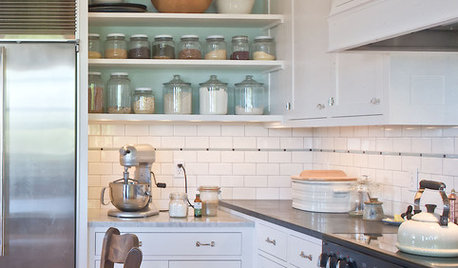
KITCHEN DESIGNLove to Bake? Try These 13 Ideas for a Better Baker's Kitchen
Whether you dabble in devil's food cake or are bidding for a bake-off title, these kitchen ideas will boost your baking experience
Full Story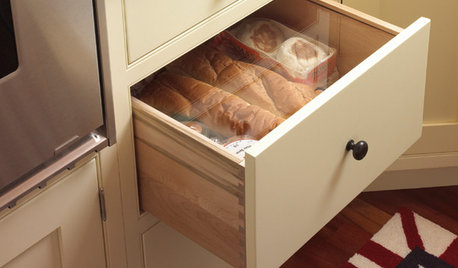
KITCHEN DESIGNKitchen Ideas for Bread Lovers
Any way you slice it, a kitchen designed with bread in mind conveys warmth and homeyness
Full Story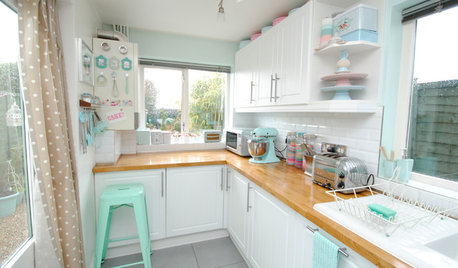
KITCHEN DESIGNGet Your Kitchen ‘Bake Off’ Ready
Make it easy to whip up a cake or a batch of cookies with these tips for organizing your space
Full Story
LIFESimple Pleasures: The Joy of Baking
Fill your house with a heavenly scent and your heart with cheer by making time to bake
Full Story
PRODUCT PICKSGuest Picks: Holiday Baking 101
20 stylish finds to help crank out those Christmas cookies like a pro
Full Story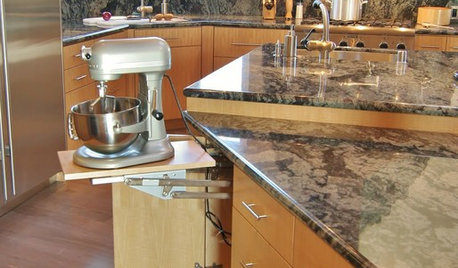
KITCHEN DESIGNKitchen Design: Baking Stations Make Cooking More Fun
Get inspired to cook (and simplify holiday prep) with a dedicated space for baking
Full Story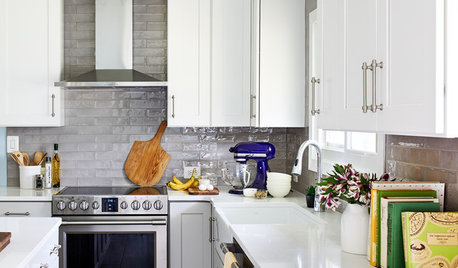
KITCHEN DESIGNGet Organized for Holiday Baking
Before you crack that first egg, establish a game plan for stress-free success
Full Story
HOUSEKEEPINGBaking Soda: The Amazing All-Natural Cleanser You Already Own
Battle grime, banish odors and freshen clothes with this common nontoxic cupboard staple
Full Story
KITCHEN DESIGNKitchen Luxuries: The Wood-Fired Pizza Oven
If you love homemade pizza and are (ahem) rolling in dough, a wood-burning oven may be just the right kitchen investment
Full Story
LIFESavor Natural Scents at Home
Bread fresh from the oven, luscious lavender, just-mown grass ... the loveliest fragrances for the home are also the most natural
Full Story

mcmann