

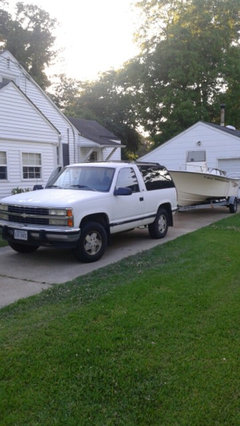
1992 Chevy Truck 1500 running BAD!
19 years ago
Featured Answer
Sort by:Oldest
Comments (75)
 11 years ago
- 11 years ago
Related Discussions
dodge or chevy 2500 ?
Comments (10)"The 5.7 L in the 1500 should be perfectly adequate and get better mileage.." That is a inaccurate guess many consumers make. Just because it is a smaller engine they think that it gets better milage. Truth is, in the real world they dont. The smaller engine has to work twice as hard to get the same job done as a 2500 with a 6 litre engine. I am talking if you take a 1500 and a 2500 hook up a trailor to each of them that weights the same. With the same amount of fuel in the tanks. I will bet anything that the 1500 will have to stop for fuel way before the 2500 with the 6 litre engine will. "The 2500 rides like a dump truck.." If you are talking about a Chevorlet, You could not proove that by me. The Dodge 2500 and Ford F250 and F350's I have had did not give a comfortable ride at all. They were rough riders. DuraMax, Cummins, Power Stroke diesel's? Sure they are strong powerful engines. Cant afford to use them. 8 to 10 miles per gallon. Maybe 12 if you drive down hill a lot. Insurance nearly twice the cost of a gasoline in the same class. Parts..lol.. Take one $850 dollar fuel pump for a Power Stroke diesel, add a $250.00 cam sensor (wont run without one). I will stick with my Chevy 2500HD's....See More1992 Chevy 1500 no injector pulse
Comments (3)When a shop posts a help request similar to what is above, the normal reply is to tell them to substitute a known good technician. VBG... Test this and change that is not how to diagnose and repair a problem like this, well, by now you probably realize that because it simply doesn't work. Now sure there are times that this method does work, and occasionally you don't even spend a fortune doing it. But as a pro, you'd fail so often you would not last as a technician. A "noid" light is not an accurate test of the systems ability to turn the injectors on. The injectors initially start to draw current at such a level that if they were allowed to stay turned on long enough they would each draw twenty amps+ of current. To prevent overheating the injectors the computer uses what is called a peak and hold system. How it works is one transistor (also referred to as a "driver") turns on and starts to open the injector. Once a sufficient current flow is reached, a second transistor turns on that has a resistor in series with it, the first transistor turns off and that limits the current flow to around 1.8 amps. The "peak" part of the voltage waveform causes the injector to open, and the hold portion allows the injector to remain open long enough to dispense the right amount of fuel. A noid light will flash with as little as 1ma, or .001 amps. This type of testing has tricked just about everyone who relies on it at least once. The right way is to measure the current flow with a low amps probe an an oscilloscope. You can also use the scope to monitor the ground side of the injector to watch for both drivers signatures, and their inductive kick on turn off which is an indicator of the strength of the magnetic field that was created when the computer turned the injector on. Now just because current is flowing that does not mean that the injectors physically opened, nor does having fuel pressure guarantee there is fuel at the injectors under sufficient pressure to be injected into the engine. There are screens on the injectors themselves that serve as a last defense filters, as well as there is usually an inlet screen to the throttle body just inside of the fuel inlet nut. Once you prove that electrically the injectors should be opening, by measuring the current flow with them connected, and/or measuring their inductive kick. Plus you re-confirm that there is fuel pressure, AND volume. Then you have proven that problem is inside the throttle body, and you will need to take it apart to find out what is going on....See Moretruck locked up tight
Comments (30)Yes my 2001 Montero Locked Up out of the blue while idling. No oil light whatsoever. I just notice it suddenly lost power as I was about to park it. Then engine died in a way like it locked. Tried cheater bar to turn engine no luck. Recently though I charged the battery full and it budge a bit so I turned again with a cheater turning opposite direction and it did. It turn about half way. There is hope the engine can be fix while on the vehicle. Maybe bad camshaft or broken valve spring which bent the vavle. Worn rod earing would have thrown oil light or any bearing that is worn. I may add too that I recently rebuilt the head myself so there is a posibilty I may have Installed the valve train rod backwards which would cause the oil hole not to line up causing oil starvation on the cam shaft, I did notice loud valve noise when starting the engine that diminish once it start but gets loud when raising rpm. I also want to mention it also had broke valve spring on piston 1 but I fixed it amd ran like a champ before it locked up in me....See MoreCombustion problems with a 1986 Chevy 350/5.7 engine
Comments (2)A bad MAP sensor can cause the symptoms you describe. Also, check all vacuum lines for breaks/leaks. Insure that all are properly conected. Some of the vaccuum connectors may be ported (Have internal restrictors). If any of these have been replaced with regular connectors, system upsets can occur. A very good repair manual is required to identify which connectors, if any, are ported. Back in 1986, the ignition system may have used a conventional distributor enhanced with some electronics. (Be gentle with me here. I'm flying blind relying on memory alone.) The ignition advance was still by governor springs and weights plus a vaccuum advance unit. Engine power can be reduced at part throttle if the vaccuum advance is missing - also the vaccuum will be down because the throttle is opened more that normal. Abnormally low vaccuum will cause the enrichment needle to rise in the carbureator and excessively enrichen the fuel mixture....See More 11 years ago
- 11 years ago
- 11 years ago
- 11 years ago
- 11 years ago
- 11 years ago
- 11 years ago
- 11 years ago
 10 years ago
- 10 years ago
- 10 years ago
 10 years ago
- 10 years ago
- 10 years ago
- 10 years ago
- 10 years agolast modified: 10 years ago
- 10 years ago
- 10 years ago
- 10 years ago
- 10 years ago
- 10 years ago
- 10 years ago
- 10 years ago
- 10 years ago
- 10 years ago
- 10 years ago
- 10 years ago
- 10 years ago
- 10 years ago
- 10 years ago
- 10 years ago
- 10 years agolast modified: 10 years ago
- 10 years ago
- 10 years ago
- 10 years ago
- 10 years agolast modified: 10 years ago
- 10 years agolast modified: 10 years ago
- 10 years ago
- 10 years ago
- 10 years ago
- 10 years ago
- 10 years agolast modified: 10 years ago
- 10 years ago
- 10 years ago
- 10 years ago
- 10 years ago
- 10 years ago
- 8 years ago

Related Stories
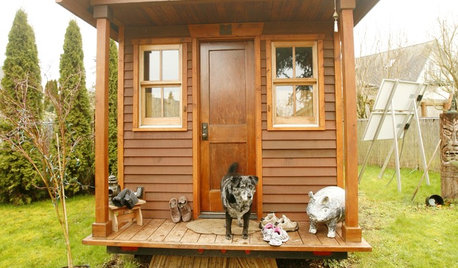
SMALL SPACESLife Lessons From 10 Years of Living in 84 Square Feet
Dee Williams was looking for a richer life. She found it by moving into a very tiny house
Full Story
GREEN BUILDINGHouzz Tour: Going Completely Off the Grid in Nova Scotia
Powered by sunshine and built with salvaged materials, this Canadian home is an experiment for green building practices
Full Story
LIFEHow to Prepare for and Live With a Power Outage
When electricity loss puts food, water and heat in jeopardy, don't be in the dark about how to stay as safe and comfortable as possible
Full Story
MOST POPULAR15 Remodeling ‘Uh-Oh’ Moments to Learn From
The road to successful design is paved with disaster stories. What’s yours?
Full Story
DECORATING STYLESIs Your Home Ready for a 1970s Revival?
Seventies chic is a trend that’s been brewing for some time, but this year it could hit big — with a few modern tweaks
Full Story
MOST POPULARHouzz Tour: Going Off the Grid in 140 Square Feet
WIth $40,000 and a vision of living more simply, a California designer builds her ‘forever’ home — a tiny house on wheels
Full Story
GARAGESKey Measurements for the Perfect Garage
Get the dimensions that will let you fit one or more cars in your garage, plus storage and other needs
Full Story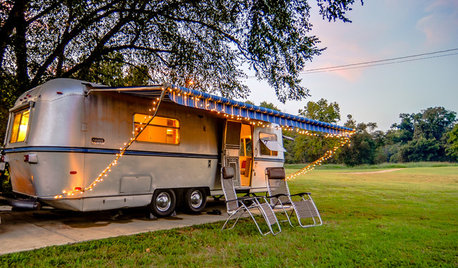
VINTAGE STYLEGet Away From It All in a Glamper
A glammed-up camper can transport you to a happy place, whether in your yard or on the highway
Full Story
KITCHEN CABINETS9 Ways to Save Money on Kitchen Cabinets
Hold on to more dough without sacrificing style with these cost-saving tips
Full Story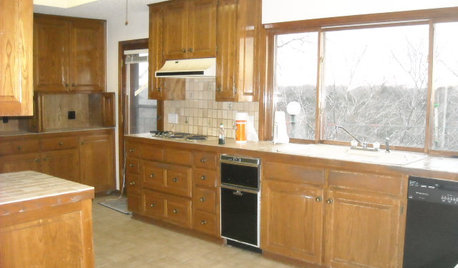
GREEN BUILDINGHow to Recycle Your Kitchen
Instead of adding to the junk pile — and paying landfill fees — get rid of old appliances, cabinets and countertops the ecofriendly way
Full Story
arkansas girlOriginal Author