

100,000 Buckthorns to kill
18 years ago
Featured Answer
Sort by:Oldest
Comments (789)
 6 years ago
- 6 years ago
Related Discussions
Buckthorn
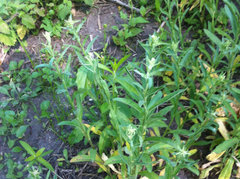
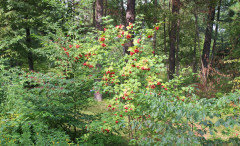
Comments (3)I've been battling the 2 invasive species of Buckthorn for several years - - Frangula alnus, Glossy or European Buckthorn, aka Rhamnus frangula - Rhamnus cathartica, Common Buckthorn Both grow in a multi-stemmed shrubby habit, but Common Buckthorn has a tendency to grow in a more tree-like form. Common Buckthorn is dioecious, so only the female plants make berries. Seedlings are relatively easy to pull, but don't even bother trying to dig out med-large plants - the roots are embedded like concrete. Even the weed wrench is challenging with anything over 1 inch diameter. I cut the stems close to the base and use a squeeze bottle with a concentrated herbicide (Glyphosate, Triclpyr, or 2-4-d). Apply herbicide immediately after cutting. If it is a large stem (2-4") is only necessary to apply herbicide in the outer edge of the cut trunk. The plants do not have to be cut down, they can be left in place to die using other methods of applying herbicide. Cut bark treatment - where the bark and cambium are girdled or cut downward in a "cup" pattern all around the stem and herbicide is applied in the cup. Also basal bark application involves spraying oil-based herbicide over the lower couple feet of stems. I've tried to eliminate the larger plants first, to prevent additional generations of seeds from being dispersed by birds. Don't have a good pic of Common Buckthorn, but here's one of Frangula alnus, Glossy Buckthorn -...See MoreViable sea buckthorn seeds from super market freezed beries?
Comments (2)No, it's not a whack idea at all. I think it depends on the species and its particular natural and evolutionary history. Sea Buckthorn seeds should be specifically adapted to germinating only after being frozen in the fruit, since they are produced late in the growing season, persist on the trees into freezing weather, and therefore must remain viable until spring. Germination definitely cannot take place in the fall, as the soft-tissued seedlings would quickly be killed by the first frosts. So I guess what I'm saying is: give it a try! It might work. By the way, I also love the fruit of some of Elaeagnaceae, such as Autumn Olive (Elaeagnus multiflora), and certain large, red-fruited cultivars of Russian Olive (Elaeagnus angustifolia). They're all very high in vitamins. I suppose you can't order any plants from the US, but Miller Nurseries (www.millernurseries.com) sells what they call "Sea Berry" but which is probably the same plant. If they can't ship to you, maybe they could send some dried seeds? Good Luck, Chris...See MoreBuckthorn and Honeysuckle herbicide questions
Comments (14)1) Spraying Glyphosate on leaves of buckthorn will not kill them. It does cripple the new leaf growth, but after a couple of years they will regrow normally. 2) I would not use 24d. Why spray when you can cut and paint - much more environmentally friendly and safer for you. 3) Saying that you use a certain % of Roundup does not help the reader. Roundup is available in a number of formulations (not counting the competitors) and these formulas have different strengths. the very dilute formulation that is ready for spraying is too dilute. 4) I can't comment on using glyphosate in winter, but it seems to me that this would not work once the tree has lost it's leaves. At that point it has gone dormant. I would recommend doing this in fall, up to leaf fall. 5) The strategy for a large infestation--mine is 4 acres--is to start with berry producing plants. This will be larger female plants. Berries are reported to be viable in the ground for 7 years. the sooner to stop having berries the sooner you will get rid of the Buckthorn. Once berry producers are gone, get rid of all large plants. You can also go after very small plants. I find that if the ground is wet, you can easily pull plants up to about 2 feet tall. As they get larger, the roots become too strong for hand pulling. For 3-4 ft plants, I usually wait until they are 5 feet tall - easier to handle then. Cut and paint with glyphosate in fall. You can leave cut wood on the ground. It gets brittle in one year and rots fairly quickly. I find that it does not make good firewood. Here is a link that might be useful: Garden Myths...See MoreNeed Advice on how to take back my flower beds etc
Comments (18)I know about Georgia summers. :). Have you considered just putting that area to lawn? I would suggest pricing out weed removal and sodding. If that's too much, weed whack it down, moisten a bunch of cardboard and cover the areas with cardboard and a bit of mulch to weigh the cardboard down. Leave it over winter then pull back (weeds should be smothered) and seed in Spring. Grass is really the easiest as mowing will make quick work of anything that attempts to grow bigger than an inch or two. If you want your garden beds back, do the same smothering method except don't pull anything back in the Spring. Just makes holes and plant. Put thick layer of mulch after planting to discourage weeds (not right against new plants). I'm thinking if you don't get out there occasionally to weed or if you don't renew your mulch yearly, your garden beds will run wild again in just a few years....See More- 6 years ago
- 6 years ago
- 6 years agolast modified: 6 years ago
- 6 years agolast modified: 6 years ago
- 6 years ago
- 6 years ago
- 6 years ago
- 6 years ago
- 6 years agolast modified: 6 years ago
- 6 years ago
- 6 years ago
 5 years ago
- 5 years ago
 5 years ago
- 5 years ago
- 5 years agolast modified: 5 years ago
- 5 years ago
- 5 years ago
- 5 years ago
- 5 years ago
- 5 years agolast modified: 5 years ago
- 5 years agolast modified: 5 years ago
- 5 years ago
- 5 years ago
- 5 years ago
- 5 years ago
- 5 years ago
- 2 years ago
- 2 years ago
- 2 years ago
- 2 years ago
- 2 years ago
- 2 years ago
- 2 years ago
- 2 years ago
- 2 years ago
- 2 years agolast modified: 2 years ago
- 2 years agolast modified: 2 years ago
- 2 years ago
- 2 years ago
- 2 years ago

Related Stories
BEFORE AND AFTERSA ‘Brady Bunch’ Kitchen Overhaul for Less Than $25,000
Homeowners say goodbye to avocado-colored appliances and orange-brown cabinets and hello to a bright new way of cooking
Full Story
REMODELING GUIDESOne Guy Found a $175,000 Comic in His Wall. What Has Your Home Hidden?
Have you found a treasure, large or small, when remodeling your house? We want to see it!
Full Story
KITCHEN DESIGNThe 100-Square-Foot Kitchen: Farm Style With More Storage and Counters
See how a smart layout, smaller refrigerator and recessed storage maximize this tight space
Full Story
MOST POPULARHouzz Tour: Going Off the Grid in 140 Square Feet
WIth $40,000 and a vision of living more simply, a California designer builds her ‘forever’ home — a tiny house on wheels
Full Story
FEEL-GOOD HOMEWhat’s the Perfect Home Size? Houzz Readers Weigh In
We asked you to tell us your ideal home size. For some, it’s 337 square feet. Others find that 5,000 square feet is still too small
Full Story
KITCHEN DESIGNKitchen of the Week: Practical, Budget-Friendly Beauty in Dallas
One month and a $25,000 budget — see how a Texas homeowner modernized her kitchen beautifully working with those remodeling constraints
Full Story
RANCH HOMESHouzz Tour: Budget Remodel for a Midcentury Oregon Rancho
With help from friends, an interior designer and her husband refresh an efficient, timeless home in Portland for $15,000
Full Story
GARDENING GUIDESMeet the Mighty Saguaro of the Desert Landscape
You’ve seen its form in films, on souvenirs and much more. Now get to know this iconic cactus of the Sonoran Desert
Full Story
HEALTHY HOMEA Guide to Indoor Air Purifiers
Get the lowdown on air filtration systems for your house and the important ratings to look out for
Full Story
PETSHouzz Pets Survey: Who Rules the House — Dogs or Cats?
New data shows that pets make people happy, and pet owners love spending big to return the favor
Full StorySponsored
More Discussions
bill_g_wisconsin